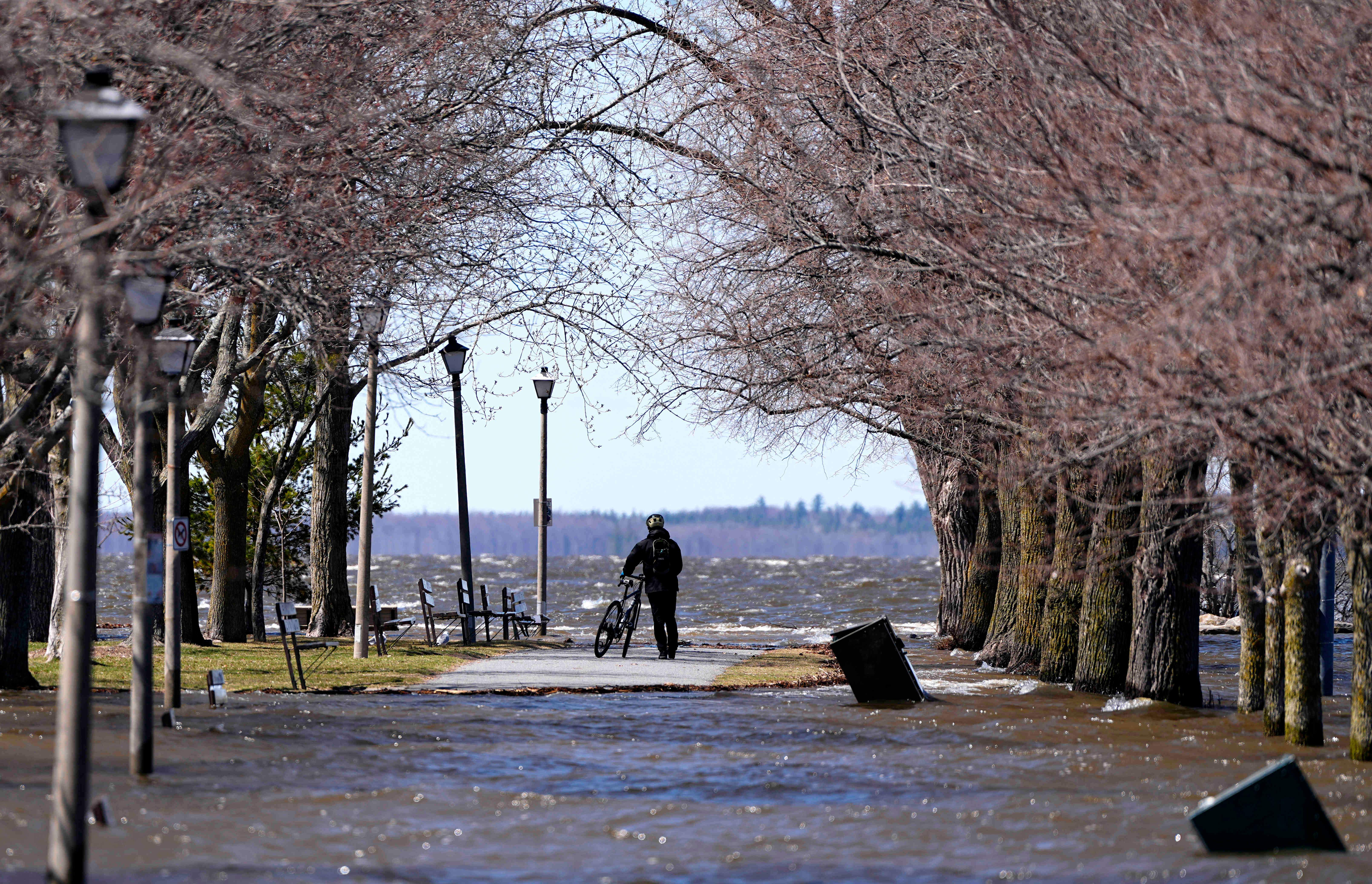
The Canadian federal government just dropped a "searchable" flood risk tool that doesn't actually let you search. The media is having a field day with the irony. They're calling it a bureaucratic blunder, a "coming soon" poster for a movie that’s already three years late. They’re missing the point.
The real disaster isn't the broken search bar. The disaster is the delusion that a centralized, government-vetted database is the "missing link" for Canadian real estate safety. We are obsessed with waiting for Big Brother to tell us if our basements will turn into swimming pools, while ignoring the fact that the data already exists, the markets have already priced it in, and the government's primary goal isn't to inform you—it's to manage the liability of their own infrastructure failures.
Stop waiting for a map. Start looking at the water.
The Search Bar is a Red Herring
The current outcry focuses on the "portal" nature of the new Federal Flood Hazard Identification and Mapping Program (FHIMP). Critics moan that you can’t plug in your postal code and see a red dot on your roof. This critique is lazy. It assumes that "access" to data is the same as "utility" of data.
If the government gave you a high-resolution, street-level risk map today, half of the country would realize their single largest asset is a ticking financial time bomb. The "lag" in searchability isn't a technical glitch; it's a political buffer. Total transparency in flood risk would trigger an immediate, localized housing market collapse in high-risk zones. No politician wants their name on the UI update that wipes out $200,000 in equity for a whole concession road overnight.
I have seen municipal planners sit on updated topographical data for years because the legal implications of "knowing" are more expensive than the physical reality of the flood. When a government body labels your property "High Risk," they aren't just giving you a heads-up. They are flagging your property for every insurance underwriter and mortgage lender in the country.
The Fallacy of the Unified Map
Canada is a patchwork of jurisdictional ego. You have conservation authorities, provincial ministries, and municipal engineering departments all holding different pieces of the puzzle. The idea that a federal tool will "unify" this into a single source of truth is a fantasy.
Different models use different variables. Some prioritize fluvial (river) flooding. Others look at pluvial (rainwater) events. Some account for the "1-in-100-year" storm—a term that is functionally extinct in an era of rapid climate shift.
- The Flaw of Averages: A federal map uses broad-stroke data. It cannot account for the fact that your neighbor paved their entire backyard last summer, changing the runoff pattern for your specific foundation.
- The Lag Time: By the time a federal map is digitized, peer-reviewed, and "searched," the hydrological reality of the area has likely changed due to new upstream development.
We are building a digital monument to historical data while the actual environment is moving at ten times the speed of a government procurement cycle.
Why Your Insurance Company Already Knows
While citizens wait for a "searchable tool," the private sector is lightyears ahead. Insurance giants like Intact or Aviva aren't waiting for a federal portal to tell them where the water goes. They use proprietary LIDAR (Light Detection and Ranging) data and machine learning models that assess risk down to the centimeter.
If you want to know your flood risk, don't check a government website. Check your premiums.
If your "Overland Water" coverage is suddenly capped at $10,000 or your deductible has tripled, the "tool" has already spoken. The market is the most accurate map we have. It is cold, it is brutal, and it doesn't have a "loading" icon. The obsession with a public tool is a desire for a second opinion that will likely be more optimistic—and therefore more dangerous—than the reality the private sector has already calculated.
The Counter-Intuitive Truth: Transparency is a Trap
We demand transparency because we think it empowers us. In the realm of climate risk, transparency is often just a transfer of liability.
Imagine a scenario where the search tool goes live. You search your address. It’s green. Two years later, a "black swan" atmospheric river event puts three feet of water in your living room. You sue the government because their map said you were safe. The government points to a 50-page disclaimer buried in the "About" section that says the map is for "informational purposes only" and does not constitute a guarantee of safety.
By providing the tool, the government isn't protecting you; they are protecting themselves. They are discharging their "duty to inform" so that when the catastrophe happens, they can claim you were a "willing participant" in the risk. "You saw the map," they will say. "Why didn't you buy more insurance?"
Stop Asking for Maps, Start Asking for Engineering
The conversation around this tool is a massive distraction from the actual problem: crumbling, outdated grey infrastructure. A map doesn't stop water. Better culverts, permeable pavement, and daylighted creeks stop water.
We are spending millions of taxpayer dollars on the representation of risk rather than the mitigation of it. It’s easier to build a website than it is to dig up a city’s worth of undersized Victorian-era sewers. We are being fed data as a substitute for action.
How to Actually Assess Your Risk
Forget the portal. If you want to know if you're in trouble, do the work the "insiders" do:
- Topography Trumps Tools: Download a basic contour map of your area. If you are at the bottom of a "bowl," no amount of "green" on a federal map makes you safe. Water follows gravity, not government projections.
- The Basement Audit: Look for sump pump history. Talk to neighbors who have lived on the street for thirty years. The "1-in-100-year" event has likely happened three times in their tenure.
- The Mortgage Litmus Test: If your bank is hesitant about a specific property's location or demands high-level environmental assessments, take the hint. They are the ultimate risk managers.
The federal flood tool is a placebo for a population that wants to feel informed without having to face the reality of a changing landscape. It’s a UI layer over a systemic failure.
The fact that you can't search it yet isn't the problem. The problem is that you think searching it will change your reality. The water doesn't care about your search results. It’s time to stop refreshing the page and start looking at your foundation.
The map is not the territory. The map is just a way for the people in charge to say they warned you before the bill arrives.
Buy a better pump. Move to higher ground. Stop waiting for a website to tell you what the clouds already have.