The global economy currently rests on a razor’s edge thin enough to be severed by a single miscalculation in the Strait of Hormuz. While equity markets churn with indecision and oil prices spike on every headline regarding the U.S.-Iran standoff, the real story is not about daily price fluctuations. It is about a structural vulnerability in the global energy supply chain that has been ignored for decades. The standoff has transformed the world's most important chokepoint into a theatre of psychological warfare where the mere threat of disruption carries nearly as much weight as a physical blockade.
Investors watching the ticker symbols for Brent Crude and the S&P 500 are seeing the symptoms, not the disease. The disease is a geographical bottleneck through which roughly 20 percent of the world’s petroleum consumption passes daily. If the Strait closes, there is no immediate workaround. The infrastructure to bypass this twenty-one-mile-wide passage simply does not exist at the scale required to keep the lights on in Europe or the factories humming in Asia. For a closer look into similar topics, we suggest: this related article.
The Geography of Total Dependency
The Strait of Hormuz is the only sea passage from the Persian Gulf to the open ocean. To its north lies Iran, and to its south, Oman and the United Arab Emirates. At its narrowest point, the shipping lanes are only two miles wide in either direction. This is not a vast expanse of water; it is a crowded hallway.
When tensions between Washington and Tehran escalate, the market reacts because the logistics of oil delivery are unforgiving. Tankers are slow, massive, and vulnerable. A single "kinetic event"—a mine, a drone strike, or a boarding party—forces insurance premiums for these vessels to skyrocket. When it costs more to insure the cargo than to pump the oil, the economic math of global trade breaks down. This creates a feedback loop where the fear of a shortage induces the very price spikes that cripple consumer confidence, regardless of whether a single drop of oil has actually been spilled. For broader context on this development, detailed analysis can be read on Financial Times.
The Myth of American Energy Independence
A common narrative suggests that because the United States has increased domestic shale production, it is now insulated from Middle Eastern volatility. This is a dangerous oversimplification. Oil is a fungible global commodity. Even if the U.S. did not import a single barrel from the Persian Gulf, the price of gasoline in Ohio is still dictated by the global balance of supply and demand.
If Hormuz is blocked, Asian markets—specifically China, India, and Japan—lose their primary source of energy. These nations will then scramble to outbid everyone else for available cargoes from West Africa, the North Sea, and the Gulf of Mexico. The result is a global price surge that hits every pump on the planet. Domestic production provides a cushion for supply, but it offers no shield against the price shocks triggered by a regional conflict thousands of miles away.
The Iranian Playbook of Asymmetric Pressure
Tehran understands its leverage perfectly. They do not need to win a naval battle against the U.S. Fifth Fleet to achieve their objectives. Their strategy is rooted in "asymmetric friction." By harassing commercial shipping or conducting high-profile military drills, Iran reminds the West that it holds the "kill switch" for the global economy.
This is a diplomatic tool as much as a military one. Every time a tanker is seized or a drone is downed, the "war premium" on oil prices increases. For Iran, this serves two purposes. First, it forces the international community to the negotiating table by demonstrating the cost of sanctions. Second, the resulting rise in oil prices actually helps the Iranian treasury, provided they can still move some of their own product through backchannels.
The Limits of Naval Escorts
The reflex of Western powers is to increase naval presence. Operation Sentinel and various other maritime security constructs aim to provide a "policeman on the beat" for the Strait. However, protecting a slow-moving tanker in a narrow waterway against swarming fast-attack boats or land-based anti-ship missiles is a tactical nightmare.
The U.S. Navy is built for blue-water dominance, not for urban-style brawls in a maritime alleyway. The sheer volume of traffic—roughly 14 tankers a day—makes individual escorts for every vessel impossible. The standoff remains in "limbo" because neither side wants a full-scale war, yet neither can afford to back down without losing face or strategic advantage. This creates a permanent state of high-alert that exhausts crews and keeps markets in a state of perpetual anxiety.
Why Pipelines are a Feeble Defense
There are pipelines designed to bypass the Strait, but they are the equivalent of a garden hose trying to replace a fire hydrant. The East-West Pipeline in Saudi Arabia and the Abu Dhabi Crude Oil Pipeline can move several million barrels per day, but the Strait handles over 20 million.
- Saudi East-West Pipeline: Capacity of approximately 5 million barrels per day.
- Abu Dhabi Pipeline: Capacity of approximately 1.5 million barrels per day.
- The Deficit: Over 13 million barrels per day would still have no way out of the Gulf.
The math doesn't work. These pipelines are also fixed targets. In a hot conflict, an enemy capable of mining a strait is equally capable of sabotaging a pipeline terminal. Relying on these bypasses as a safety net is a fantasy that ignores the scale of global energy demand.
The Silent Threat of Insurance and Finance
While the media focuses on gray-hulled warships, the real damage is often done in the glass towers of London and Singapore. Maritime insurers are the silent arbiters of global trade. When the Joint War Committee designates the Persian Gulf as a high-risk area, "Additional Premium" charges are triggered.
These costs are passed directly to the consumer. For a Very Large Crude Carrier (VLCC) carrying two million barrels of oil, a small percentage increase in insurance can add hundreds of thousands of dollars to the cost of a single voyage. If the standoff lingers, shipping companies may eventually refuse to enter the Gulf altogether. This is "de facto" closure. You don't need to sink a ship to stop the oil; you just need to make it uninsurable.
The Mixed Signals of the Stock Market
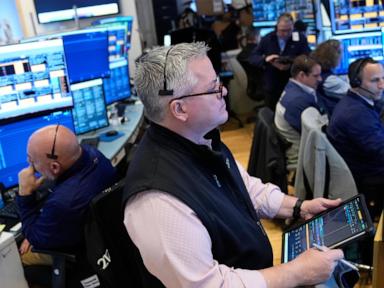
Equity markets are currently "mixed" because they are struggling to price in a binary outcome. If the standoff de-escalates, the oil premium evaporates, and the economy continues its sluggish growth. If it erupts, we face a global recession.
Professional traders are hedging their bets, moving into gold and defensive utilities while keeping a foot in tech and consumer goods. This indecision reflects a fundamental truth: nobody knows where the "red line" actually is. The U.S. warns against interference with navigation; Iran warns against the strangulation of its economy. As long as these two lines remain blurred, the market will continue to oscillate between panic and complacency.
The Asian Factor
China is the largest importer of Gulf oil. This makes the Hormuz standoff a three-dimensional chess game. Washington’s pressure on Iran indirectly pressures Beijing. While the U.S. uses the standoff to exert geopolitical influence, it also risks alienating its largest trading partners who desperately need that oil to keep their economies from stalling.
China’s response has been to accelerate its "Belt and Road" energy investments, seeking land-based pipelines from Russia and Central Asia. But these projects take decades. For the foreseeable future, the Chinese Communist Party is just as hostage to the stability of the Strait as a commuter in Los Angeles. This shared vulnerability is perhaps the only thing preventing the standoff from descending into total chaos, as every major power has a vested interest in the oil continuing to flow, even as they bicker over who controls the taps.
The reality of the Strait of Hormuz is that it represents a single point of failure for modern civilization. We have built a world that requires the uninterrupted flow of energy through a 21-mile gap controlled by a hostile power and patrolled by an overstretched superpower. This isn't just a news cycle or a temporary market "limbo." It is a permanent condition of the 21st-century economy. We are all passengers on those tankers, whether we realize it or not.
The only way to truly mitigate this risk is a total diversification of energy sources and transport routes, a task that the world has repeatedly deferred in favor of cheap, immediate supply. Until that fundamental shift occurs, the global economy will remain a hostage to the geography of the Persian Gulf. Every spike in oil prices is a reminder of our collective refusal to build a more resilient system. Stop looking at the daily charts and start looking at the map.