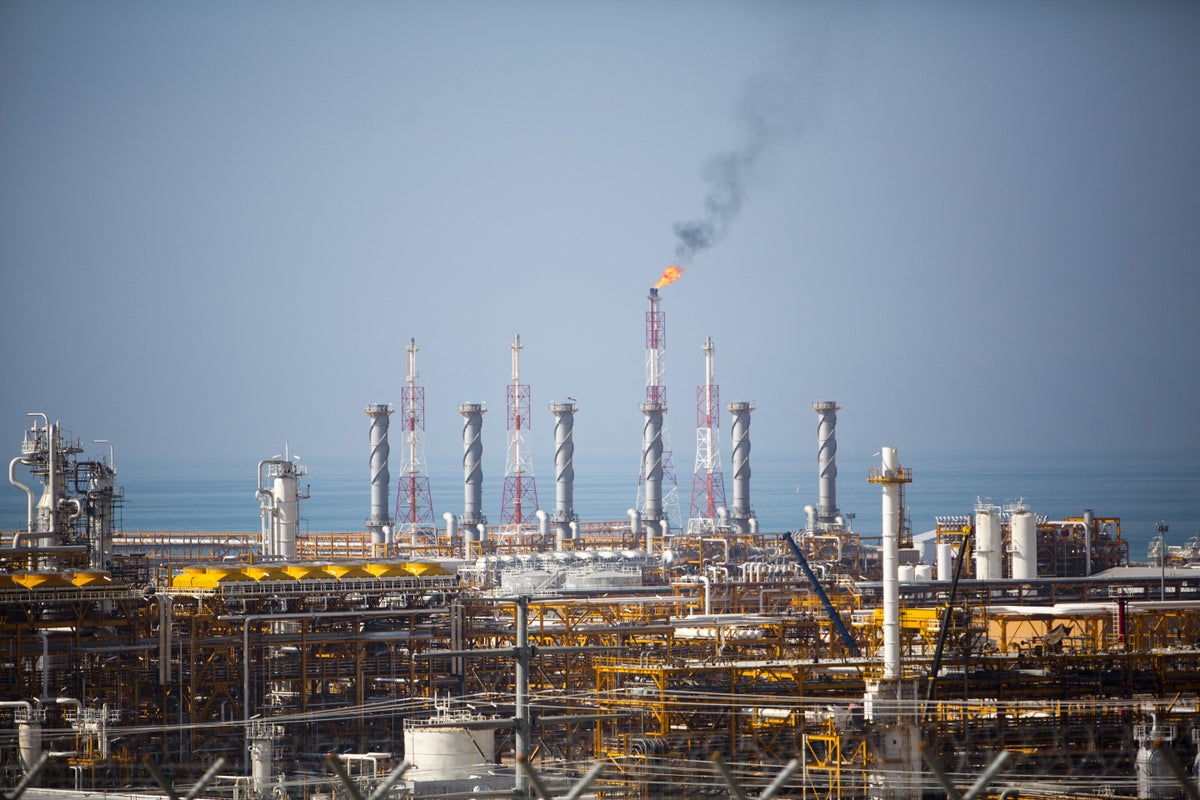
The global economy is currently absorbed in a high-stakes calculation of risk that the world has not seen since the 1970s. When the Trump administration, in coordination with Israeli forces, launched a series of precision strikes against Iranian nuclear and military infrastructure on February 28, the immediate assumption in Washington was a "maximum pressure" victory. The goal was to zero out Iranian exports and force a total diplomatic capitulation. Instead, Tehran executed its long-threatened "scorched earth" maritime strategy, effectively shuttering the Strait of Hormuz and removing 20% of the world’s daily oil and liquefied natural gas (LNG) supply in a single stroke.
This is not a temporary spike. It is a structural break. While the White House recently issued a 30-day "mercy waiver" for sanctioned Iranian oil already at sea, the reality is that the physical infrastructure of global trade is broken. Brent crude is stubbornly holding above $100 a barrel, and the secondary effects—on everything from AI data center cooling to the price of a bowl of rice in Kolkata—are just beginning to manifest. The worst-hit nations are not the ones in the line of fire, but those whose industrial and social contracts are built on the bedrock of cheap, Middle Eastern energy.
The Fertilizer Trap and the Coming Food Emergency
While energy dominates the headlines, the most lethal economic transmission mechanism is actually chemical. The Persian Gulf is the world's lung for nitrogen-based fertilizers. By closing the Strait, Iran has inadvertently launched a war on global food security.
Egypt and Pakistan are the early casualties. Egypt, already struggling with a devalued pound and a heavy debt load, relies on the Gulf for over 70% of its remittances and a massive portion of its fertilizer feedstock. In Cairo, the government has already mandated that restaurants and retailers close by 9 pm to conserve energy. This is a survival tactic, not a policy.
Further east, India’s massive agricultural sector is staring at a "grocery supply emergency." Urea prices jumped 77% between December 2025 and mid-March 2026. For an Indian farmer, the cost of a ton of urea now equals 126 bushels of corn, nearly double the ratio from just three months ago. When the cost of inputs rises this fast, planting stops. When planting stops, social unrest follows. We are seeing a direct line from a drone strike in Isfahan to bread lines in the Global South.
The Silicon Ceiling and the Energy-Intensive AI Boom
There is a quiet panic in Silicon Valley that has nothing to do with code and everything to do with kilovolts. The World Trade Organization (WTO) recently warned that prolonged high energy prices could "crimp" the generative AI boom.
AI is the most energy-hungry industry in human history. The massive GPU clusters required to train and run next-generation models require constant, cheap electricity—much of which is still underpinned by natural gas. Europe, currently facing a "second energy crisis" after the loss of Qatari LNG, is seeing its Dutch TTF gas benchmarks double.
When energy costs surge, the "hyperscalers"—Microsoft, Google, and Amazon—face a choice. They can absorb the costs and watch their margins evaporate, or they can pass them on to users. If the cost of an AI query triples, the enterprise adoption of these tools will stall. In 2025, AI-related investment accounted for 70% of all investment growth in North America. If that engine fails because the fuel is too expensive, the "soft landing" the Federal Reserve promised will turn into a hard crater.
Europe’s Empty Tanks and the Industrial Exodus
Europe thought it had diversified away from energy risk after the 2022 Russian gas cutoff. It was a mirage. By moving from Russian pipelines to Middle Eastern LNG, the continent simply traded one vulnerability for another.
The timing of the current conflict could not be worse. Following a brutal 2025-2026 winter, European gas storage levels are at a dangerously low 30% capacity. Germany and Italy, the industrial heartbeats of the Eurozone, are now staring at technical recessions.
The crisis is triggering a permanent deindustrialization. Chemical and steel manufacturers in the UK and EU have already slapped 30% surcharges on their products to cover electricity costs. If these prices hold through the summer, these factories won't just pause; they will relocate to the United States or Southeast Asia, where energy is marginally more stable. The "Green Transition" is also a casualty here. When oil is $110, governments pivot back to coal and whatever else keeps the lights on, regardless of the carbon cost.
The Logic of the Dark Fleet
One of the most overlooked factors in this crisis is the resilience of the "Dark Fleet"—the hundreds of aging tankers that operate outside Western insurance and banking systems. The Trump administration’s attempt to drive Iranian exports to zero is failing because 60% of the fleet carrying Iranian crude is not currently under U.S. sanctions.
These ships use deceptive tactics:
- AIS Spoofing: Transmitting false locations to hide Ship-to-Ship (STS) transfers.
- Flag Hopping: Frequently changing vessel registration to stay ahead of Treasury designations.
- Shadow Insurance: Relying on non-Western protection and indemnity (P&I) clubs.
China is the primary beneficiary of this shadow economy. By continuing to buy Iranian crude at a steep discount, Beijing is insulating its own manufacturers from the price shocks hitting the West. While the U.S. struggles with $4-a-gallon gasoline, China is quietly filling its strategic reserves with discounted oil that officially "doesn't exist."
The End of the Strategic Petroleum Reserve Buffer
The White House has tried to blunt the pain by tapping the Strategic Petroleum Reserve (SPR), but the math is grim. After years of drawdowns, the "shield" is thin. Releasing emergency oil is a psychological tool, not a structural solution to a closed Strait of Hormuz.
The administration’s recent waiver for Iranian oil at sea is a tacit admission that "Maximum Pressure" has hit its ceiling. You cannot sanction a country into submission when that country holds the literal "off switch" for 20% of global energy. The markets know this. Shipping insurance has become prohibitively expensive, and even with naval escorts, many commercial carriers are refusing to enter the Gulf.
We are entering a period where geography matters again. The era of seamless, "just-in-time" global trade relied on the assumption that chokepoints like Hormuz would always remain open. That assumption is dead. The winner of this economic shock won't be the country with the most missiles, but the one that can feed its people and power its factories without needing a permit from a war zone.
The global economy isn't just fluctuating; it is remapping itself around a new, brutal reality where energy is a weapon, and the safety of the seas can no longer be taken for granted.