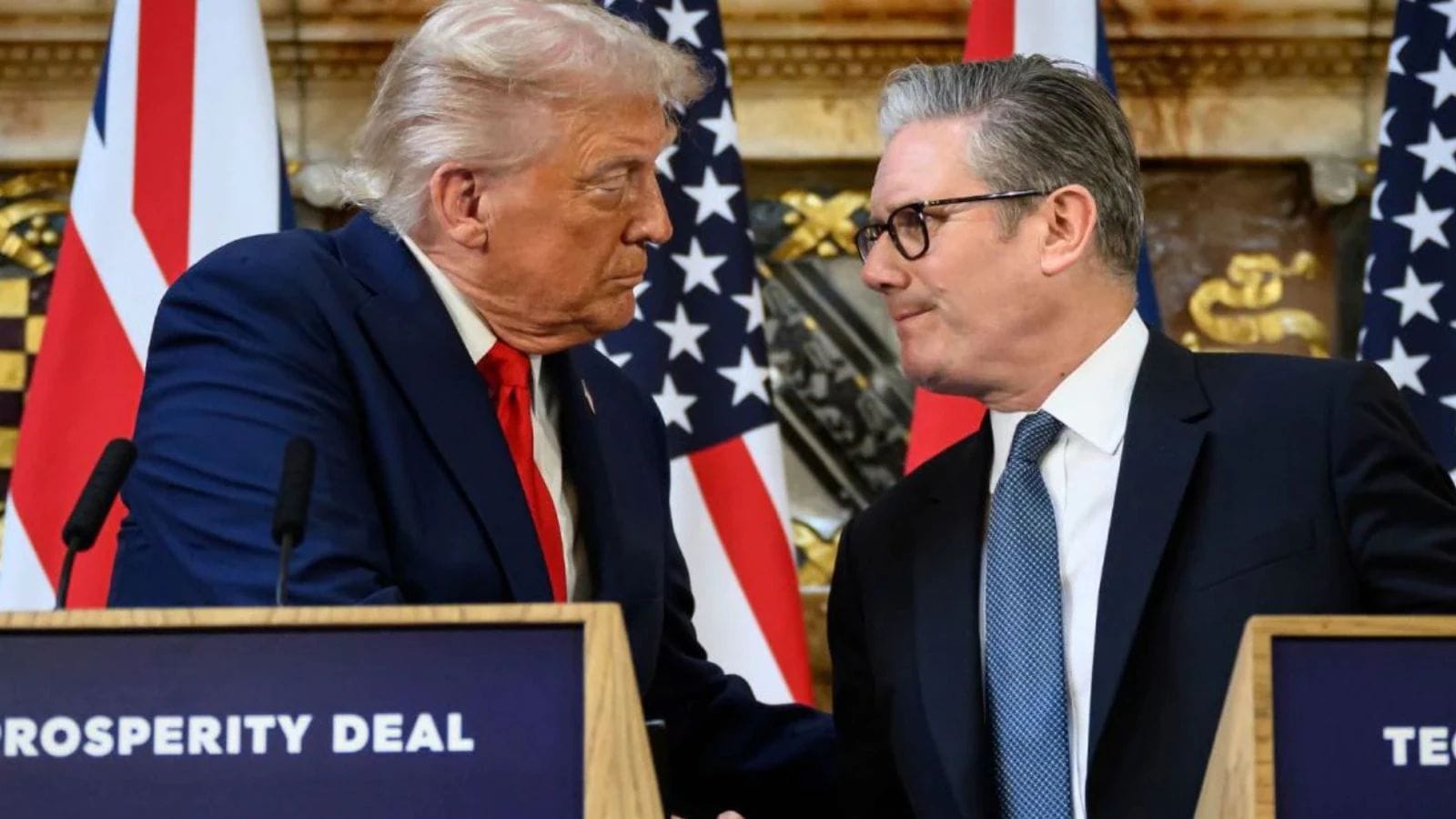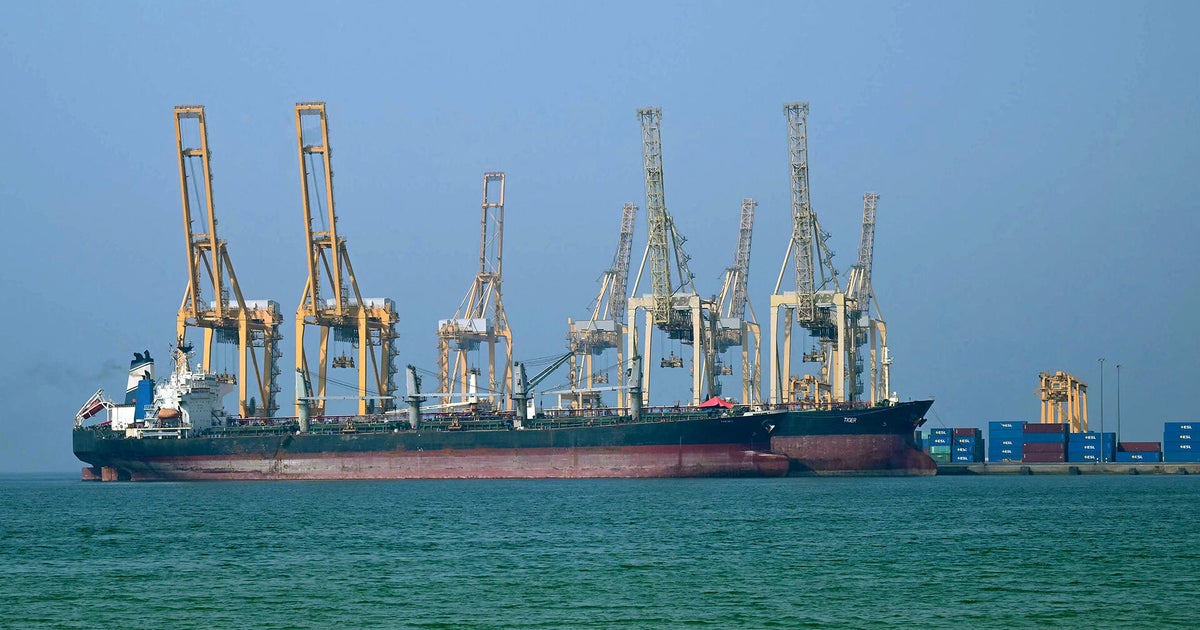
The request was direct, delivered with the characteristic bluntness of a commander-in-chief who views global security as a shared expense report. President Donald Trump has called upon the world’s major energy consumers—China, Japan, South Korea, and the United Kingdom—to dispatch their own warships to the Strait of Hormuz. The goal is to provide armed escorts for the tankers that feed their economies, a burden the United States has largely shouldered for decades. Yet, the response from the global community has been a deafening, polite silence.
This isn't just a diplomatic snub. It is a calculated recognition by global powers that the current crisis in the Persian Gulf has fundamentally changed the math of maritime security. As the Strait remains effectively closed by risk, not just by decree, the reluctance of allies and rivals alike to join a U.S.-led escort coalition reveals a deep-seated fear: that entering the waterway doesn't just protect the oil, it invites the war. Meanwhile, you can find similar stories here: The Calculated Silence Behind the June Strikes on Iran.
The Strategy of Reluctance
For decades, the U.S. Fifth Fleet acted as the guarantor of the "global commons." If you were a Japanese refiner or a Chinese manufacturer, you relied on the implicit promise that American steel would keep the oil flowing through the 21-mile-wide chokepoint. Trump’s latest push to dismantle this "free rider" status comes at a moment when the stakes are at their highest since the Tanker War of the 1980s.
The nations Trump is calling upon are the ones with the most to lose. Roughly 80% of the crude passing through Hormuz is destined for Asian markets. Logically, Tokyo and Seoul should be the first to volunteer. Instead, they are hiding behind constitutional constraints and "careful reviews." To see the full picture, check out the recent analysis by The New York Times.
The "why" is found in the nature of modern asymmetric warfare. In the 1980s, protecting a ship meant scan-and-destroy missions against predictable naval threats. Today, the Strait is a corridor of "smart" hazards. Iran’s Islamic Revolutionary Guard Corps (IRGC) has spent twenty years perfecting a swarm-and-mine strategy that renders traditional naval escorts nearly obsolete. A billion-dollar destroyer can protect a tanker from a missile, but can it protect it from a dozen underwater drones and "invisible" tethered mines in the world's most congested shipping lane?
The Fallacy of the Naval Shield
The competitor narrative suggests that the "muted response" is a failure of American leadership. The reality is more technical and far more grim. Naval experts and industry analysts know that an escort mission in 2026 is a logistical nightmare that might actually increase the risk to commercial crews.
When a warship escorts a merchant vessel, it creates a high-profile target. For Iran, striking a civilian tanker is a provocation; striking a foreign warship is a badge of honor. European powers like France and Germany, currently distancing themselves from the U.S. approach, realize that sending frigates into the Gulf right now is essentially offering up hostages.
Furthermore, the physical geography of the Strait works against the escort model. At its narrowest, the shipping lanes are only two miles wide in each direction. There is no room to maneuver. If a tanker is disabled by a drone strike while under escort, the entire lane is blocked. You haven't protected the flow of commerce; you've inadvertently helped the enemy bottle it up.
The Insurance Deadlock
Beyond the hardware, there is the software of global trade: insurance. Even if the U.S. Navy and its "coalition of the cautious" begin escorting ships tomorrow, the private sector is unlikely to follow.
- War-Risk Premiums: Rates have surged 400% to 600% in the last week alone.
- The "Safety Gap": Insurance giants like Lloyd's of London have hinted that naval escorts do not necessarily lower the risk profile enough to drop premiums.
- Collateral Damage: In a confined space, the "defense" of a ship often involves kinetic exchanges that can damage the very cargo being protected.
Industry insiders suggest that only about 10% of lost shipping volumes can be restored through escorts. The remaining 90% stays in port because the math of losing a $200 million hull simply doesn't work, regardless of how many frigates are nearby.
The China Wildcard
Perhaps the most telling aspect of Trump’s demand is the inclusion of China. By asking Beijing to protect its own oil, the administration is attempting to force China into a regional security role it has spent years avoiding. China is Iran’s primary oil customer, often bypassing sanctions to keep the IRGC funded.
If China sends warships, it risks its "neutral" status and its special relationship with Tehran. If it doesn't, it proves Trump’s point about "free riders" while its economy chokes on $150-a-barrel oil. So far, Beijing has chosen the third option: calling for "de-escalation" while doing absolutely nothing. This inaction is a strategic bet that the U.S. will eventually be forced to act alone to prevent a global depression, allowing China to reap the benefits without firing a shot.
A Broken Security Model
The current standoff proves that the era of the "global policeman" is hitting a hard geographic and financial limit. The U.S. military is currently focused on "destroying Iran's offensive capabilities" from a distance, rather than sitting in the Strait like sitting ducks. General Dan Caine’s recent briefings suggest that the Pentagon prefers to eliminate the threat at the source—drones on the launchpad and mines in the warehouse—rather than playing defense in the water.
This shift in strategy is the real reason for the "muted response." Allies see that the U.S. is moving toward a strike-first posture and they have no interest in being the "shield" while the U.S. acts as the "sword."
The hard truth is that the Strait of Hormuz cannot be "opened" by simple escort missions anymore. It requires a total cessation of hostilities or a total military victory. Anything in between is just expensive theater, and the rest of the world knows it.
Would you like me to analyze the specific impact of these shipping disruptions on the upcoming Q3 energy futures?