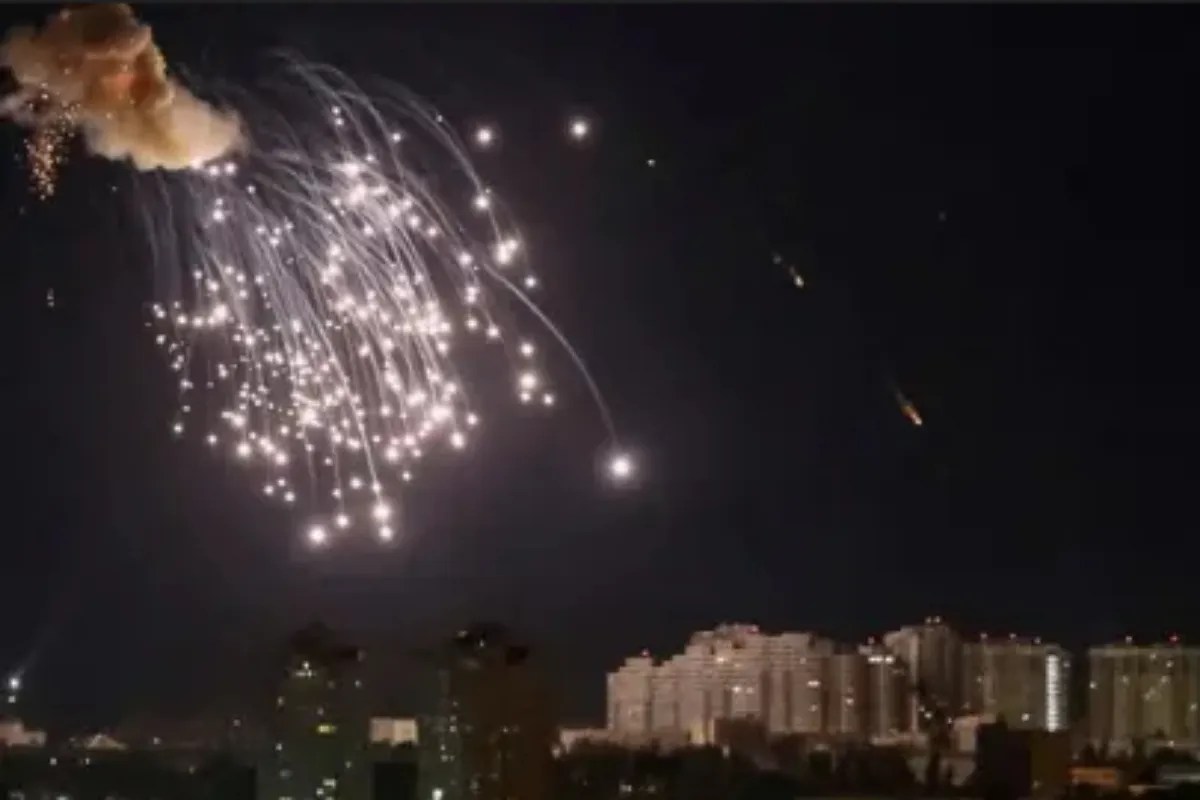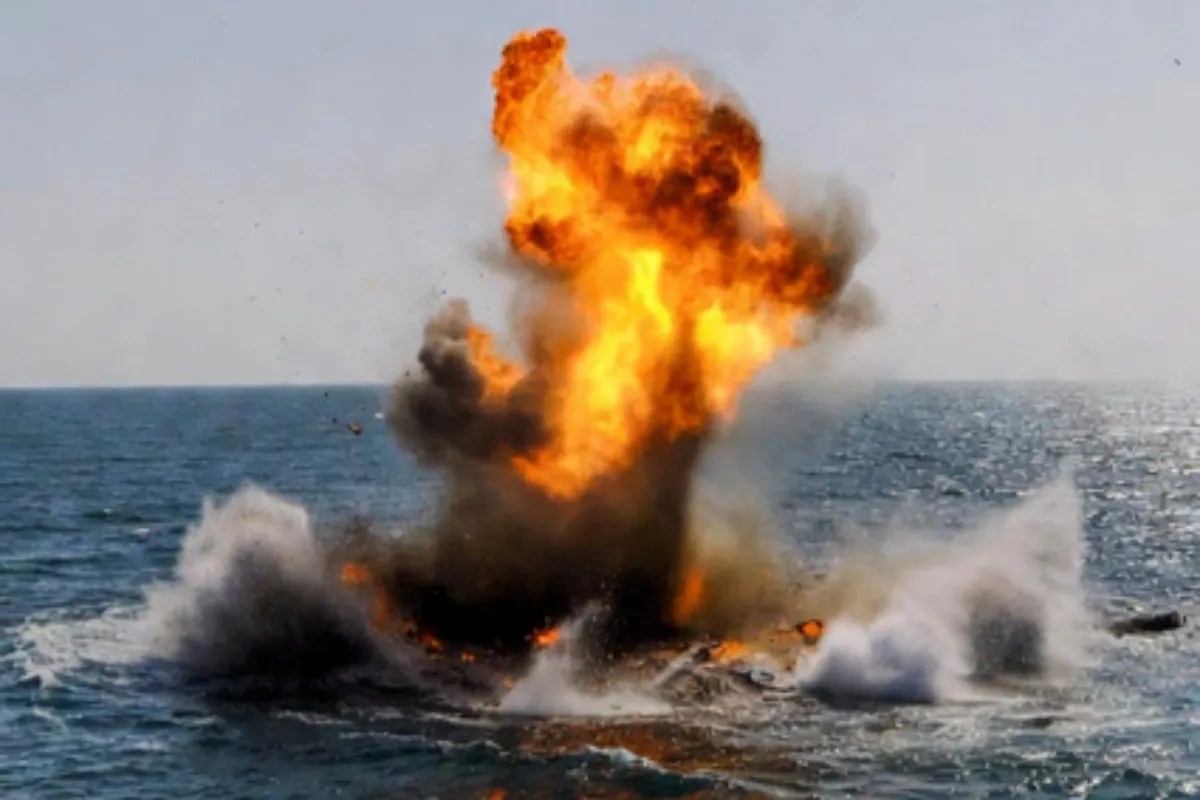
The global oil market is currently holding its breath as Tehran signals a fundamental shift in how it polices the Strait of Hormuz. While headlines often focus on the immediate threat of missiles or naval skirmishes, the real danger lies in a new "regulatory" offensive by Iran. By rewriting the rules of passage through the world’s most vital maritime artery, Iran is effectively weaponizing geography. This is not just a regional spat; it is a direct assault on the mechanics of global trade that could see crude prices surge past $100 per barrel overnight.
The Geography of Total Control
The Strait of Hormuz is a narrow stretch of water that separates the Persian Gulf from the Gulf of Oman. At its narrowest point, it is only 21 miles wide. However, the shipping lanes used by massive tankers are even narrower—just two miles wide in either direction, separated by a two-mile buffer zone.
Approximately 20% of the world's total petroleum consumption passes through this gap daily. This includes crude oil from Saudi Arabia, Kuwait, Iraq, and the UAE, as well as nearly all of Qatar's Liquefied Natural Gas (LNG). There is no immediate or cost-effective workaround. While some pipelines exist across Saudi Arabia and the UAE, they lack the capacity to handle even half of the volume that currently moves by sea.
Tehran’s New Playbook
Historically, Iran’s threats to the Strait were centered on "closing" it—a move that would be considered an act of war and would likely trigger a massive military response from the US Fifth Fleet. Tehran knows this. Instead of a hard closure, we are seeing the rollout of a "gray zone" strategy.
Iran is now asserting that it has the right to inspect vessels, demand new environmental certifications, and impose "transit fees" on ships passing through what it considers its territorial waters. By moving the goalposts from military blockade to "maritime regulation," Iran complicates the international legal response.
- The Inspection Tactic: By stopping tankers under the guise of security or environmental checks, Iran creates massive delays. In the world of shipping, time is literally money.
- The Legal Trap: Iran is not a signatory to the United Nations Convention on the Law of the Sea (UNCLOS) in the same way the US or other Western nations are. They use this ambiguity to claim that the "right of transit passage" does not apply to their waters.
- The Insurance Spike: Even if a ship isn't seized, the mere threat of a new "Iranian rule" causes maritime insurance premiums to skyrocket. This cost is passed directly to the consumer at the pump.
The Myth of American Energy Independence
There is a common misconception that because the US produces more oil domestically than ever before, it is immune to a Hormuz crisis. This is a dangerous fallacy.
Oil is a fungible global commodity. If 20 million barrels of oil per day are removed from the global supply or delayed significantly, the price goes up everywhere—from a refinery in New Jersey to a gas station in Mumbai. The US may not rely on Persian Gulf crude as heavily as it did in the 1970s, but its allies in Europe and Asia do. If the economies of Japan, South Korea, and China are throttled by an energy shortage, the resulting global recession will hit the US economy with the force of a sledgehammer.
The Failed Deterrence
For decades, the presence of US carrier strike groups was enough to keep the lanes open. That era is fading. Iran has invested heavily in asymmetrical capabilities designed specifically to counter a traditional navy.
- Swarm Boats: Small, fast, explosives-laden boats that can overwhelm a destroyer's defenses.
- Anti-Ship Missiles: Mobile batteries hidden along the rugged Iranian coastline.
- Smart Mines: Sophisticated underwater explosives that are difficult to detect and even harder to clear.
Washington’s focus has shifted toward the Indo-Pacific, leaving a perceived power vacuum in the Middle East. Iran is filling that vacuum not with a better navy, but with a more persistent threat. They don't need to win a naval battle; they only need to make the Strait too dangerous for commercial traffic.
The China Factor
Beijing is the elephant in the room. As the largest buyer of Iranian oil—often through "dark fleet" tankers that bypass sanctions—China has a unique relationship with Tehran. However, China also relies on the rest of the Gulf for its energy security.
Iran is betting that China will prevent any severe UN sanctions or heavy military retaliation from the West. This creates a bizarre triangle where Iran uses its leverage over the Strait to force the West into concessions, while China acts as the silent guarantor of the Iranian economy. If Tehran pushes too hard and chokes off oil to China's rivals, it risks biting the hand that feeds it.
The Math of a Crisis
To understand the scale, consider the current flow:
- 18-21 million barrels per day (bpd) of oil.
- 80 million metric tons per year of LNG.
If Iran enforces a "tax" or a slow-down that reduces this flow by just 15%, the global supply-demand balance breaks. Markets operate on margins. A 2% supply deficit can lead to a 20% price increase. In a scenario where the Strait is actively contested, analysts at major banks have modeled prices reaching $140 to $150 per barrel.
Tactical Reality Versus Political Rhetoric
Politicians often speak of "keeping the lanes open" as if it were a simple matter of sailing a ship through a door. In reality, modern tankers are massive, slow-moving targets. They cannot "dodge" a drone or outmaneuver a minefield.
The US and its allies have attempted to form maritime coalitions like "Operation Prosperity Guardian" in the Red Sea to counter Houthi attacks. The results have been mixed at best. If the Houthi rebels—an Iranian proxy—can disrupt the Red Sea with cheap drones, Iran itself can turn the Strait of Hormuz into a graveyard for commercial shipping with far more sophisticated hardware.
The End of Cheap Transit
We are entering an era where the "freedom of navigation" is no longer a given. It is a service that will now come with a heavy geopolitical tax. Iran's new rules are a test of Western resolve and a signal to the world that the old maritime order is dead.
The transition to green energy was supposed to reduce this dependency, but the world is still decades away from moving past oil. In the meantime, the global economy remains tethered to a 21-mile wide strip of water controlled by a regime that has realized it doesn't need to win a war to win the argument.
Look at the freight forwarders and the insurance adjusters. They are the ones currently pricing in the end of the "safe" Strait. When the cost of moving oil becomes as volatile as the oil itself, the infrastructure of the 20th century has officially failed. Prepare for a world where energy security is a luxury, not a right.