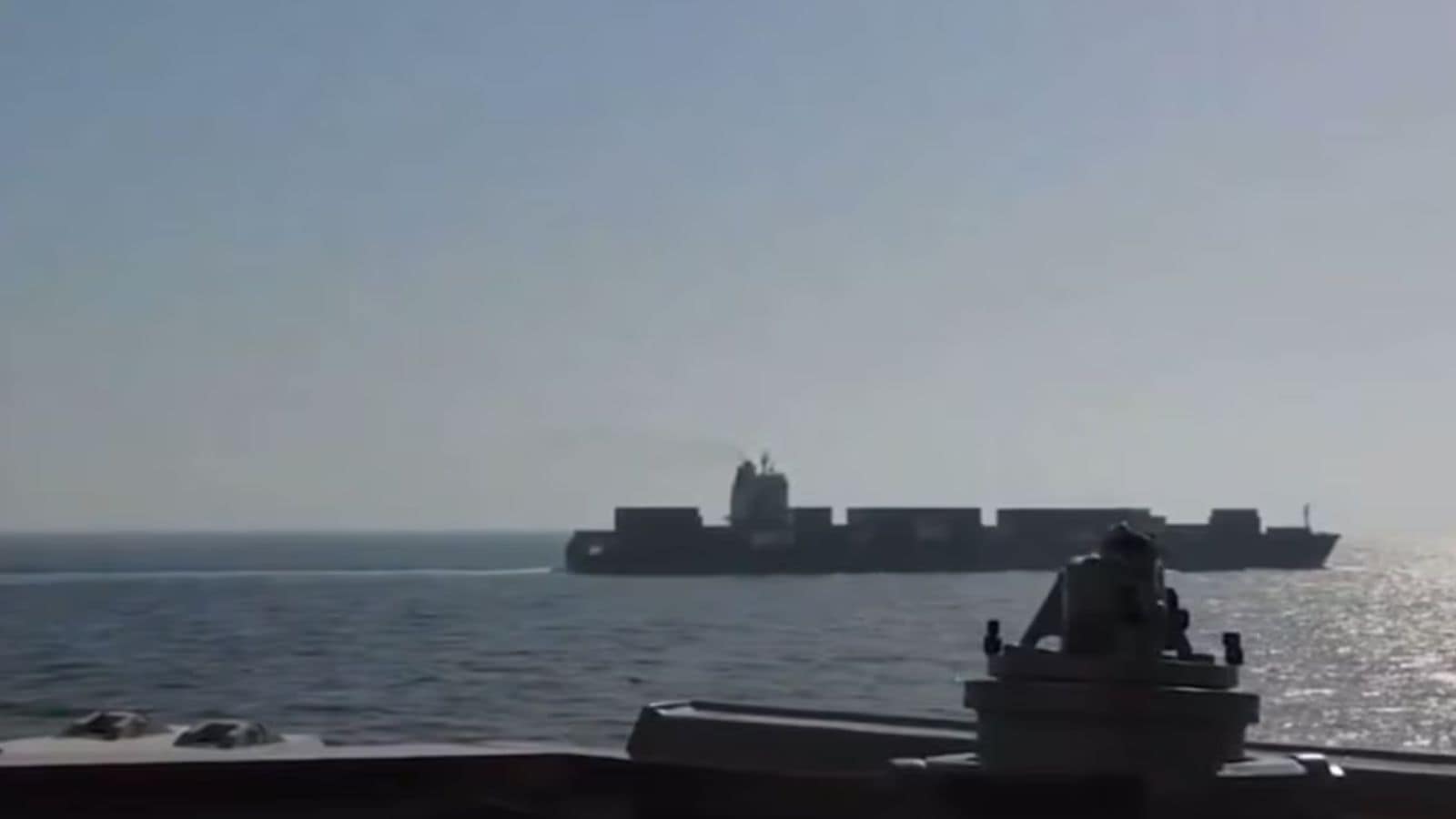
The Strait of Hormuz is the world's most stressful choke point and it just got a lot tighter. While most of the world watches land wars, the real economic conflict is playing out in the turquoise waters of the Middle East. Recent enforcement actions have proven that the US isn't just watching anymore. They’re actively turning ships around. Specifically, 27 vessels were recently blocked from proceeding after a Hormuz-related crackdown. But the real story isn't just the number of ships. It’s about the Touska.
The Touska wasn’t just another tanker. It was the first vessel caught and seized after attempting to evade the strict new restrictions following the blockade. This isn't just a "logistics issue." It’s a loud, clear message to every shipping company on the planet: the era of looking the other way is over. If you try to sneak past the new maritime boundaries, you’re going to lose your cargo, your ship, and likely your insurance.
The 27 ships that had to turn back
When the US and its allies decided to enforce a tighter perimeter around the Strait of Hormuz, they didn't do it with a polite letter. They did it with physical presence. The 27 ships that were turned back weren't all carrying "illegal" goods in the traditional sense. Many were simply failing to comply with the heightened vetting procedures that came after the blockade was announced.
Think about the cost. A single day of a tanker sitting idle can cost upwards of $50,000 to $100,000 in charter rates alone. When you multiply that by 27, you’re looking at millions of dollars in losses before a single drop of oil is even offloaded. The US Navy and Coast Guard are basically acting as the world’s most expensive bouncers. If your name isn't on the list or your paperwork has a smudge, you aren't coming in.
Most of these ships were redirected to ports in the UAE or Oman. They had to sit there and wait for clearance that, in some cases, never came. This creates a massive bottleneck. The global supply chain is already fragile. Adding a "turn back" policy in the world's most vital energy corridor is like putting a kink in a garden hose while the house is on fire.
How the Touska got caught and why it matters
The seizure of the Touska is the centerpiece of this entire saga. This ship tried to play a game that many tankers have played for years. They turn off their transponders. They engage in "dark" ship-to-ship transfers. They rename the vessel mid-voyage. They use shell companies registered in places you’ve never heard of. It usually works. This time, it didn't.
The Touska was the first ship seized for actively evading the post-blockade restrictions. US authorities didn't just stumble upon it. They tracked it using advanced satellite imagery and acoustic signatures. You can turn off a GPS, but you can't hide the physical displacement of thousands of tons of steel moving through the water.
Breaking down the evasion tactics
The Touska’s crew likely thought they were being clever. They followed a path that veered away from the standard shipping lanes, hoping to hug the coastline where radar coverage is sometimes spotty.
- AIS Spoofing. They were broadcasting coordinates that put them miles away from their actual location.
- Flag Hopping. The ship had changed its registration multiple times in the months leading up to the attempt.
- Night Maneuvers. Most of the critical movement happened during a new moon to minimize visual sightings.
None of it mattered. The seizure wasn't just a win for the US; it was a warning. It proved that the technology used to monitor the Strait is now several steps ahead of the technology used to hide. If the Touska—which was sophisticated—couldn't make it, most of the "shadow fleet" has zero chance.
The economic ripple effect you’ll feel at the pump
You might think a few ships turning around in the Middle East won't affect you. You'd be wrong. Roughly 20% of the world’s oil passes through that 21-mile-wide stretch of water. When 27 ships get turned back, the markets freak out. Traders hate uncertainty. They see a blockade and a seizure and they immediately bake that risk into the price of a barrel.
Insurance companies are the ones really sweating. After the Touska was seized, "War Risk" insurance premiums for the Persian Gulf skyrocketed. Some insurers are refusing to cover vessels that have even a tangential connection to the regions under scrutiny. Without insurance, a ship can't dock at any major port. It’s a death sentence for the vessel's profitability.
We aren't just talking about oil, either. Liquefied Natural Gas (LNG) from Qatar uses the same route. If the blockade enforcement stays this rigid, heating costs in Europe and Asia will spike. It’s a domino effect. The Touska was just the first domino to fall.
Shadow fleets and the end of the "Dark" shipping era
For years, a massive "shadow fleet" has operated with near impunity. These are old, dilapidated tankers that carry sanctioned oil from places like Iran or Russia. They don't follow safety rules. They don't have real insurance. They are environmental disasters waiting to happen.
The US crackdown is specifically targeting these ghosts. By turning back those 27 ships, authorities are filtering out the vessels that don't meet the new, rigorous transparency standards. The seizure of the Touska showed that the "shadow" isn't dark enough anymore.
I’ve talked to maritime analysts who say this is the most aggressive enforcement they’ve seen in three decades. It’s not just about stopping a specific country; it’s about reclaiming control over the most important trade route on earth. The rules of the sea are being rewritten in real-time.
Why the "turn back" strategy is actually genius
It’s much easier to turn a ship around than it is to seize it. Seizing a ship involves lawyers, international disputes, and the physical task of offloading cargo. Turning them back is a "soft" power move with "hard" consequences.
- It avoids a direct military confrontation in many cases.
- It forces the shipping companies to police themselves.
- It creates a logjam that makes "dark" shipping too expensive to be worth the risk.
What you should watch for next
The situation in Hormuz isn't cooling down. If anything, the seizure of the Touska has emboldened enforcement agencies. You should expect to see more "inspections" and more ships being told to find a different route.
If you’re involved in logistics, energy, or even just own a car, keep an eye on the "vessel detention" numbers coming out of the Gulf. If those 27 ships become 50 or 100, we are looking at a global energy crisis. The Touska was the canary in the coal mine. It told us that the US is willing to put hands on ships to maintain the blockade's integrity.
Check your supply chains. If your goods or energy sources rely on tankers that might have "questionable" histories, you’re at risk. The days of the "anything goes" maritime world are dead. The Touska proved it. The 27 ships that had to turn around are the proof that this is the new normal. Plan for delays. Plan for higher costs. Most importantly, don't expect the enforcement to let up anytime soon.