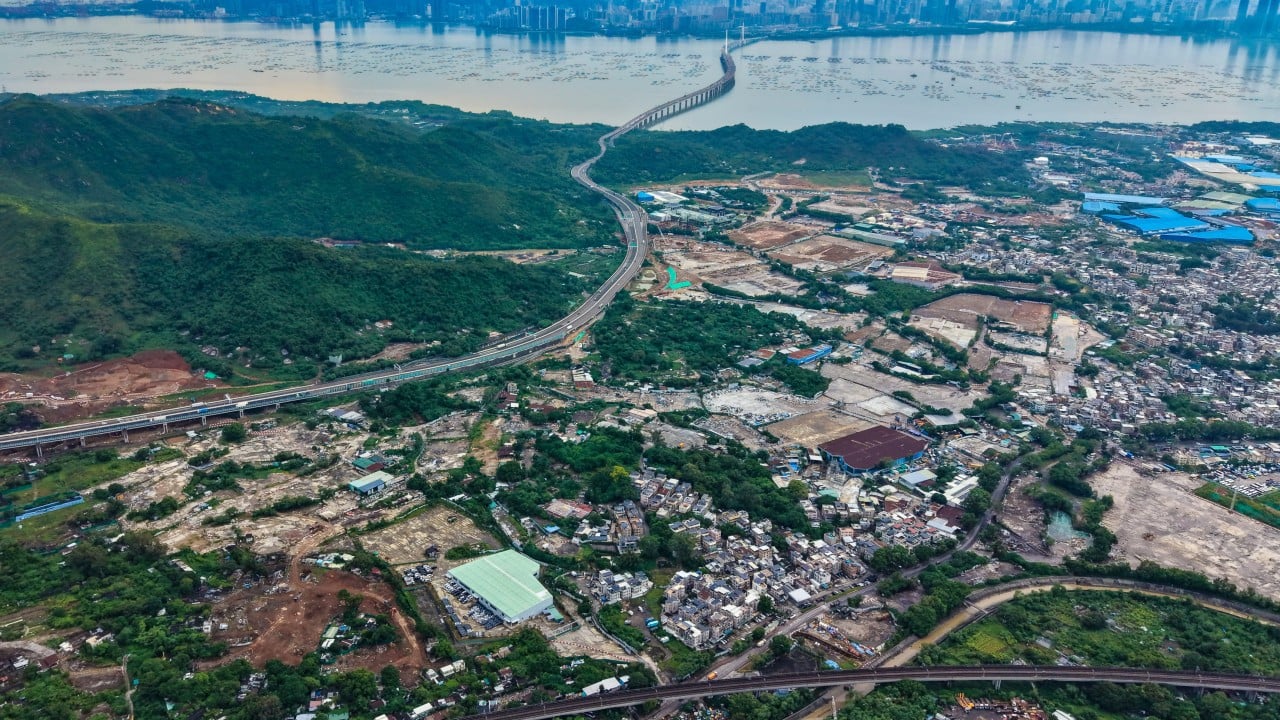
Everyone loves a clean narrative. City planners draw up blueprints for sparkling new innovation hubs, politicians talk about turning geographic zones into global knowledge capitals, and bureaucrats applaud themselves for engineering economic transformation without draining public treasuries. The current gospel circulating through official policy briefs claims that self-funded higher education campuses are the magic key to Hong Kong’s Northern Metropolis. The pitch sounds clean. Let private capital build the dorms, let tuition dollars pay the professors, and let the market decide which institutions survive.
It is a comforting fantasy. And it is entirely wrong. In similar developments, take a look at: Why the Stellantis Brampton Plant Battle Is a Massive Warning Sign for Auto Workers.
I have watched urban development projects turn into hollowed-out monuments to wishful thinking across multiple continents. When you tie the viability of a higher education institution to a self-funded model inside a newly manufactured district, you stop building centers of inquiry. You start building retail-adjacent credential mills designed to extract maximum cash from students while minimizing any operational risk for property developers.
Let us dismantle the polite fiction that self-funded campuses represent forward-thinking economic policy. Investopedia has analyzed this fascinating subject in great detail.
The Fatal Flaw of Tuition-Dependent Innovation
Higher education is not a retail store. It is a slow, expensive, high-risk capital sink. True breakthroughs require decades of patient endowment backing, government underwriting, and an absolute immunity to short-term cash flow pressures. When a campus must rely entirely on tuition revenue and commercial partnerships from day one, its institutional incentives warp instantly.
You cannot fund fundamental physics laboratories, deep-sea marine biology archives, or theoretical mathematics departments on undergraduate tuition fees alone. Those operations bleed money. They do not generate immediate return on investment.
So what happens when a self-funded campus opens its doors in a newly designated university town? Economics takes the steering wheel. The administration quietly drops high-cost, low-enrollment basic sciences. They replace them with high-margin, low-overhead professional master's programs: business administration certificates, digital marketing diplomas, and data analytics bootcamps that cost pennies to teach and thousands of dollars to attend.
The town gets crowded with students, but the city gets zero foundational research. You end up with a high-density apartment complex that happens to hand out certificates of attendance.
The Real Estate Shell Game
Let us look at what is actually happening beneath the bureaucratic varnish of these master plans.
Property developers and municipal planners share a symbiotic obsession. Land needs value. Raw land on the edge of a border zone or reclamation plot sits dead on the balance sheet. Slap the word "university" on the master plan, however, and the math changes. Suddenly, you have student housing demand, retail storefronts, transit connectivity subsidies, and commercial zoning upgrades.
Self-funded campuses are frequently trotted out as private sector initiatives because governments want to avoid the political cost of funding multi-billion-dollar academic infrastructure. But look closely at the land allocation mechanics. The land is often secured through preferential leases or discounted state-backed development agreements. The private institutions come in not because they have discovered an undiscovered pedagogical model, but because real estate syndicates need an institutional anchor tenant to unlock commercial density approvals.
Imagine a scenario where a private consortium builds a university campus. To service the debt on the construction, tuition rates must climb every single year. To keep enrollment high enough to pay those rising bills, admissions standards soften. Grade inflation sets in because a failing student is a dropout, and a dropout defaults on the financial ecosystem supporting the campus bond structure.
You are not building a seat of learning. You are building a financial asset-backed security wrapped in ivy.
The Myth of Academic Agility
The primary defense offered by proponents of self-funded models is agility. Bureaucratic state-funded universities, the argument goes, are bloated, slow-moving dinosaurs weighed down by tenure systems and civil service rules. Private, self-funded institutions can pivot to market demands instantly, adapting their curricula to whatever skills industry needs right now.
This sounds pragmatic until you realize what "adapting to market demands" actually means in practice.
Industry does not want long-term critical thinkers who spend four years deconstructing historical power structures or questioning foundational technological assumptions. Industry wants plug-and-play junior employees who can write basic code or fill out compliance spreadsheets by Monday morning.
When you turn a university into a service bureau for current market trends, you destroy its primary societal value: its detachment from immediate commercial utility. The most valuable discoveries in human history came from researchers pursuing weird, economically unjustifiable anomalies for decades without a corporate sponsor breathing down their necks.
If a campus must balance its ledger every semester based on current corporate hiring trends, it stops pushing the frontier of human knowledge. It becomes a corporate training department subsidized by student loans.
Dismantling the Competitor's Claims
Let us address the specific talking points pushed by mainstream analysts advocating for these developments.
First, they argue that self-funded models protect taxpayers from fiscal exposure. This is true in the narrowest accounting sense. The government does not write a direct check for the faculty salaries. But it shifts the financial risk onto the most vulnerable party in the entire equation: the student. When a self-funded campus faces a downturn in international enrollment or economic shocks, it does not absorb the loss. It raises fees, fires adjunct professors, cuts student support services, or quietly closes its doors mid-program, leaving hundreds of students stranded with unaccredited credits. The public subsidizes the infrastructure through land use and zoning privileges anyway; the public just loses any direct control over the quality or mission of the institution.
Second, they claim that bringing in international private branch campuses elevates the local ecosystem through prestige transfer. This is a brand manager's delusion. Elite academic prestige is non-transferable. You cannot franchise a centuries-old institutional culture by slapping a famous name on a glass tower in a newly minted suburban tech zone. The best faculty do not move across continents to teach at offshore franchise campuses unless they are paid exorbitant danger money or cannot find employment anywhere else. The brand gets diluted, the local talent gets second-rate instruction, and the parent institution treats the overseas outpost as a cash cow to subsidize its home campus operations.
The Uncomfortable Truth About Global Talent Hubs
Hong Kong does not need more mid-tier business certificates or overcrowded vocational degree mills. Its historical edge as a global metropolis was built on deep institutional depth, legal predictability, and a unique bridge between distinct economic systems.
If you want to build a real university town that matters on a global scale, you have to spend actual public capital on foundational science, massive multi-decade research grants, and unconstrained intellectual freedom. You have to accept that seventy percent of what you fund will fail to yield an immediate commercial product.
You cannot shortcut this through public-private real estate engineering.
Private capital belongs in commercial parks, logistics hubs, and residential developments. It does not belong at the core of higher education. When you treat a university as a commercial enterprise that needs to balance its own checkbook from day one, you ensure that it produces compliance, not creativity.
Stop pretending that financial engineering equals educational excellence. If you build a university town out of commercial self-interest, you will end up with a ghost town of empty lecture halls and expensive student apartments, wondering why nobody is inventing anything new.
The math does not care about your marketing brochures.
Build the endowment. Fund the science. Or accept that you are just running a real estate play and stop calling it a knowledge economy.