The narrative surrounding Hong Kong’s Golden Week is lazy. It’s a collection of half-baked observations from people who miss a version of the city that functioned as a giant, duty-free vending machine.
They point at the "uneven spending" like it’s a failure. They mourn the death of the luxury queue outside Tsim Sha Tsui. They panic because visitor numbers are up but the average transaction value is down. They are looking at the scoreboard of a game that ended in 2019.
Hong Kong isn't suffering from a spending problem. It’s undergoing a radical, necessary identity shift that most analysts are too comfortable to acknowledge. The "Golden Week" of yesterday—where busloads of mainland tourists bought bags of infant formula and gold bars before disappearing—was a bubble. That bubble didn't pop; it dissolved.
The Luxury Mirage
The competitor narrative obsesses over the retail slump. They tell you that because the big spenders aren't clearing out the shelves at Harbour City, the city is losing its edge.
This is fundamentally wrong.
The mainland Chinese consumer has evolved. If they want high-end luxury, they buy it in Shanghai or via cross-border e-commerce where the price gap has narrowed to almost zero. If they want a tax-free spree, they head to Hainan. The idea that Hong Kong can survive solely as a regional shopping mall is a fantasy held by landlords who haven't updated their business models in fifteen years.
I’ve watched retail groups dump millions into "omnichannel" strategies that are just fancy ways of saying they have no idea why people should walk through their doors anymore. The "uneven spending" isn't a glitch. It’s the market signaling that the old Hong Kong value proposition—buying things you can get elsewhere—is dead.
The Rise of the Experience Arbitrage
The "Citywalk" trend isn't a sign of "poor" tourists. It’s a sign of sophisticated ones.
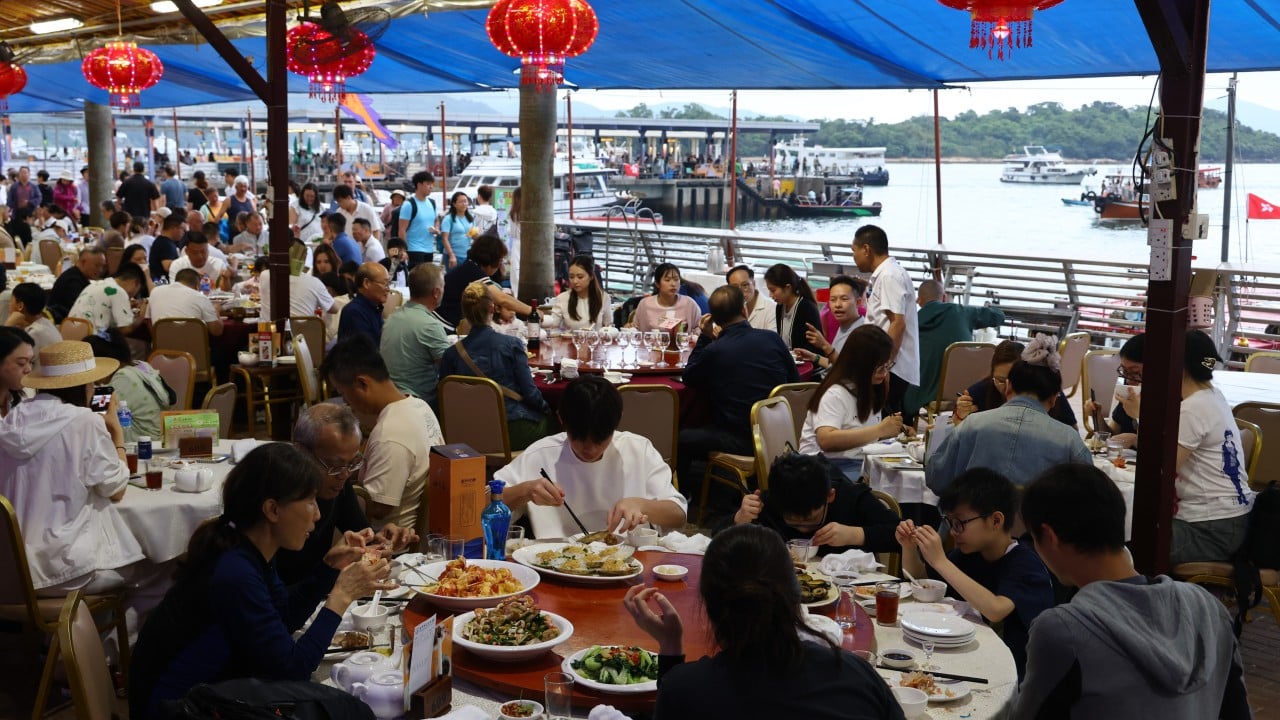
Mainland visitors are now trading luxury goods for cultural social capital. They are hunting for the "vibe" of Old Hong Kong, the aesthetics of Wong Kar-wai films, and the gritty, neon-lit authenticity that makes this city unique. They are spending their money in Sham Shui Po cafes and Kennedy Town bars rather than at high-end watch counters.
The "lazy consensus" views a tourist taking a photo of a street sign instead of buying a $50,000 watch as a net loss. This ignores the lifetime value of a visitor who actually likes the city. A shopper is a mercenary; they go where the price is lowest. A traveler is an investor; they return because of how a place makes them feel.
The Math of the New Economy
Let’s look at the friction.
If a visitor spends $10,000 on a handbag, 90% of that value leaves Hong Kong immediately to the brand’s headquarters in Paris or Milan. The local capture is tiny.
If that same visitor spends $2,000 across five local eateries, three independent boutiques, and a craft cocktail bar, nearly 100% of that value stays in the local ecosystem. The "spending is down" headline ignores the velocity of money. A higher volume of lower-value transactions in the local economy is healthier than a handful of massive transactions that benefit offshore conglomerates.
Stop Trying to Fix the Old Model
Everyone asks: "How do we get them to spend like they used to?"
This is the wrong question. It’s the question of a dying industry. The real question is: "How do we build a city that is worth more than its duty-free status?"
The current strategy of "more events, more fireworks, more drones" is a desperate attempt to buy attention. It’s the equivalent of a failing nightclub offering free drinks to get people through the door. It doesn't work long-term. You don't need drones to sell Hong Kong; you need to get out of the way of the city’s natural grit.
- Deregulate the Street Level: Stop sanitizing the city. The reason people go to Tokyo or Seoul isn't because of a government-funded drone show; it's the density of interesting, unregulated, authentic experiences.
- Acknowledge the Currency Trap: The HKD-USD peg makes the city expensive. You cannot out-price Shenzhen. You have to out-cool it.
- Kill the "Shopping Paradise" Moniker: It’s a millstone. Rebrand as the "Culture Lab" of Asia.
The Hard Truth About Service
The elephant in the room that no one wants to mention in a polite business article is the service gap.
For decades, Hong Kong’s service industry relied on a "take it or leave it" attitude because the demand was infinite. That arrogance is now being punished. When mainland visitors complain about the service in Hong Kong, they aren't being "sensitive." They are comparing the experience to the frictionless, hyper-attentive service standards of cities like Hangzhou or Chengdu.
If Hong Kong wants to capture the new "experience" dollar, it has to earn it. You can't charge New York prices and provide 1970s cafeteria-level hospitality. The "uneven spending" is a direct reflection of where the value is being delivered. People spend where they feel welcome. They browse where they feel tolerated.
The Scenario of the "Ghost Mall"
Imagine a scenario where the government continues to subsidize "mega-events" while the physical infrastructure of the city remains geared toward 2012-era shopping.
You end up with a hollowed-out center—giant malls filled with staff staring at their phones, surrounded by streets where the actual life of the city is happening in the cracks. This isn't a theory; it’s the current reality of Nathan Road.
The disconnect is widening. The "Golden Week" stats are a lagging indicator. They tell you what happened, but they don't tell you why. The "why" is that Hong Kong is no longer a necessity for the mainland consumer. It is now an option.
The Opportunity in the Pivot
The smartest players in the market aren't waiting for the big spenders to return. They are pivoting to the "New Mainland" demographic:
- The Gen Z Explorer: Values exclusivity and "Instagrammable" (or Xiaohongshu-friendly) authenticity over brands.
- The Intellectual Tourist: Interested in the city's unique position as the bridge between East and West.
- The Wellness Traveler: Seeking the hiking trails and islands that most locals take for granted but are a revelation to urban mainlanders.
This transition is painful. It requires landlords to lower rents to allow interesting businesses to survive. It requires the government to stop measuring success by "total arrivals" and start measuring it by "resident satisfaction and cultural vibrancy."
The End of the Proxy Era
For thirty years, Hong Kong was a proxy for the world. It was the only way for the mainland to access global goods and for the world to access the mainland. That era is over.
The city is now just a city. And that is its greatest opportunity.
When you stop trying to be a giant transit lounge, you can start being a destination. The "uneven spending" isn't a crisis—it's the sound of a market correcting itself. It's the sound of the fluff being burned away to reveal what actually matters.
The "Golden Week" of the future won't be defined by the weight of shopping bags. It will be defined by the depth of the experience. Those who are still counting receipts in Tsim Sha Tsui are counting the days until their own irrelevance.
Stop mourning the death of the mall. Start investing in the life of the street.
The city isn't losing its value; it’s finally deciding what it’s actually worth.