Every six months, the script plays out with clockwork predictability. London publishes its six-monthly report on Hong Kong. Beijing fires back, calling the remarks irresponsible, interfering, or detached from reality. Headlines flash. Commentators declare a fresh diplomatic crisis.
Most readers are watching the wrong play.
The lazy consensus treats these exchanges as a high-stakes tug-of-war over Hong Kong’s soul, where every diplomatic rebuke chips away at an old agreement or signals a sudden collapse. That framing sells clicks. It also misreads how geopolitical leverage actually operates.
Diplomatic outrage in these semi-annual cycles is rarely a turning point. It is ritualized maintenance. Both capitals already know the other’s red lines, legal arguments, and domestic audiences. Treating a predictable clash over a six-monthly report as a shock to the system confuses noise with movement.
The Lazy Consensus Misses the Mechanics of Leverage
Standard coverage usually reduces the story to a simple binary: London defends treaty obligations and civil liberties; Beijing asserts sovereignty and national security. Once that binary is locked in, every paragraph becomes a scorecard of who sounded tougher.
That scorecard misses the structural reality underneath. The 1984 Sino-British Joint Declaration established the framework for the 1997 handover and the "one country, two systems" arrangement, with its basic policies articulated in China’s Basic Law. Over the years, successive UK governments have issued six-monthly reports to Parliament reviewing developments in Hong Kong, while Beijing has consistently maintained that Hong Kong affairs are internal matters under Chinese sovereignty and that external commentary constitutes interference.
When a competitor article treats Beijing’s rebuke as a dramatic escalation by itself, it skips the harder analytical work. A diplomatic statement does not alter court rulings, capital flows, or administrative authority on its own. Words are cheap; institutional design and economic gravity are not.
People often ask whether these reports still change anything on the ground or whether Beijing’s anger signals an imminent break in ties. Both questions start from a flawed premise. They assume the semi-annual report is an active lever rather than a recurring audit with built-in friction. London’s legal and diplomatic leverage over Hong Kong’s day-to-day governance has long been bounded by sovereignty realities, while Beijing’s sharp rhetoric is standard signaling aimed at deterring foreign political pressure and reinforcing authority at home.
Imagine a scenario where London stops publishing the report altogether. Would Hong Kong’s legal environment, financial clearing role, or security posture suddenly reverse course? No. Conversely, imagine a scenario where Beijing mutes its response to a sharp critique. Would that mean Beijing suddenly accepts foreign oversight of its internal governance? Again, no.
Recognizing that symmetry strips away the melodrama. The clash is structural, not accidental.
How Geopolitical Theater Works Behind Closed Doors
I have spent years watching boards, policy teams, and commercial operators blow millions of dollars misreading political theater as operational reality. Time after time, decision-makers react to fiery press releases as if a trapdoor just opened beneath their business model, only to discover the real shifts happened months earlier in quiet regulatory adjustments or balance-sheet moves.
Precision matters here. Sovereignty refers to supreme authority within a territory; jurisdiction refers to the practical legal power to adjudicate and enforce rules; geopolitical signaling refers to public statements designed to shape perceptions, deter rivals, or reassure allies without necessarily changing physical or legal facts immediately. Confusing those three terms leads to terrible analysis.
In policy and international relations circles, scholars and practitioners such as Joseph Nye—known for dissecting hard, soft, and smart power—and Graham Allison—famous for examining how strategic rivalry and bureaucratic incentives shape state behavior—have long emphasized that public posturing rarely captures the full calculus of statecraft. States speak in absolutes at podiums while negotiating constraints in practice.
Still, I have to admit the downside of taking a hard-nosed, anti-hysteria view on diplomatic clashes. Cynicism can go too far. If you dismiss every political row as mere theater, you risk underestimating slow-moving institutional changes that compound over time. Rhetoric is not always empty; sometimes it accompanies real shifts in legal enforcement, cross-border integration, or talent and capital movement. The trick is separating the volume of the speech from the weight of the policy behind it.
Stop Asking Who Won the Statement and Watch What Actually Shifts
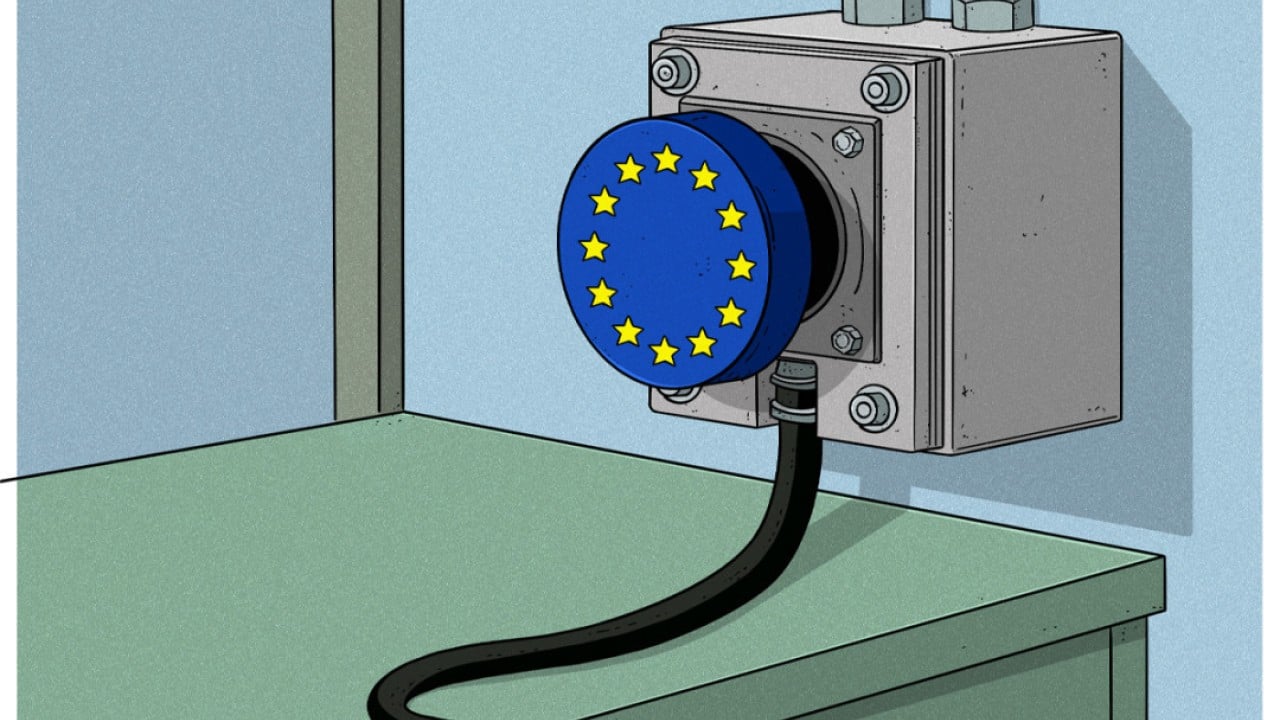
If you care about Hong Kong, international law, or regional risk, stop treating six-monthly reports like breaking news bulletins. Treat them like smoke alarms that ring on a timer: annoying, loud, and occasionally useful if there is actual fire, but useless as a substitute for checking the wiring.
Instead of asking who "slammed" whom harder this cycle, ask sharper questions:
- What changed in law or enforcement, not just rhetoric? Look at statutory revisions, court practices, and administrative rules rather than adjectives in a press release.
- Where is capital, trade, and talent actually moving? Track cross-border flows, listing activity, compliance burdens, and corporate headquarters decisions over multi-quarter windows.
- Who is the real audience for each statement? A foreign ministry rebuke often speaks to domestic legitimacy, allied solidarity, or regional deterrence just as much as to the counterpart capital.
| Analytical Lens | What Conventional Coverage Focuses On | What Actually Moves the Needle |
|---|---|---|
| Diplomatic Exchange | Harsh adjectives, rebukes, and tit-for-tat blame | Whether any concrete policy, sanction, or legal step follows |
| Treaty & Legal Framing | Repeating familiar positions on obligations and sovereignty | Actual judicial and administrative practice on the ground |
| Market & Risk Reaction | Knee-jerk panic over headline clashes | Multi-quarter shifts in capital, compliance, and operational rules |
| Strategic Intent | Assuming every harsh word means a sudden rupture | Quiet deterrence, domestic messaging, and long-term positioning |
For executives, analysts, and serious observers, the actionable move is disciplined skepticism. Build a standing tracker of concrete policy shifts and commercial indicators, and put diplomatic blowups on a 72-hour cool-down before reacting. Let everyone else argue over the volume of the shouting while you watch the ground underneath their feet.