Try driving a private car toward Shenzhen at 1 a.m. during a major Hong Kong holiday weekend. You won't just hit traffic. You'll sit in a police-managed holding pen for over an hour while hundreds of bus passengers breeze straight past you through immigration.
That isn't a glitch in the system. It's the entire point of how the Hong Kong SAR Government manages late-night surges at the newly redeveloped Huanggang Port. Ahead of the 2026 Halloween weekend, Chief Secretary for Administration Chan Kwok-ki chaired an interdepartmental working group to lock down a strict traffic hierarchy for the 24-hour boundary control point. High-capacity public transport gets the VIP lane, and private motorists wait at the back of the line.
If you're planning a late-night crossing between Hong Kong and Shenzhen during Halloween or any major festival rush, understanding the exact mechanics behind this policy will save you hours of frustration.
The Structural Bottleneck Behind Late-Night Border Congestion
Most travelers assume border delays happen because immigration officers aren't stamping passports fast enough. That's rarely the case at Huanggang.
The redeveloped Huanggang Port operates out of a nine-story vertical complex equipped with 184 elevators and escalators, designed specifically to process massive foot traffic efficiently. Chief Secretary Chan Kwok-ki explicitly noted that late-night congestion isn't a terminal design flaw. The real choke point sits outside the building on the connecting road network, particularly around San Tin Highway and San Sham Road.
Two structural realities collide after midnight:
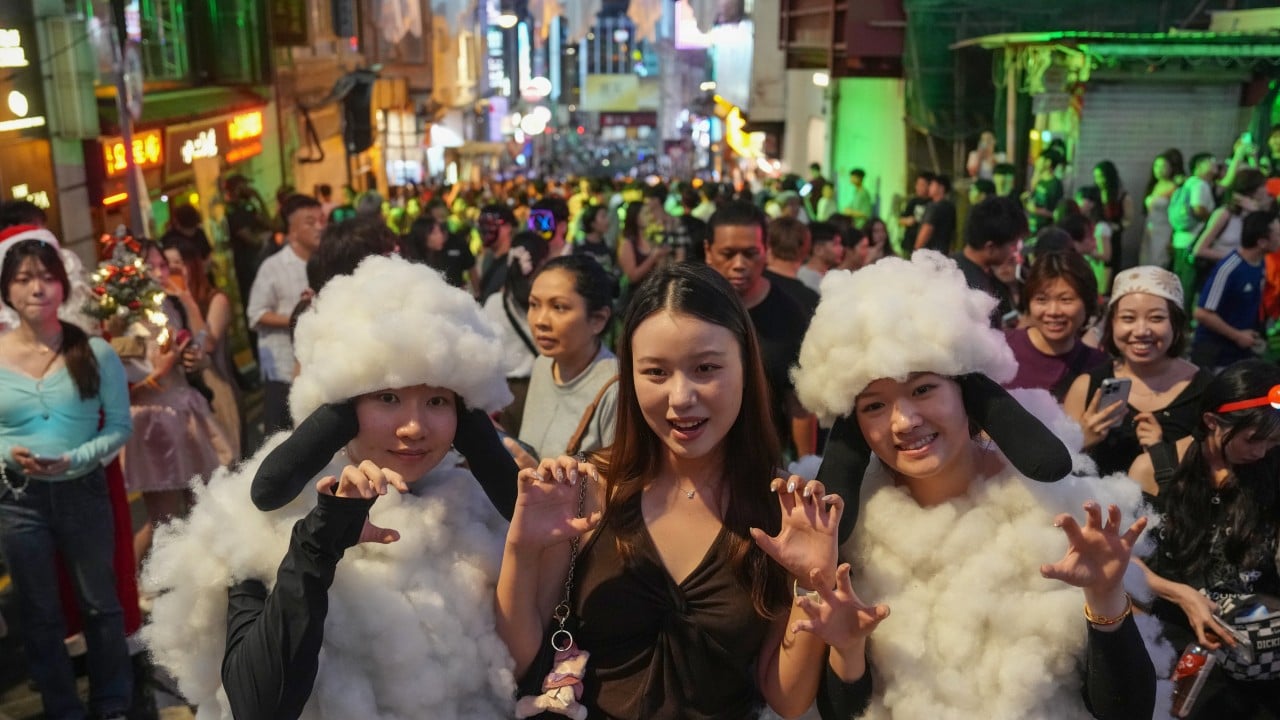
- Huanggang's 24-hour monopoly: Under normal circumstances, Huanggang is the only land crossing between Hong Kong and Shenzhen offering round-the-clock clearance for both passengers and passenger vehicles. When nightlife districts like Lan Kwai Fong and large-scale evening concerts empty out around midnight, every late-night traveler funnels toward this single checkpoint.
- The Closed Road Permit spillover: Cross-boundary private cars holding Closed Road Permits for daytime crossings—specifically Shenzhen Bay, Man Kam To, Sha Tau Kok, and Heung Yuen Wai—are legally permitted to use Huanggang Port between midnight and 6:30 a.m. daily.
When regular weekend partygoers mix with hundreds of cross-boundary private cars converging on the same narrow approach roads, road capacity maxes out instantly. One double-decker franchised bus or cross-boundary coach clears 50 to 80 people in the road space of roughly two private sedans. Giving buses priority isn't about punishing drivers. It's basic crowd math.
How Hong Kong Gives Public Transport Priority at Huanggang
To keep San Tin Highway from locking up completely between 11 p.m. and 2 a.m. across Friday, Saturday, and Sunday nights, the Transport Department and Hong Kong Police Force execute a coordinated series of physical road interventions.
Dedicated Bus Lanes and Direct Interchange Access
Since the new Huanggang Port opened, authorities have relied on a dedicated public transport lane leading directly to San Sham Road. For the Halloween weekend rush, the Transport Department extended this lane and upgraded its road markings to keep light vehicles and taxis out.
On top of that, four franchised bus routes passing through the San Tin Public Transport Interchange are rerouted during peak late-night windows to enter the facility directly from Castle Peak Road. Bypassing local roundabouts shaves critical minutes off turnaround times, allowing operators to loop vehicles back into the city faster.
Dynamic Frequency Surges
Road priority only works if buses actually show up. Working with transit operators, the Transport Department prepares aggressive frequency boosts tailored to real-time queue lengths:
- Franchised buses can ramp up to departures every two to three minutes during peak waves.
- Cross-boundary coaches and green minibuses can tighten headways to one vehicle every five minutes.
Mandatory Holding Areas for Private Cars
While buses glide down dedicated corridors, private motorists face strict containment. When congestion builds near the port, police activate traffic controls and divert private vehicles into designated holding areas near San Tin Highway.
Officials warned ahead of the Halloween rush that private car passengers crossing during peak hours should expect waits of an hour or more inside these holding zones and clearance channels. Attempting to bypass the queue by sneaking into the bus lane or stopping illegally on approach roads triggers immediate police enforcement.
Inside the Port Operations and Command Setup
Managing the roads outside the terminal means nothing if bottlenecks form inside the building. To prevent indoor crowd buildup, multiple government departments synchronize their shifts before the 11 p.m. wave hits.
A Joint Command Post at Huanggang activates early Friday afternoon and runs continuously through the weekend, maintaining direct real-time communication with Shenzhen port authorities across the boundary. Simultaneously, the Security Bureau activates its Emergency Monitoring and Support Centre, while the Transport Department's Emergency Transport Co-ordination Centre operates around the clock.
Inside the terminal, the Immigration Department minimizes frontline staff leave so every available inspection point opens early:
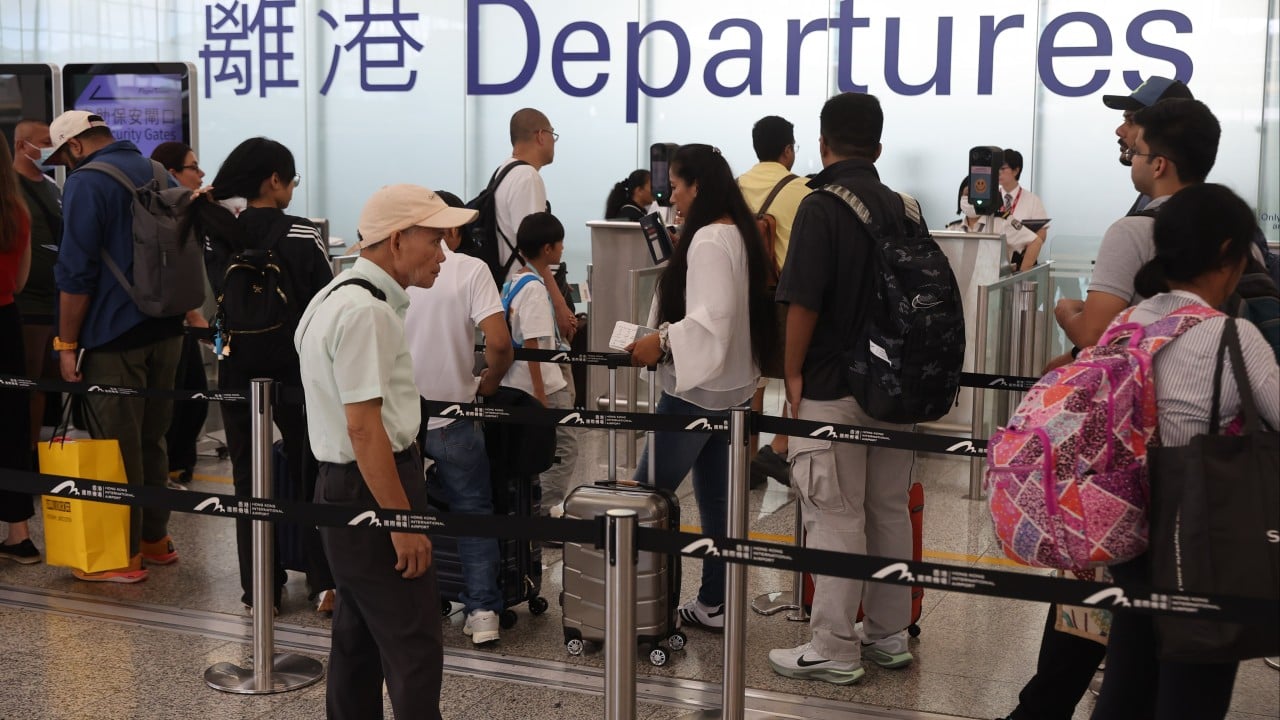
- L5 Passenger Departure Hall: All automated e-Channels and manual counters open ahead of peak arrivals to keep foot passengers moving continuously.
- L1 Vehicle Departure Level: Maximum vehicle clearance kiosks operate simultaneously.
- L1M On-Board Passenger Immigration Hall: Additional police officers and Government Property Agency service ambassadors deploy directly to L1 and L1M to guide coach passengers through clearance and back onto their waiting vehicles without confusion.
That L1M coordination is crucial. Unlike railway crossings where you walk across on foot, cross-boundary coach passengers at Huanggang disembark with their luggage, clear immigration at L1M, and re-board their specific coach on the other side. If passengers get lost or stall in the hall, coaches sit idle at the bays and back up the entire San Sham Road approach.
The Shenzhen Bay Escape Valve Over Halloween
Recognizing that Huanggang alone shouldn't absorb the entire Halloween nightlife exodus, Hong Kong and Shenzhen authorities reached an agreement to keep Shenzhen Bay Port open two hours later than usual.
Normally, clearance at Shenzhen Bay ends at midnight. Over the Halloween weekend—specifically Friday, October 30, and Saturday, October 31—passenger and passenger-vehicle clearance at Shenzhen Bay extended until 2 a.m. the following morning, supported by additional cross-boundary coaches and two overnight franchised bus routes.
There is a catch for private drivers, though. Private cars holding Closed Road Permits specifically for Shenzhen Bay can only use that crossing during the extended midnight-to-2 a.m. window. They cannot use Huanggang during those two hours, though they regain access to Huanggang from 2 a.m. to 6:30 a.m. as normal. If you hold a Shenzhen Bay permit and leave Hong Kong right after midnight, head straight to Shenzhen Bay instead of defaulting to Huanggang.
Why You Should Never Take an Unlicensed Hire Car
Whenever border queues stretch past an hour, social media groups and nightlife districts fill up with offers for unlicensed cross-boundary point-to-point cars—locally known as "white license cars".
Don't fall for it. Authorities pair every holiday border traffic plan with targeted crackdowns against illegal hire-car operators. Aside from the risk of your driver getting pulled over mid-trip and leaving you stranded on the highway with your luggage, there is a massive financial trap most riders miss.
Under Hong Kong law, carrying passengers for reward without a valid Hire Car Permit invalidates the vehicle's third-party liability insurance. If your driver causes a crash on San Tin Highway at 1:30 a.m., you have zero insurance protection for medical bills or personal injury. Saving twenty minutes isn't worth taking on unlimited personal liability.
Practical Moves for a Smooth Late-Night Crossing
If you're heading north into Shenzhen during Halloween weekend or any peak holiday period in Hong Kong, adjust your travel habits around how the port actually operates:
- Leave before 10:30 p.m. or wait until after 2:30 a.m. The 11 p.m. to 2 a.m. window is when post-event crowds and midnight permit holders collide. Shifting your departure by even 45 minutes outside that bracket cuts your transit time dramatically.
- Ditch the private car for public transit. Park your car at a suburban MTR station or leave it at home, and take a franchised bus into San Tin Public Transport Interchange or book a licensed cross-boundary coach. You'll bypass the San Tin Highway holding pens entirely via the dedicated San Sham Road bus corridor.
- Use Shenzhen Bay before 2 a.m. on Friday and Saturday nights. If you're coming from Hong Kong Island, Kowloon West, or Tuen Mun, the extended 2 a.m. clearance at Shenzhen Bay offers a much faster western corridor into Nanshan and Futian.
- Check live port feeds before heading to the highway. Open the Hong Kong Government's Easy Boundary one-stop immigration platform or the Transport Department's HKeMobility app before leaving downtown. Both tools provide real-time waiting status and traffic updates so you can pivot crossings before getting trapped in a highway queue.