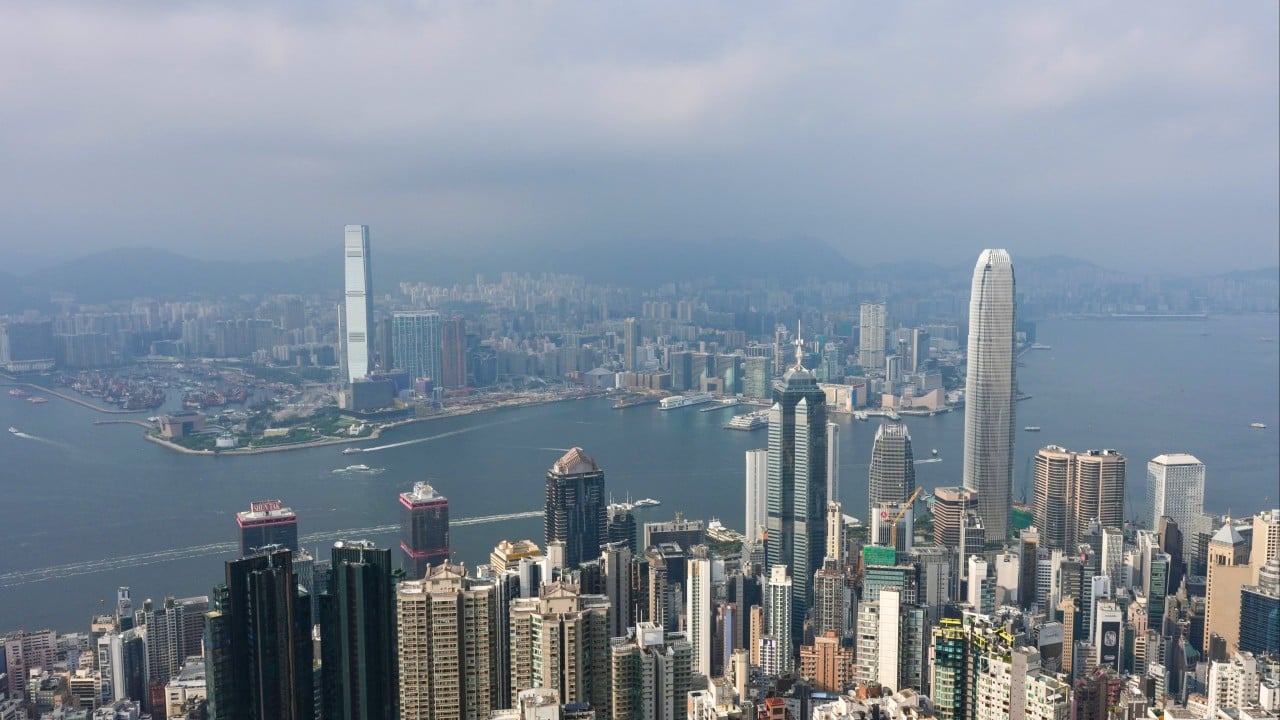
The tech world loves a grand pronouncement. The latest narrative making the rounds in financial hubs claims that Hong Kong can magically fuse the capital markets of New York with the tech genius of Silicon Valley. It is a intoxicating vision. It is also a fundamental misunderstanding of economic geography.
When policymakers tell you that a city can become "New York and Silicon Valley combined," they are selling a fantasy. They are pitching a hybrid model that ignores how actual innovation ecosystems operate. You cannot simply build a few incubators, fund some biotech startups, pump billions into Science Park, and expect a dual-engine superpower to emerge overnight. For a closer look into this area, we suggest: this related article.
Chasing the Silicon Valley ghost is a trap. If Hong Kong continues down this path of forced tech replication, it risks losing the exact structural advantages that made it a global financial pillar in the first place.
The Fatal Flaw of the "Both/And" Illusion
The premise that a single city can dominate both hyper-scale venture-backed tech and legacy global finance assumes these two industries share the same DNA. They do not. They are culturally, structurally, and economically antagonistic. For additional details on this topic, comprehensive analysis can be read at Financial Times.
Silicon Valley built its empire on a foundation of cheap land, academic research institutions like Stanford that were willing to commercialize defense-grade tech, and a legal framework that treats spectacular failure as a badge of honor. More importantly, California's strict ban on non-compete clauses allowed talent to walk out of one company and start a competitor the next morning.
Now look at New York. Manhattan did not become a tech capital by building semiconductor chips or launching consumer software giants. It succeeded by digitizing its existing strengths: fintech, media, and adtech. New York absorbs tech to serve capital, not the other way around.
Hong Kong trying to be both simultaneously ignores its core constraint: real estate economics.
In Silicon Valley, a startup can burn capital on R&D for seven years before showing a dime of profit because its physical footprint is negligible. In Hong Kong, the sheer cost of space forces an immediate premium on cash flow. When monthly rent for a modest office or living space rivals the annual seed stipend of an early-stage engineer, the math breaks. You cannot have a culture of messy, long-term experimentation when the overhead demands immediate monetization.
Stop Funding Copycat Apps and Focus on the Plumbing
I have spent years watching regional governments throw subsidies at local founders who promise to build "the Uber of Southeast Asia" or "the Robinhood of the East." It is a waste of capital. These copycat consumer platforms rely on massive, homogeneous domestic markets to scale. Hong Kong has a population of 7.5 million people. The local consumer market is a rounding error compared to the US mainland or mainland China.
Trying to build consumer internet giants here is fighting the wrong war. Instead, the focus must shift to where the city actually commands authority: institutional plumbing, cross-border settlement, and specialized logistics.
The Real High-Value Targets
- Tokenization of Real-World Assets (RWAs): Forget crypto-bro trading platforms. The real value lies in taking massive, illiquid assets—like commercial real estate portfolios or global shipping fleets—and breaking them into digital tokens for fractional ownership.
- Programmable Trade Finance: The Greater Bay Area handles a staggering volume of physical goods. The documentation for this trade is stuck in the twentieth century. Automating bills of lading, customs clearances, and multi-currency escrow through smart contracts is not flashy, but it controls the velocity of money.
- Arbitration and Legal Tech: The city’s common law system is its greatest asset. Building the software architecture that automates international commercial dispute resolution under this framework creates an un-copyable moat.
If you want to disrupt the status quo, you do not build another food delivery app. You build the invisible digital architecture that prevents global supply chains from freezing up.
The Talent Lie: High Salaries Do Not Equal Innovation
A common argument from the optimistic elite is that because Hong Kong can attract wealthy investment bankers, it can easily attract world-class software architects and machine learning engineers. This is a massive false equivalence.
Top-tier tech talent does not move to a city for tax incentives alone. They move for density of peers, open internet infrastructure, and cultural friction.
Why the Current Talent Strategy Fails
- The Banker Premium: The local economy is geared toward rewarding financial compliance, risk management, and structured deal-making. A brilliant 24-year-old coder entering this environment will quickly realize that modifying a legacy trading algorithm for an investment bank pays three times more than building a breakthrough decentralized protocol. The financial sector cannibalizes the tech sector’s raw material.
- Risk Aversion is Inoculated Early: Local education systems and societal expectations prioritize stability and prestige. Silicon Valley requires a psychological willingness to go broke at 26 to build something disruptive. When societal pressure demands property ownership and status symbols by 30, the talent pool naturally tilts toward safe, corporate positions.
- The Capital Misalignment: Family offices and traditional real estate tycoons dominate the local wealth landscape. They understand bricks, mortar, and yield. They do not understand buying 10% of a company whose sole asset is a piece of unpatented code and a brilliant team. When this capital does invest in tech, it demands path-to-profitability metrics too early, suffocating the company before it can find product-market fit.
Dismantling the "People Also Ask" Consensus
Look at any forum discussing the region's economic future, and you will see the same flawed assumptions repeated ad nauseam. Let's dismantle them one by one.
"Can Hong Kong beat Singapore as a tech hub?"
This is the wrong question. It assumes a winner-take-all battle for the exact same prize. Singapore has successfully positioned itself as the enterprise software and regional headquarters hub for Southeast Asia. It won that match by offering corporate predictability and massive tax incentives to multinational tech companies.
Hong Kong should not try to out-Singapore Singapore. Instead of trying to be the clean corporate headquarters of ASEAN, it should be the high-velocity financial interface between mainland China’s manufacturing colossus and the rest of the global capital markets. One is an administrative hub; the other is a transactional engine.
"How can the city increase its number of tech unicorns?"
By stopping the obsession with the word "unicorn." The obsession with billion-dollar valuations is a relic of Zero Interest Rate Policy (ZIRP) thinking. It led to bloated companies that burned billions without ever creating sustainable value.
The city does not need ten highly subsidized, fragile unicorns that collapse the moment interest rates tick upward. It needs five hundred highly profitable, lean, mid-sized B2B software companies that dominate specific niches in global commerce. Valuations are vanity metrics. Cash flow and structural indispensability are reality.
The Hard Truth About the Greater Bay Area Integration
The grand plan relies heavily on integration with Shenzhen and Dongguan to create a complete supply chain—the design in Hong Kong, the manufacturing in Shenzhen, the assembly in Dongguan.
On paper, this looks flawless. In practice, it creates a massive identity crisis.
Shenzhen is already the hardware capital of the world. It does not need Hong Kong to be its tech lab; it already has Tencent, DJI, and BYD. If Hong Kong enters that relationship pretending to be the technological innovator, it will be relegated to a junior partner.
The value proposition cannot be "we do tech too." It must be "we provide the rule of law, capital convertibility, and international trust that the mainland manufacturing apparatus cannot generate on its own."
The Real Division of Labor
Imagine a scenario where a foreign enterprise wants to deploy an advanced IoT network across global logistics hubs using hardware manufactured in Shenzhen. They will not sign a contract under mainland legal jurisdictions due to data compliance and IP fears. They will not fund it via restricted currency.
They will structure the deal through a Hong Kong holding company, under common law, using fully convertible currency, backed by insurance policies litigated in local courts. That is the integration that works. The moment the city tries to compete on the actual engineering or coding, it loses to the sheer scale and speed of Shenzhen's talent pool.
The Strategic Pivot: A Playbook for Irrelevance or Dominance
To avoid becoming a second-tier financial hub with a mediocre tech scene, the entire economic strategy requires an aggressive pivot.
First, kill the subsidies for generic tech accelerators. Stop giving grants to companies building things that already exist in Silicon Valley or Beijing. If a startup's pitch deck contains the words "social media for X" or "AI-powered lifestyle assistant," deny the funding immediately.
Second, aggressively deregulate the intersection of capital and digital assets. Ensure the regulatory framework for stablecoins, tokenized bonds, and digital custody is faster, clearer, and more ironclad than anywhere else on earth. The goal should be that if a company anywhere in the world wants to issue a digital debt instrument, the default jurisdiction is Hong Kong because the legal clarity is unmatched.
Third, change the immigration metrics. Instead of focusing solely on university degrees or corporate titles, offer immediate residency to anyone who has committed code to major open-source financial protocols or holds verified patents in cryptography, zero-knowledge proofs, or quantum-resistant security.
Stop trying to build a new Silicon Valley out of concrete and press releases. Accept the reality of what this city is: a high-density, high-velocity financial machine. Strip away the tech-bro illusions, stop apologizing for being a financial city, and engineer the most sophisticated, legally secure digital capital gateway the world has ever seen.
The alternative is trying to be everything to everyone, and ending up meaning nothing to anyone.