Trade show booths do not build global tech hubs. Handshakes at mainland expos do not restore lost hub dominance.
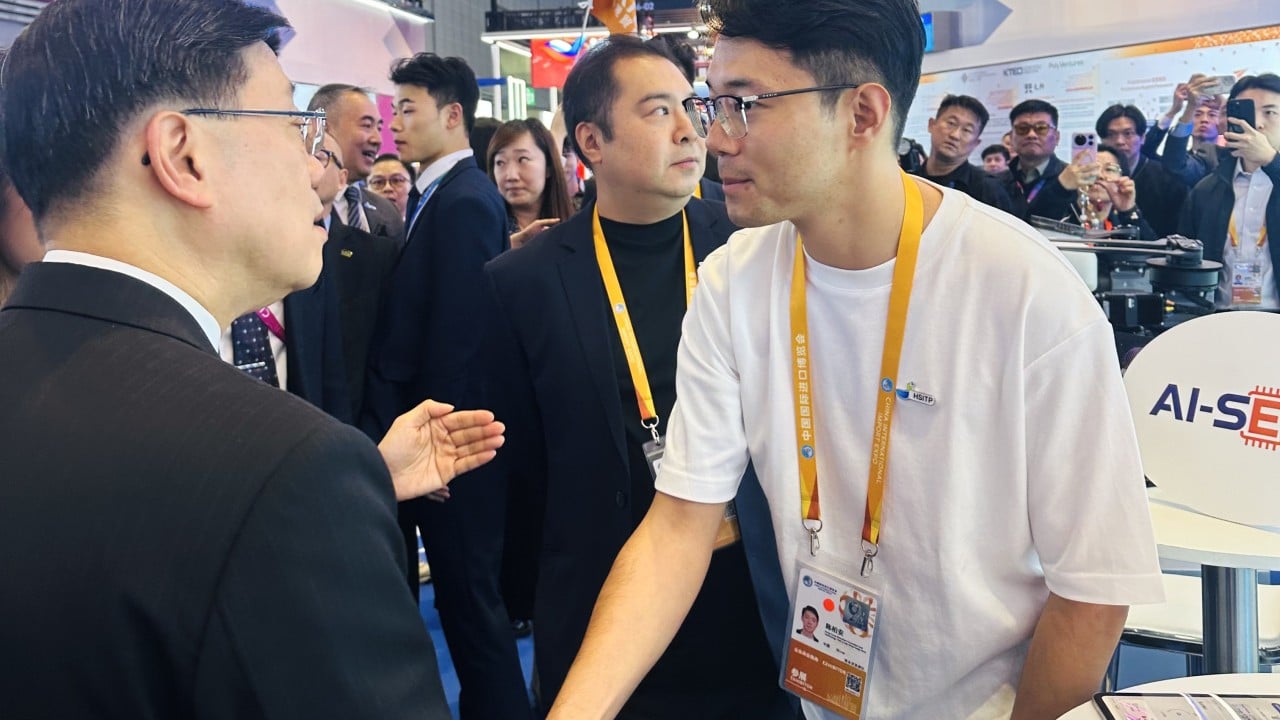
Every time a Hong Kong delegation sets up a pavilion at a major mainland Chinese exhibition—whether it is the Zhuhai Airshow, the China International Import Expo in Shanghai, or the World Artificial Intelligence Conference—the local press releases follow an identical, predictable script. They celebrate "further in-roads." They boast about "deepening integration." They treat Memorandum of Understanding (MOU) signings as proof that Hong Kong is capturing the mainland market.
They have the direction of the current completely backward.
When a smaller, service-heavy economy brings its startups and aviation regulators to an industrial giant's trade show, it is not conquering territory. It is auditioning for relevance. The prevailing consensus treats Hong Kong’s presence at mainland AI and aerospace expos as an offensive expansion strategy. In reality, it is a defensive survival maneuver—an attempt to stay tethered to an industrial machine that has already outgrown its traditional middleman.
The Expo Illusion and the MOU Trap
I have sat in enough cross-border boardrooms over the past fifteen years to recognize the exact lifecycle of a trade show announcement. A delegation flies up from Chek Lap Kok. Executives in sharp suits pose in front of a banner featuring the Hong Kong skyline alongside sleek renderings of autonomous drones or large language models. A dozen non-binding MOUs are signed with state-owned enterprises or municipal tech parks. Everyone flies home, and six months later, ninety percent of those agreements are gathering dust in a compliance folder.
Mainland Chinese expos are theater for domestic industrial policy. When cities like Shenzhen, Guangzhou, or Shanghai host massive AI and aviation showcases, they are displaying sovereign supply chains that they built, funded, and scaled internally.
Hong Kong’s pitch at these events usually rests on the "super-connector" thesis—the idea that mainland tech companies need Hong Kong’s common law system, international capital markets, and global aviation network to reach the rest of the world. That pitch worked brilliantly in 2005. It worked reasonably well in 2015. Today, it collides with three hard realities:
- Capital has shifted. Western institutional capital, once routed effortlessly through Hong Kong into mainland tech, has retreated due to geopolitical friction and outbound investment restrictions. Meanwhile, Middle Eastern sovereign wealth funds and Southeast Asian family offices are increasingly flying directly to Beijing, Shenzhen, and Hangzhou to cut deals without paying a Hong Kong intermediation fee.
- Tech stacks have bifurcated. A mainland AI company training foundation models on domestic compute clusters faces severe friction when trying to deploy those models in Western markets. Hong Kong cannot magically launder geopolitical compliance risk.
- Aviation traffic has bypassed the middle. Direct long-haul routes from mainland hubs like Guangzhou Baiyun, Beijing Daxing, and Shanghai Pudong now connect directly to Europe, the Middle East, and Latin America.
Presenting a booth at a mainland expo does not solve any of these structural headwinds. It merely advertises that Hong Kong is open for business to partners who already know where to find it.
Aviation's Three-Runway Mirage
To understand why the "in-roads in aviation" narrative misses the mark, you have to look at physical capacity and airspace reality rather than press releases.
Hong Kong International Airport (HKIA) is an engineering marvel, and its Three-Runway System represents a massive capital commitment. The Airport Authority Hong Kong regularly pitches itself at mainland aviation expos as the premier international gateway for the Greater Bay Area (GBA)—a cluster of nine Guangdong cities plus Hong Kong and Macau. They highlight seamless intermodal transport, sea-to-air cargo links in Dongguan, and world-class aircraft maintenance, repair, and overhaul (MRO) capabilities through firms like HAECO.
Here is the friction that rarely makes it into the promotional brochures: airspace congestion and hub cannibalization.
The Pearl River Delta has five major airports within a 100-kilometer radius: Hong Kong, Shenzhen Bao'an, Guangzhou Baiyun, Macau, and Zhuhai. They all share a tightly constrained, heavily restricted sky. Building a third runway in Hong Kong adds concrete on the ground, yet it does not automatically create new air corridors in the sky, where military airspace restrictions and overlapping flight paths create severe bottlenecks.
More importantly, look at the cargo and passenger dynamics. Shenzhen and Guangzhou are not sitting idly by waiting to feed traffic to Hong Kong. Guangzhou Baiyun is aggressively expanding toward a five-runway configuration designed to handle over 120 million passengers annually. Shenzhen Bao'an is rapidly adding international routes while dominating domestic air freight—driven by the fact that the actual factories making the electronics, drones, and e-commerce parcels are located in Shenzhen and Dongguan, not in Kowloon.
Consider a simple operational scenario. Suppose you are a logistics director in Dongguan shipping high-value lithium-battery electronics to Frankfurt. Ten years ago, trucking those goods across the border to HKIA was your only reliable option for wide-body cargo capacity and international customs clearance. Today, you can put that freight on a dedicated cargo carrier directly out of Shenzhen or Guangzhou, avoiding cross-border customs delays, higher labor costs, and Hong Kong’s steep airport handling fees.
Hong Kong’s aviation sector is not making "in-roads" into the mainland. It is fighting to defend its market share from turning into a regional feeder airport for a mainland manufacturing powerhouse.
The Low-Altitude Economy Reality Check
At recent mainland expos, Hong Kong officials have heavily promoted the "low-altitude economy"—commercial drone deliveries, urban air mobility (UAM), and electric vertical takeoff and landing (eVTOL) aircraft. They point to regulatory sandboxes and cross-border drone trials as evidence of Hong Kong’s leadership.
Let us define the terms precisely. A low-altitude economy refers to commercial, civil, and public-service flight operations conducted below 1,000 meters (and up to 3,000 meters in specific corridors).
If you look at who actually owns the intellectual property, the manufacturing scale, and the operational hours in this sector, Hong Kong is a spectator.
- DJI, headquartered in Shenzhen, controls roughly 70% of the global commercial drone market.
- EHang, based in Guangzhou, was the first company in the world to secure type certification from the Civil Aviation Administration of China (CAAC) for an autonomous passenger-carrying eVTOL (the EH216-S).
- XPeng AeroHT, also in Guangzhou, is building dedicated mass-production factories for modular flying cars.
- SF Express, operating out of Shenzhen, has already logged hundreds of thousands of commercial drone delivery flights across complex urban and rural terrain.
Hong Kong has zero mass manufacturing capacity for airframes, batteries, or flight-control avionics. Furthermore, Hong Kong’s dense urban topography—characterized by extreme high-rise canyons, severe wind shear, and some of the strictest civil aviation regulations in Asia—makes it one of the hardest places on Earth to scale commercial drone logistics.
When Hong Kong showcases low-altitude initiatives at a mainland expo, it is essentially asking mainland hardware giants to use Hong Kong as a testing ground for international safety standards. That is a valid niche role, akin to what Singapore does with autonomous vehicle trials. Calling it "making in-roads," however, confuses being a regulatory sandbox with owning the industry.
The AI Compute and Talent Deficit
The second pillar of the expo narrative—that Hong Kong is making major strides in artificial intelligence—suffers from an even deeper structural misunderstanding of how modern AI actually works.
Hong Kong possesses genuinely world-class academic research. Institutions like the Hong Kong University of Science and Technology (HKUST), the University of Hong Kong (HKU), and the Chinese University of Hong Kong (CUHK) consistently publish top-tier computer vision and machine learning papers. Founders who came out of these labs, such as the team behind SenseTime, proved that Hong Kong universities can incubate foundational AI talent.
Yet academic papers do not equal an AI ecosystem. Modern generative AI and foundation model development run on three brutally expensive inputs:
- Massive GPU compute clusters
- Gigawatt-scale, cheap electrical power
- Hyper-scale proprietary datasets
Hong Kong fails on all three counts.
First, compute and hardware access. Due to U.S. export controls, advanced AI accelerators like NVIDIA’s H100 and B200 chips are restricted from being sold or transferred to entities in Hong Kong just as they are in mainland China. Hong Kong firms do not enjoy a special regulatory exemption that lets them buy restricted Western silicon. At the same time, Hong Kong has only recently begun building modest local supercomputing facilities—such as the Cyberport AI Supercomputing Centre—whose compute capacity is a rounding error compared to the massive clusters operated by Alibaba, Tencent, ByteDance, or state-backed data centers in Guizhou and Inner Mongolia.
Second, energy and land economics. Training frontier models requires staggering amounts of electricity and cheap real estate for data centers. Hong Kong has some of the highest commercial real estate prices on the planet and an electricity grid heavily reliant on imported natural gas and nuclear power, resulting in industrial power tariffs that are multiples higher than those in western China. You cannot train trillion-parameter models profitably on Victoria Harbour.
Third, the commercial talent drain. Look at what happened to Hong Kong’s flagship AI success stories. SenseTime was founded in Hong Kong, yet its primary operations, engineering workforce, government contracts, and compute infrastructure rapidly migrated to Shanghai, Beijing, and Shenzhen. Why? Because Hong Kong’s domestic market of 7.5 million people is too small to train consumer-scale algorithms, and its commercial sector is dominated by real estate conglomerates and traditional banks that move slowly on deep-tech procurement.
Dismantling the Common Questions
When business leaders and investors read bullish headlines about Hong Kong’s tech and aviation push, they tend to ask the wrong questions. Let us tear down the assumptions behind the most common queries.
"Can Hong Kong become the Silicon Valley of the Greater Bay Area?"
No, and trying to force it into that mold is a waste of public capital. Silicon Valley succeeded because it combined Stanford’s research with massive Cold War defense procurement, deep venture capital willing to tolerate 90% failure rates, and cheap suburban land for semiconductor fabrication and corporate campuses. Hong Kong has expensive land, risk-averse property-backed capital, and zero defense-industrial base. Shenzhen is already the hardware and commercial tech engine of the GBA. Hong Kong trying to out-build Shenzhen in AI hardware or drone manufacturing is like Manhattan trying to out-manufacture Detroit in its prime.
"Does Hong Kong still offer a unique legal advantage for mainland AI companies?"
Yes, though it is narrower than boosters admit. Hong Kong’s common law framework and independent judiciary remain valuable for cross-border intellectual property licensing, international arbitration, and structuring offshore joint ventures with partners in Southeast Asia or the Middle East. However, when it comes to data governance, mainland China’s Cyberspace Administration (CAC) enforces strict cross-border data transfer rules. While Beijing has introduced pilot mechanisms to ease data flows within the Greater Bay Area, Hong Kong cannot freely ingest sensitive mainland consumer or industrial data to train models and then export those weights globally without triggering mainland national security reviews.
"Is investing in Hong Kong aviation infrastructure a bad bet?"
Not necessarily, provided you understand what you are actually buying. If you invest expecting Hong Kong to recapture its 1990s monopoly as the sole gateway into southern China, you will lose money. If you invest in specialized, high-margin niches—such as aircraft leasing, aviation finance, high-security air cargo handling (pharmaceuticals, perishables, high-value electronics), and certified MRO engineering—the fundamentals remain solid.
The Contrarian Playbook: What Actually Works
If Hong Kong wants to stop playing defense at mainland expos—and if companies operating in the region want to actually make money rather than collect commemorative plaques—both sides need to abandon the delusion of building an independent, full-stack AI and aviation empire inside a 1,100-square-kilometer territory.
Here is the unconventional strategy that actually captures value:
1. Stop Subsidizing Local Clone Startups; Become the Compliance and Certification Tollbooth
Hong Kong should stop pouring taxpayer money into generic local AI startups trying to build yet another foundation model or enterprise chatbot. They will be crushed by mainland price wars—where companies like DeepSeek, Alibaba, and ByteDance are slashing API token prices to near zero.
Instead, Hong Kong should weaponize its regulatory credibility. When a mainland AI company, autonomous vehicle maker, or eVTOL manufacturer wants to sell into Singapore, Dubai, Riyadh, London, or São Paulo, foreign regulators do not trust mainland certification standards out of the box. Hong Kong can serve as the international testing, safety-auditing, and compliance certification hub. If an autonomous drone or a medical AI diagnostic tool passes rigorous, transparent, internationally recognized safety benchmarks in Hong Kong, that stamp of approval becomes an export passport. That is a high-margin service business that plays to Hong Kong’s actual institutional strengths.
2. Pivot Aviation from Volume to High-Margin Financialization
Hong Kong will never win a brute-force volume war against Guangzhou’s five runways or Shenzhen’s manufacturing hinterland. It should stop measuring success purely by total passenger headcount or raw tonnage.
Instead, Hong Kong should double down on aviation finance and aircraft leasing. Ireland—specifically Dublin—controls over 60% of the world’s leased commercial aircraft fleet despite having a small domestic aviation market, because it built an unbeatable tax, legal, and financial ecosystem for aviation assets. Hong Kong already has a dedicated aircraft leasing tax regime and deep capital pools. As mainland airlines and global carriers across Asia-Pacific order thousands of narrow-body and wide-body jets over the next decade, structuring, financing, insuring, and trading those leases in Hong Kong generates massive, recurring white-collar value without requiring a single extra square meter of airspace.
3. Enforce Radical Specialization in Vertical AI
Rather than chasing general-purpose AI compute, Hong Kong’s research grants and venture funds should be strictly restricted to three domains where the city holds genuine proprietary data and domain expertise:
- Quantitative Finance and Algorithmic Risk Management: Leveraging Hong Kong’s status as Asia’s premier wealth management and equities hub.
- Biotech and Clinical Trial AI: Utilizing Hong Kong’s dual-recognized clinical trial data—which is accepted by both China’s National Medical Products Administration (NMPA) and the U.S. FDA—to train drug-discovery and diagnostic models.
- Maritime and Supply Chain Optimization: Using real-time trade finance, shipping insurance, and port logistics data flowing through one of the world's busiest trading ports.
The Hard Truth About This Strategy
Even this focused, contrarian approach carries serious risks that boosterish press releases will never mention.
First, regulatory arbitrage has an expiration date. Serving as a compliance bridge or leasing hub works only as long as international counterparties view Hong Kong’s regulatory and legal firewall as genuinely distinct from the mainland's. If geopolitical sanctions expand to treat Hong Kong entities identically to mainland entities across all high-tech and financial sectors, the middleman premium evaporates overnight.
Second, specialization means accepting smaller scale. Becoming the Dublin of aircraft leasing or the Zurich of AI compliance is lucrative, yet it will not employ tens of thousands of hardware engineers or fill massive industrial parks. It requires political leaders to admit that Hong Kong is a specialized node within a larger national system rather than the undisputed master of the region.
Third, execution speed remains a glaring vulnerability. Mainland tech ecosystems operate at a ruthless, 24/7 execution pace where prototypes move from CAD drawings to mass production in months. Hong Kong’s civil service, university grant committees, and corporate conglomerates still operate on multi-year consultation cycles. You cannot regulate or certify fast-moving industries if your bureaucratic approval process moves slower than the product lifecycle of the technology you are auditing.
Stop Confusing Attendance With Influence
Look past the polished press releases the next time a delegation returns from a mainland technology or aerospace exhibition. Count the actual cross-border revenue generated twelve months later, not the number of ribbons cut on the showroom floor.
Hong Kong does not need another pavilion in Shanghai or Zhuhai to prove it belongs in the conversation. It needs to stop pretending it is competing head-to-head with Shenzhen’s factories or Guangzhou’s runways, admit its structural limits on compute and airspace, and aggressively monetize the one thing mainland industrial giants still cannot manufacture at scale: international institutional trust. Until it makes that pivot, every "in-road" celebrated at a mainland expo is just another step toward becoming a branch office.