The air in Hong Kong is about to turn into a liquid. Within the next 72 hours, a massive surge of maritime subtropical air will collide with the weakening remnants of a seasonal monsoon, pinning a blanket of 95% humidity over the territory. This isn't just a matter of "damp days" or carrying an umbrella. It is a systemic atmospheric shutdown that affects everything from the structural integrity of high-rise apartment walls to the operational safety of the city’s aging electrical grids.
When the relative humidity hits the 95% mark in a concrete jungle as dense as this one, the physics of evaporation simply cease to function. Sweat stays on the skin. Wet laundry becomes a breeding ground for spores rather than drying. Most critically, the "dew point"—that specific temperature where air can no longer hold its water vapor—begins to synchronize with the ambient outdoor temperature. When these two numbers meet, every surface colder than the air becomes a magnet for condensation.
The Physics Of The Indoor Rain Forest
Most residents view the inevitable "sweating walls" of March as a seasonal nuisance. They are wrong. It is a biological and structural hazard. In the cramped subdivided flats of Sham Shui Po and the luxury towers of Mid-Levels alike, the lack of airflow during high-humidity cycles creates a micro-climate where mold can colonize a surface in under 24 hours.
The mechanism is relentless. Warm, moisture-heavy air from the South China Sea flows through open windows or poorly sealed frames. It hits the tile floors and concrete walls which, having been cooled by the preceding weeks of dry winter air, remain at a lower thermal mass. The result is immediate liquefaction. Water doesn't just sit on the surface; it seeps into the alkaline environment of the grout and the gypsum of the drywall.
Standard dehumidifiers, the ubiquitous workhorses of Hong Kong life, are often fundamentally outmatched during these peaks. A standard 20-liter unit can fill its tank in less than six hours when the saturation is this high. If you aren't home to dump the bucket, the machine shuts off, the internal fans stop, and the unit itself becomes a damp, dark cavity for fungal growth. For those living in the city’s notorious "coffin homes," where ventilation is non-existent, these 95% humidity windows represent a genuine respiratory crisis.
Infrastructure Under Pressure
While individuals worry about their wardrobes, the city’s infrastructure faces a different kind of threat. High humidity is a silent killer of electronics and electrical distribution systems. In the dense urban corridors of Kowloon, the combination of salt-laden sea air and extreme moisture creates a conductive film on insulators and circuit boards.
Flashovers—unintended electrical discharges—become significantly more common when the air is this thick. The dust that accumulates in server rooms and electrical closets during the dry months suddenly absorbs moisture, turning from an inert powder into a muddy, conductive paste. This is why many of the city’s sudden localized power flickers happen during the transition into spring. It isn't the wind or the rain; it's the invisible weight of the water in the air shorting out aging components.
Logistics hubs at Chek Lap Kok and the container terminals at Kwai Tsing also feel the squeeze. High-precision machinery used in automated sorting and crane operations is calibrated for specific air densities. When the air becomes nearly as dense as a light mist, sensors can misread distances, and friction coefficients on metal surfaces change. Operators are forced to slow down, adding a hidden "humidity tax" to the city's commercial throughput.
The Mental Toll Of The Gray Curtain
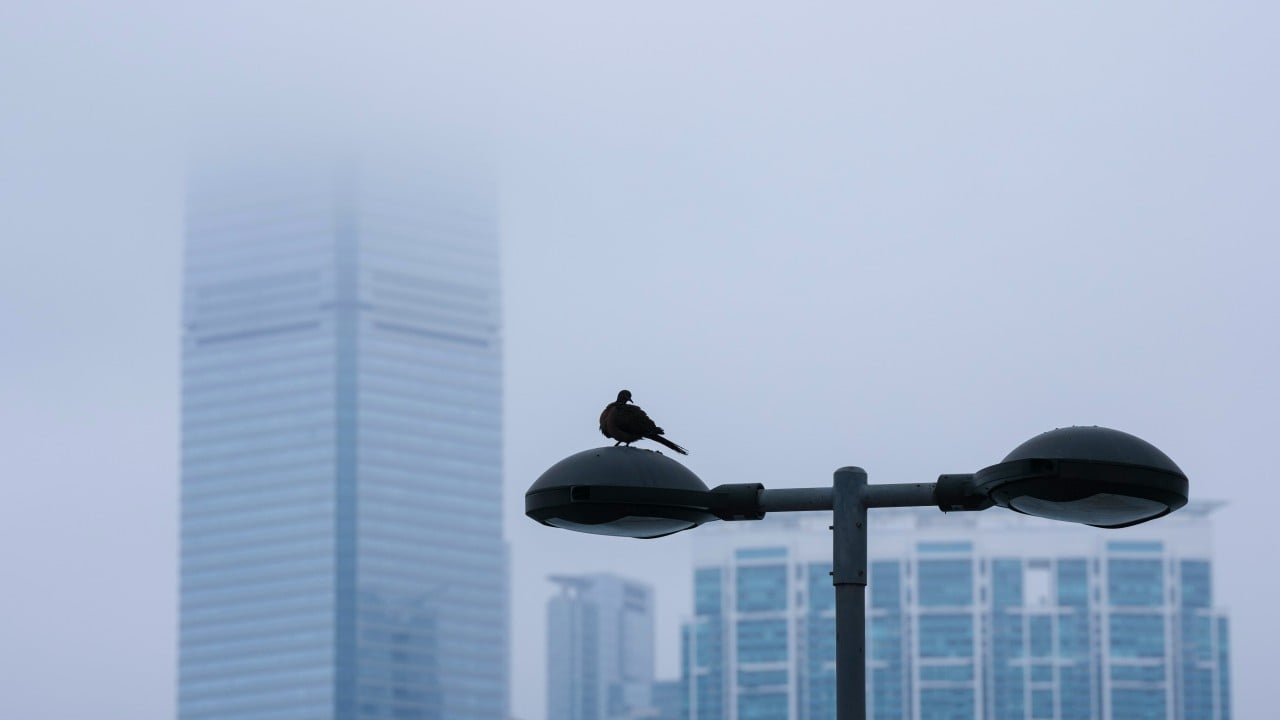
There is a documented psychological phenomenon associated with the "Great Damp" of Hong Kong. It is a form of sensory deprivation. When the cloud base drops to 200 meters, the peaks of the skyscrapers disappear. The world shrinks. The visual horizon vanishes, replaced by a flat, gray opacity that reflects the streetlights in a sickly orange hue.
Psychologists have noted that the lack of sunlight, combined with the physical discomfort of never being truly dry, spikes cortisol levels. The air feels heavy, making physical exertion feel twice as draining. This isn't just "feeling blue." It's a physiological response to an environment where your body's primary cooling mechanism—evaporative cooling—has been neutralized by the atmosphere.
Surviving The Saturated Week
The immediate reaction for most is to crank the air conditioning. This is a double-edged sword. While an AC unit acts as a powerful dehumidifier by pulling moisture out of the air as it passes over the cooling coils, it also lowers the temperature of the interior walls. If the unit is turned off or the door is opened, the now-colder walls will attract even more condensation from the incoming humid air.
To actually manage a 95% humidity event, the strategy must be total isolation or aggressive circulation.
- Seal the perimeter: Keeping windows cracked "for fresh air" is a mistake during a maritime surge. You are simply inviting gallons of suspended water into your home.
- Thermal management: If using AC, keep it at a moderate, consistent temperature (around 22°C or 23°C) rather than freezing the room. This prevents the walls from becoming so cold that they "sweat" the moment the system stops.
- The charcoal factor: For wardrobes and enclosed spaces, industrial-grade activated charcoal desiccant bags are more effective than the cheap calcium chloride tubs found in supermarkets. They can be "recharged" in the sun later, though there will be no sun for at least five days.
The current forecast suggests this moisture trap will remain locked over the Pearl River Delta until a new cold front arrives to push it out to sea. Until then, the city will remain in a state of suspended animation, wrapped in a heavy, wet cloak that turns every hallway into a slip-hazard and every breath into a chore.
Clean your air filters now. If you wait until Wednesday, the spores will already have a head start on your lungs.