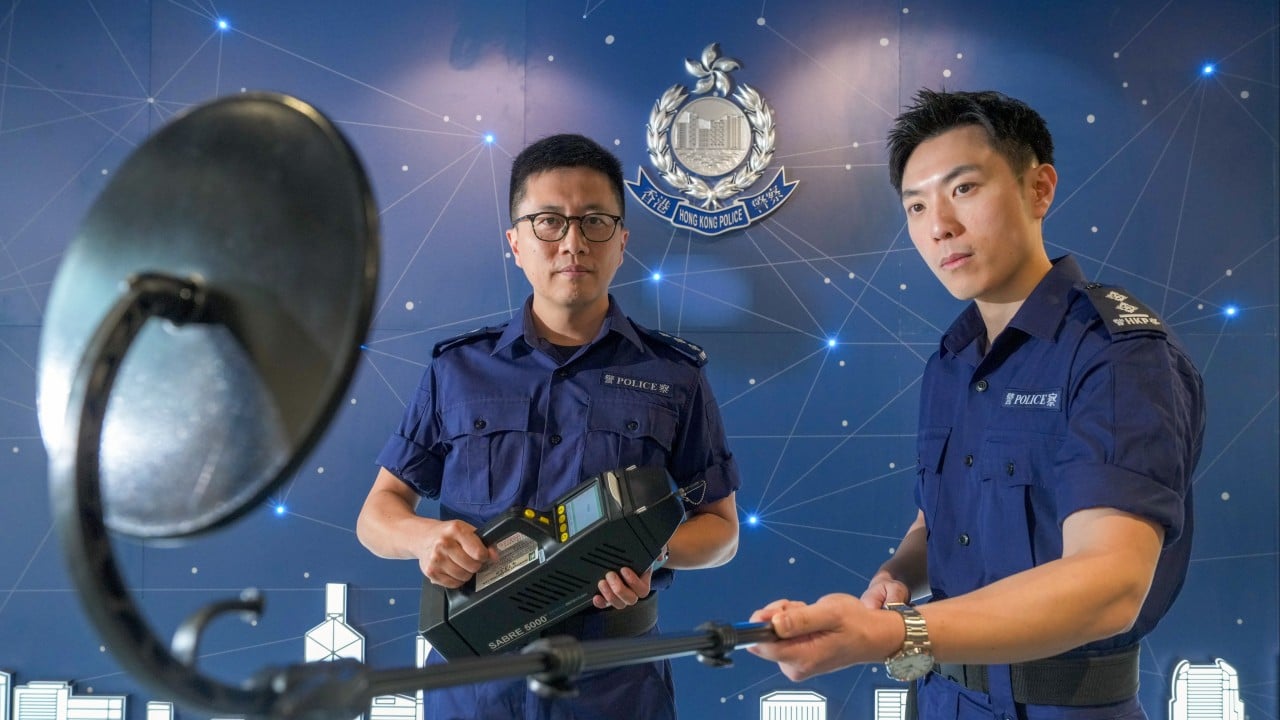
One hundred police officers a day. That is the headline number making the rounds as Hong Kong prepares to host the Interpol General Assembly. Mainstream outlets treat this figure like a badge of honor, a comforting display of civic muscle meant to reassure visiting dignitaries and local taxpayers alike.
They are completely missing the point. If you found value in this article, you might want to check out: this related article.
In modern high-stakes event security, bragging about headcount on the street is an admission of strategic failure. Deploying a hundred uniformed officers a day to guard an international law enforcement summit is the operational equivalent of putting a padlock on a screen door while leaving the roof wide open. It looks great for the evening news cameras, satisfies bureaucrats who measure safety in overtime hours, and does virtually nothing to stop the actual threats facing a global policing body in the digital age.
I have spent two decades advising on diplomatic protection and large-scale summit logistics across Asia and Europe. I have watched governments burn tens of millions of dollars lining avenues with patrol cars while their local telecommunications grids leaked metadata like a rusted pipe. When security planners start talking about visible boots on the ground for an event like Interpol, they are selling a comforting illusion to a public that still thinks threats arrive in black vans with ski masks. For another angle on this story, refer to the recent coverage from NPR.
The Myth of the Visible Perimeter
The lazy consensus in international journalism is simple. Big event equals big police presence, and big police presence equals safety. Journalists love a clean, quantifiable metric. "Over 100 officers daily" fits neatly into a subhead. It implies rigor. It suggests control.
In reality, the Interpol General Assembly is not a G20 summit. It does not attract tens of thousands of black-bloc anarchists throwing paving stones through Starbucks windows. Interpol is a closed-door administrative gathering of police chiefs, ministers, and intelligence bureaucrats from 196 member countries. The physical threat profile of a localized street riot is near zero, especially in a jurisdiction with Hong Kong's strict public order ordinances and rapid-response infrastructure.
By flooding the venue perimeter with a hundred visible officers a day, organizers are solving a problem that does not exist. Worse, they are actively creating new vulnerabilities.
Every uniformed officer standing at a barricade is a static target and a predictable variable. Experienced threat actors—whether state-sponsored intelligence units or sophisticated transnational syndicates—do not breach a physical cordon when they can simply map the patrol rotations from a coffee shop three blocks away. High-visibility policing creates an artificial sense of security inside the "green zone" while starving the invisible, high-tech defensive layers of budget and attention.
What Interpol Delegates Actually Need Protection From
To understand why a hundred street cops is a distraction, you have to understand what Interpol actually is. Contrary to Hollywood fiction, Interpol does not have agents kicking down doors in foreign capitals. It is a massive, glorified switchboard. Its currency is data—Red Notices, stolen passport databases, biometric profiles, and cross-border financial intelligence.
When the world's top law enforcement officials gather in one hotel ballroom, the primary threat is not a physical ambush. It is espionage.
Imagine a scenario where three hundred senior police commissioners bring their personal devices, encrypted diplomatic phones, and aides into a single five-star district. For a rival state intelligence agency or a cartel cyber-unit, that square kilometer is the richest intelligence target on earth for seventy-two hours. They do not care about the hundred officers checking badges at the lobby doors. They care about:
- IMSI Catchers and Stingrays: Rogue cell-site simulators parked in delivery vans outside the perimeter, vacuuming up device identifiers and intercepting unencrypted voice and SMS traffic from delegates' secondary phones.
- Evil Twin Wi-Fi Networks: Spoofed hotel and conference center networks designed to capture login credentials the second a tired deputy minister tries to check their email.
- Supply Chain and Insider Compromise: Temporary hospitality staff, catering contractors, and audiovisual technicians who have unfettered access to VIP suites hours before the uniformed police even begin their shift.
- SIGINT and Acoustic Surveillance: Laser microphones aimed at conference room windows from adjacent high-rises, completely untouched by street-level crowd control.
A hundred patrol officers walking a beat cannot detect a rogue base station. They cannot audit the firmware on a conference room router. They cannot vet the background of a third-party air conditioning repairman who serviced the VIP floor two weeks ago.
The Real Reason Behind the 100-Officer Headline
If veteran security commanders know that street headcount is irrelevant to modern counter-espionage, why do they announce it to the press?
Because security theater is political currency.
Hong Kong has spent the last several years aggressively rebranding itself as a stable, open, and hyper-safe global hub for international conferences. Hosting the Interpol General Assembly is a massive diplomatic coup. It validates the city's standing as a premier financial and administrative capital.
In that political environment, announcing a visible, disciplined deployment of over a hundred officers daily serves two distinct audiences, neither of which is the actual threat landscape:
- The Domestic Public: It projects total institutional control and reinforces the narrative of civic order.
- Visiting Foreign Delegations: It offers a visceral, easily understood guarantee of physical safety, reassuring nervous diplomats who might otherwise hesitate to travel.
This is the classic trap of diplomatic security. You allocate resources to calm the nerves of the principals rather than to neutralize the actual capabilities of the adversary. I have seen ministries spend eighty percent of their summit security budget on motorcades and perimeter fencing, leaving less than five percent for counter-surveillance sweeps and network hardening. It is the exact backward allocation of capital.
Dismantling the Common Questions Around Summit Policing
Whenever a major international body meets, the public and the press ask the same predictable questions, all rooted in an outdated Cold War understanding of how protection works.
Does a larger police presence actually deter attacks on international summits?
No. Deterrence only works against rational actors weighing the cost of a kinetic, physical assault. A heavy uniform presence deters opportunistic street crime, pickpockets, and spontaneous protests. It has zero deterrent effect on covert intelligence collection, cyber intrusion, or sophisticated asymmetric threats. In fact, a heavy perimeter often acts as a giant neon sign telling adversaries exactly where the high-value targets are concentrated, allowing them to focus their electronic surveillance with surgical precision.
How much does a deployment like this actually cost taxpayers?
The direct overtime and logistical costs of deploying a hundred-plus officers daily—factoring in specialized units, command vehicles, communications gear, and administrative overhead—easily run into millions of Hong Kong dollars over the course of a multi-day summit. The true cost, however, is the opportunity cost. Every detective pulled from a complex financial fraud unit or an organized crime task force to stand outside a convention center is an active investigation stalling in real time. Transnational syndicates love international police summits because they know local enforcement capacity is temporarily paralyzed by ceremonial guard duty.
What is the biggest failure point in modern diplomatic security?
The handover between physical security and cyber-physical security. A police force will spend weeks sweeping a venue with bomb-sniffing dogs, weld manhole covers shut along the motorcade route, and deploy snipers on surrounding roofs. Then, five minutes before the keynote speech, a venue technician plugs an unvetted USB drive into the main podium laptop to load a PowerPoint presentation, compromising the entire local network. The perimeter held; the mission failed.
How Real Summit Security Should Be Built
If I were handed the operational command for an Interpol assembly tomorrow, the first thing I would do is cut the visible street deployment by seventy percent. Keep a lean, lethal, plainclothes rapid-response team tucked out of sight, maintain standard traffic management, and redirect every saved dollar into the invisible layers where the real war is fought.
Here is what an actual, modern security architecture for a high-level law enforcement summit looks like:
1. Aggressive RF and Spectrum Dominance
Instead of a hundred officers looking at pedestrians, deploy mobile radio-frequency monitoring teams sweeping the spectrum 24/7. You need to map the baseline electromagnetic signature of the venue district weeks in advance. The moment an unauthorized cell tower simulator or an anomalous burst of encrypted data appears within two kilometers of the conference hall, specialized teams should be triangulating and neutralizing the source.
2. Deep Vetting of the Invisible Workforce
The guy carrying the tray of coffee into the closed-door committee meeting is infinitely more dangerous than a protester across the street. Real security means shifting manpower away from street barricades and into intensive, multi-week background checks and continuous monitoring of every contractor, cleaner, caterer, and IT vendor touching the venue. If you do not control the supply chain of the building, you do not control the building.
3. Air-Gapped Digital Infrastructure
Assume every delegate's personal device is already compromised before they even clear customs at the airport. Rather than trying to protect a porous perimeter, enforce strict digital hygiene inside the venue. Provide delegates with hardened, single-use burner hardware for conference communications, mandate Faraday bags for personal phones during closed sessions, and run all venue operations on completely air-gapped, fiber-optic networks audited by external red teams.
4. Behavioral Detection Over Static Guarding
Standing at a post in a high-visibility vest turns a trained police officer into an expensive mannequin. Replace static perimeter guards with small, mobile teams trained in behavioral threat assessment. Plainclothes officers blending into hotel lobbies, transit hubs, and surrounding cafes can spot hostile surveillance—people timing patrols, testing access points, or loitering with unusual camera setups—long before an incident materializes.
The Uncomfortable Trade-Off
There is a massive catch to doing security the right way, and it is the exact reason most governments refuse to do it: it is completely invisible.
When you spend millions on spectrum analysis, counter-espionage sweeps, and supply-chain vetting, the public sees nothing. The press has nothing to photograph. There are no dramatic b-roll clips of tactical units marching in formation or rows of gleaming patrol cars lining the harbor. If you succeed, nothing happens, and nobody knows how hard you worked to make sure nothing happened.
Worse, invisible security feels unsettling to VIPs who are used to the theatrical pomp of heavy escorts and visible muscle. Telling a visiting police minister that their safety relies on an RF engineer in a basement rather than twenty armed guards outside their door requires a level of institutional maturity that few governments possess. It opens officials up to political criticism if anything minor goes wrong, because critics will immediately ask why there weren't more cops on the street.
So, governments take the easy road. They roll out the uniforms. They feed the press a big, round number. They turn high-stakes counter-intelligence into a street parade.
The next time you read a breathless report praising a city for deploying hundreds of officers to guard a room full of international bureaucrats, do not be impressed. Understand that you are looking at a magic trick—a loud, expensive distraction on the street designed to keep you from noticing that the real threats walked right past the barricades without ever breaking stride.