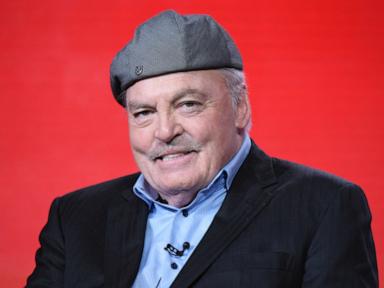
JoBe Cerny died at 78, and the entertainment press immediately reduced a five-decade career into a punchline about a giggling lump of biscuit dough.
Look at the headlines. Every major outlet ran the exact same lazy obituary template. They led with the Pillsbury Doughboy. They threw in a nod to his silent mime routine in that old Cheer laundry detergent spot where he froze a cocktail shaker in a block of ice. Then they packed up their laptops and called it journalism.
They missed the entire story. Worse, they perpetuated the most expensive lie in modern branding and voice acting.
When an actor who gave life to one of the most recognizable sonic trademarks in human history passes away, reducing him to trivia is an insult to the mechanics of persuasion. Cerny wasn't just a guy making cute noises in a sound booth in Chicago. He was the human engine behind an audio asset worth hundreds of millions of dollars in brand equity. Yet, the industry treats voice talent like disposable session musicians while worshiping B-list television actors who couldn't move a single box of pancake mix if their careers depended on it.
The Cult of Celebrity Endorsements Is a Financial Sinkhole
Let’s look at how modern advertising agencies burn client cash.
I’ve sat in creative reviews where brand managers happily signed off on eight-figure checks for an A-list movie star to mumble through a thirty-second Super Bowl spot. Six months later, brand recall is flat, sales haven't budged, and consumers remember the actor's face while completely forgetting what product was being sold. Psychologists call this the vampire effect—when a celebrity's own persona sucks all the cognitive oxygen out of the room, leaving the brand starved for attention.
Now compare that to what JoBe Cerny accomplished for Pillsbury.
Cerny took over the voice of Poppin' Fresh in 1988, inheriting the role from Paul Frees. For decades, that tiny, high-pitched giggle—hoo-hoo!—triggered an instant, involuntary Pavlovian response in hundreds of millions of consumers. You didn't think about JoBe Cerny. You didn't wonder who he was dating or what political cause he was tweeting about. You thought about warm crescent rolls coming out of an oven on a Sunday morning.
That is the pinnacle of sonic branding. It is pure, unadulterated emotional transfer without the ego, scandal risk, or astronomical licensing fees of a Hollywood celebrity. Yet, when the man who perfected that vocal instrument dies, the press treats him like a footnote.
What People Actually Get Wrong About Commercial Voiceover
If you look up discussions around Cerny’s passing or commercial voice work in general, the public—and plenty of clueless marketing executives—keep asking the exact same flawed questions. Let's dismantle them right now.
Did the actor who voiced the Pillsbury Doughboy get rich off the role?
No. And anyone telling you otherwise doesn't understand how SAG-AFTRA commercial contracts work. Unlike film residuals or music royalties where a massive hit generates generational wealth, commercial voice actors get paid session fees and holding fees based on airplay cycles. When you voice an animated brand mascot, you own zero intellectual property. You are a contractor renting out your vocal cords. Cerny worked constantly across theater, on-camera commercials, and voiceover because a single iconic giggle does not buy you a Malibu beachfront mansion. The corporation keeps the billions in equity; the talent gets a standard union check.
Is commercial voice acting easier than dramatic screen acting?
This is the most pervasive myth in entertainment. Screen actors get lighting, camera angles, wardrobe, co-stars, and forty takes to find an emotion. Commercial voice actors step into a padded isolation booth, get handed a piece of paper they've never seen, and have 1.5 seconds to convey warmth, trustworthiness, humor, and urgency using nothing but breath control and resonance. Try doing a high-register character voice like the Doughboy without shredding your vocal cords by take four. Cerny had a background in theater and physical mime—which is precisely why he excelled. He understood that voice acting is physical acting compressed into a microphone.
Can AI replace character voice actors like JoBe Cerny?
Right now, tech bros and desperate CFOs are salivating over synthetic voice cloning, convinced they can fire voice talent and generate mascots with a text prompt. They are dead wrong, and they are about to learn a brutal lesson in consumer psychology. AI can mimic pitch and cadence, but it cannot invent micro-inflections born from human empathy. The reason Cerny's giggle worked wasn't the frequency of the sound wave; it was the genuine, mischievous joy baked into the delivery. Synthetic audio triggers the auditory uncanny valley. Consumers subconsciously detect the lack of human breath and emotional intent, which immediately kills brand trust.
The Death of the Chicago Commercial Powerhouse
To understand why Cerny’s death matters, you have to understand the ecosystem he came from.
In the late twentieth century, Chicago wasn't just a flyover city for Hollywood; it was the undisputed capital of American advertising. Leo Burnett, Foote Cone & Belding, and DDB Needham dominated global marketing from Michigan Avenue. That ecosystem bred a specific, ferocious breed of working actor.
These weren't vanity performers chasing red carpets. They were blue-collar technicians of persuasion. Cerny ran his own production company, Cerny/American Creative, directing and producing spots alongside acting in them. Look at his Cheer detergent commercial from the 1980s. There isn't a single word of dialogue in it. Dressed in a tuxedo, he silently demonstrates the cold-water cleaning power of the detergent by dropping a cocktail shaker into a bucket of ice water while classical opera plays in the background.
Watch that commercial today and compare it to the hyper-edited, sensory-overload garbage cluttering your social media feeds.
- Modern advertising relies on frantic cuts, loud music, and desperate influencer shout-outs because the underlying creative concept is weak.
- Classic Chicago advertising relied on supreme confidence. It trusted the audience's intelligence enough to let a trained mime hold a silent beat for twenty seconds to prove a single product benefit.
Cerny mastered both extremes of the craft. On television, he commanded total silence through physical precision. In the radio and voiceover booth, he commanded global attention with a two-syllable laugh.
Why Modern Marketers Are Failing the "Doughboy Test"
Marketing professor Mark Ritson has spent years screaming at brand managers about the importance of distinctive brand assets—the non-verbal codes, colors, shapes, and sounds that identify a brand without needing to read its name. Byron Sharp and the Ehrenberg-Bass Institute proved empirically that brands grow not through deep, philosophical "brand purpose" manifestos, but through mental and physical availability.
When a shopper walks down a chaotic grocery aisle with four seconds to grab baking dough, they don't stop to read your corporate sustainability mission statement. Their brain scans for familiar sensory triggers. A blue box. A white chef's hat. A distinct, joyful giggle echoing in their memory.
Today's chief marketing officers have largely abandoned this discipline. Obsessed with short-term performance metrics, programmatic ad targeting, and fleeting TikTok trends, they have gutted long-term brand building. They change logos every three years. They swap out sonic identities every quarter. They treat creative consistency like a boring constraint rather than their primary competitive moat.
If you want to actually apply what made JoBe Cerny’s work lethal in the marketplace, stop chasing viral stunts and execute three unglamorous moves:
- Lock down a singular sonic signature and refuse to touch it for a decade. Stop letting new agency hires reinvent your audio identity every time a new VP of Marketing gets hired. Find a distinct vocal tone or sound effect, test it for immediate recall, and hammer it into the cultural subconscious until people hear it in their sleep.
- Hire trained character actors, not influencers, to voice your brand. Stop putting founders, marketing interns, or trendy micro-celebrities behind the microphone. Hire theater-trained voice specialists who understand pacing, subtext, and vocal placement. The difference in conversion and brand perception is measurable within weeks.
- Strip away the noise. Take a page from that Cheer detergent spot. Force your creative team to pitch a thirty-second ad with zero dialogue, zero buzzwords, and zero background pop songs. If your product benefit doesn't survive without verbal crutches, your creative strategy is broken.
The Hard Truth About Anonymity
There is, of course, a brutal downside to building a career on the backs of corporate mascots and silent physical comedy. You sacrifice personal fame at the altar of the brand's immortality.
JoBe Cerny lived a rich, respected life in the Chicago theater and commercial community, directing, teaching, and working steadily until the end. Yet, outside of industry insiders and hardcore animation historians, almost nobody knew his name while he was alive. When he walked down the street, nobody asked him for an autograph. Nobody stopped him in an airport to thank him for making them smile every time they baked cinnamon rolls with their kids.
The brand absorbed 100% of the glory, leaving the artist behind a curtain of corporate intellectual property. That is the Faustian bargain of commercial artistry. You get steady work and the quiet satisfaction of shaping pop culture from the shadows, while the public falls in love with a cartoon drawing or a silent man in a tuxedo.
Stop Writing Cute Obituaries
The next time a legendary commercial voice actor or character performer passes away, spare us the whimsical, patronizing headlines that treat their life's work like a quirky party trick.
JoBe Cerny didn't just make a cute noise for a baking company. He executed a masterclass in human psychology, vocal engineering, and brand building that outperformed ninety-nine percent of the loud, bloated, multi-million-dollar ad campaigns running today.
The mascot stays immortal on the grocery shelf, forever smiling, forever giggling, forever moving product. The least the industry can do is put some respect on the man who gave it a pulse.