The asphalt of Ocean Parkway stretches like a thin, grey ribbon between the scrub brush and the Atlantic, a lonely expanse where the salt air usually masks the scent of anything other than the sea. For decades, this stretch of Long Island was a place of quiet transit, a shortcut for surfers and locals heading toward the lighthouse. But beneath the surface of the sand and the tangled vines of the brambles, a darkness had taken root. It wasn’t a ghost or a legend. It was a man with a blueprint, a toolbox, and a profound, chilling lack of a soul.
Rex Heuermann did not look like a monster. He looked like the person you’d hire to make sure your skyscraper wouldn’t fall down. He was an architect, a man of precise measurements and structural integrity. Neighbors saw him as a hulking, somewhat eccentric figure—a guy who lived in a ramshackle red house in Massapequa Park that seemed to be shrinking under the weight of its own clutter. He caught the train. He carried a briefcase. He existed in the peripheral vision of thousands of people who never suspected that the man checking his watch on the platform was the same person who had turned a stretch of coastline into a graveyard.
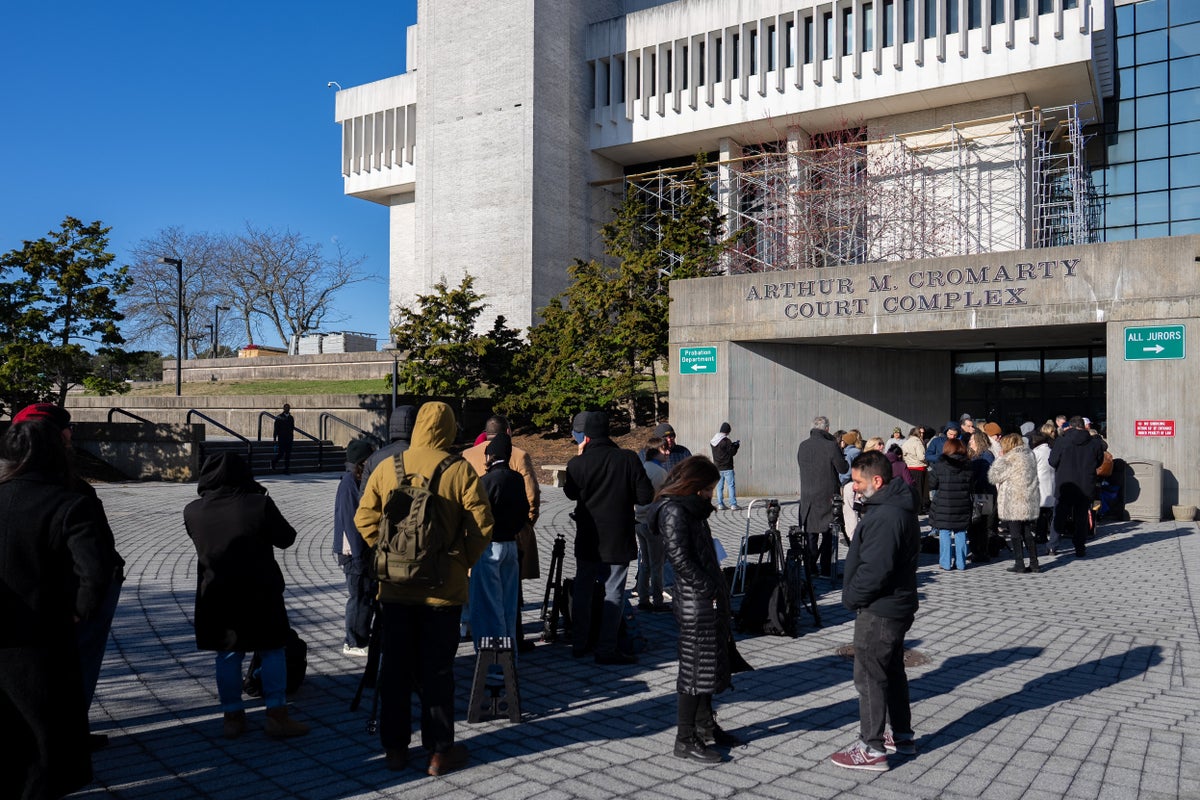
Now, the silence has finally broken. In a courtroom where the air felt heavy with the collective grief of a dozen years, the man often described as "emotionless" sat and did the unthinkable. He didn't just whisper a confession. He admitted to the killings of eight women. Not three. Not four. Eight.
The Weight of the Names
Behind every police file is a life that was meant to be long and messy and beautiful. Megan Waterman. Melissa Barthelemy. Amber Lynn Costello. Maureen Brainard-Barnes. These names became the "Gilgo Four," a clinical grouping used by investigators to categorize the victims found wrapped in burlap near the beach. For years, the narrative focused on their struggles, their work in the escort industry, and the risks they took. It was a convenient way for the world to distance itself.
But the families didn't have that luxury. They lived in the silence of empty bedrooms. They navigated the holidays with a chair that remained unoccupied. To them, these women weren't "vulnerable populations" or "cold case statistics." They were daughters who liked specific songs, sisters who had a certain way of laughing, and mothers who were desperately missed.
The confession brings a jagged kind of peace. It isn’t the warmth of a resolution; it is the cold clarity of a finished ledger. When Heuermann admitted to these crimes, he stripped away the mystery he had used as a shield for more than a decade. The boogeyman was just a man in a suit, a technician of death who finally had to look at the wreckage he left behind.
A Geometry of Cruelty
Consider the double life required to maintain such a facade. On one hand, Heuermann was navigating the complex bureaucracy of New York City building permits. He was a professional who understood load-bearing walls and fire codes. This requires a mind for detail, a commitment to rules, and a deep understanding of how systems work.
On the other hand, he was allegedly hunting. He was using burner phones with the precision of a spy. He was browsing the dark corners of the internet, searching for torture pornography and tracking the very investigation that was trying to find him. He wasn't just hiding; he was watching the hunters.
The terror of the Gilgo Beach case wasn't just the brutality of the acts. It was the realization that someone could exist so seamlessly within society while being entirely divorced from its morality. He was a neighbor. He was a customer at the local deli. He was a face in the crowd at the hardware store. This is the invisible stake of the story: the fragility of the "normal" world. We want to believe that evil looks different, that it carries a visible stain, but Heuermann proved that it can wear a commute and a tie.
The Turning of the Tide
The breakthrough didn't come from a sudden moment of cinematic genius. It came from a discarded pizza crust. It came from a hair found on a piece of burlap, preserved by the salt and the cold for years, waiting for technology to catch up with the crime.
In a way, the investigation mirrored the landscape of the South Shore itself. It was slow, erosion-prone, and often obscured by the fog. There were years of stagnation, internal police department scandals, and a feeling among the public that these women had been forgotten because of how they made their living.
Then, the task force changed. New eyes looked at old files. They didn't see "disposable" victims; they saw a pattern of a predator who thought he was smarter than the sum of his parts. They tracked a Chevrolet Avalanche. They mapped cell tower pings that danced between Midtown Manhattan and Massapequa. They waited.
When the handcuffs finally clicked shut in July 2023, the air in New York seemed to shift. But even then, the scope was limited. The initial charges were for three deaths. Then a fourth. Now, the number has doubled. The scale of the tragedy has expanded, stretching the map of pain from the 2000s into the 2020s.
The Mirror in the Courtroom
Witnessing a confession of this magnitude is a visceral experience. Usually, we expect a villain to show remorse, to break down, or perhaps to gloat. But the reports from the room describe a man who remained a vacuum of feeling. He spoke the words. He admitted the acts. But the "why" remains locked in a vault of his own making.
This lack of emotion is perhaps the cruelest part of the final act. For the survivors, there is no satisfaction in a dry "guilty." They are looking for a spark of humanity that would acknowledge the value of what was taken. Instead, they are met with the same mechanical coldness that Heuermann used to design his buildings. He is a man who deals in facts, and now the fact is that he is a serial killer.
There is a hypothetical scenario that investigators often use when trying to understand the mind of a long-term predator. They ask: What was he doing in the gaps? Between the documented murders, Heuermann lived a life. He ate dinners. He slept. He went to work. The horror lies in the "in-between." It suggests that for him, the killing wasn't a departure from his life, but a part of its infrastructure.
The Shoreline Remains
The victims now have a voice through the legal record, but the landscape of Long Island is forever changed. Ocean Parkway will never just be a scenic drive again. For the locals, it is a graveyard that happened to have a road running through it.
We often talk about "closure" as if it’s a door that shuts, ending a chapter. But for the families of the eight women Heuermann admitted to killing, it’s more like a wound that has finally been cleaned. It will still scar. It will still ache when the weather turns cold and the wind blows off the Atlantic.
But the "Gilgo Beach Monster" is gone. In his place sits a man who will likely spend the rest of his natural life behind bars, stripped of his briefcase, his blueprints, and his anonymity. He is no longer the architect of his own dark narrative. He is a prisoner of the truths he tried to bury in the sand.
The waves continue to hit the shore at Gilgo, rhythmic and indifferent. The scrub brush will grow back over the areas where the police spent months digging. The world moves on, but it moves on with a heavier knowledge of what can hide in plain sight. We are left with the image of a red house on a quiet street, a house that looked like every other home on the block, except for the man inside who was counting his secrets until the day the sea air finally let them go.



