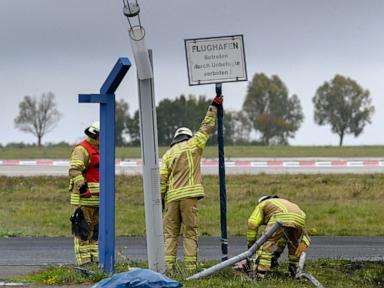
A hole is cut in a perimeter fence. Sirens wail in the headlines. Police launch an investigation.
Predictable. Lazy. Comfortably shallow. Meanwhile, you can explore other events here: Inside the Venezuela Opposition Power Struggle Nobody is Talking About.
Whenever a perimeter breach hits the news—especially at a major freight hub like Leipzig/Halle Airport—the standard coverage follows the exact same script. Authorities are investigating. Security is heightened. Officials promise a thorough review. It reads like a police blotter dressed up as aviation security analysis.
That lazy consensus assumes a perimeter fence is a wall that stops threats, and a breach means the system failed. Both assumptions are wrong. To understand the bigger picture, we recommend the recent report by USA Today.
In modern airport security, a hole in a fence is a symptom, not the disease. Treating a cut chain-link mesh as the main story misses the real mechanics of how high-volume cargo hubs operate, how attackers and activists actually probe defenses, and why spending millions on taller fences and brighter floodlights often creates a dangerous illusion of safety.
Perimeter Fences Are Tripwires, Not Fortresses
Let’s get the terminology straight before anyone panics over wire cutters.
In aviation security, perimeter intrusion detection systems (PIDS) and physical barriers serve a specific, limited purpose. A fence defines property boundaries, deters casual trespassers, and slows down unauthorized entry long enough to trigger a detection and response cycle. It is a delay and signaling mechanism. It is not an impenetrable shield.
Anyone who has worked in physical security or critical infrastructure operations knows this. I have watched operators blow millions of dollars on heavy-duty fencing, razor wire, and miles of trenching for fiber-optic vibration sensors, only to leave tailgating gaps at vehicle gates or unmonitored blind spots along service roads. A fence without rapid verification, clear response protocols, and layered interior controls is just expensive metal waiting for bolt cutters.
When investigators look at a cut fence at a major airport, the first question is rarely "How could someone cut metal?" Metal cuts. Chain link yields to a decent pair of shears in seconds. The real questions are much colder and more technical:
- Did the sensor zone register the cut within seconds?
- Did the camera slew to the exact coordinate and capture clear video?
- How long did it take a patrol unit to reach the sector?
- What sits between that spot on the perimeter and an actual aircraft or high-value cargo pallet?
If those answers are solid, a hole in the fence is an annoyance and a maintenance ticket. If those answers are shaky, the hole is just proof of a vulnerability that was already sitting there waiting to be tested.
Why Cargo Hubs Like Leipzig Draw Different Attention
Leipzig/Halle is not a quiet regional airstrip. It is one of Europe’s major air cargo hubs, running twenty-four hours a day with massive freight volumes, night operations, and sprawling grounds stretching across miles of perimeter.
Large cargo hubs face a unique set of trade-offs. Unlike a compact passenger terminal where movement is tightly funnelled through glass, turnstiles, and X-ray lanes, a freight hub has vast acreage, constant truck traffic, subcontractor access, and enormous open expanses. Securing every linear meter of perimeter at a massive logistics hub to fortress standards is financially and operationally brutal.
Because of that scale, perimeter incidents at major airports often draw heightened scrutiny—whether from local police, federal authorities, or aviation regulators. Sometimes the motive is petty theft or local trespassing. Sometimes it is political protest or activist stunts aimed at logistics and supply chains. Sometimes it is probing behavior to test response times or security posture.
Standard reporting treats every investigation as if a shadowy master plot is about to be uncovered—or as if a single cut wire proves the entire airport is wide open. Neither is true. Most perimeter breaches are messy, opportunistic, or theatrical. Treating all of them with the same breathless alarm blurs real threats with noise.
The Questions Everyone Asks Instead of the Ones That Matter
When a story like this breaks, search behavior follows the same predictable ruts. People ask the same surface-level questions and get surface-level answers.
"How dangerous is a breach at an airport perimeter?"
That question is flawed because it treats "an airport perimeter" as one uniform zone.
An airport is a set of concentric rings. The outer fence is ring one. Access-controlled roads, ramp areas, cargo facilities, sterile zones, and aircraft themselves sit deeper inside. Crossing the outer fence does not magically teleport someone onto a taxiway or into the belly of a cargo plane.
A breach is dangerous when three things line up: detection fails, response is slow, and inner layers are weak. If someone cuts a hole in a fence and gets stopped ten minutes later by a patrol car before ever reaching an operational ramp, the risk profile is completely different from someone slipping past unmonitored cameras and reaching an active aircraft apron. Asking "how dangerous is it" without asking how deep the intrusion went—and how fast it was detected—is just guessing.
"Why don’t airports just make fences harder to cut and guard every inch?"
Because physics, budgets, and human nature get in the way.
First, there is no material you can put on a ten- or fifteen-mile perimeter that cannot be defeated with enough time, tools, or determination. Thicker steel costs more, takes longer to repair, and still fails if nobody watches it.
Second, human guards staring at dozens of camera feeds or patrolling long stretches of fence line run straight into vigilance decrement—a well-documented phenomenon in human factors research where attention drops sharply during repetitive, low-event monitoring tasks. Even experienced security professionals miss things when nothing happens for hours at a time.
Third, every extra friction point slows down legitimate operations. Cargo flights run on tight schedules. Ground crews, maintenance teams, and delivery vehicles move constantly. If security measures choke legitimate throughput without improving real detection and response, operators find workarounds—and workarounds are where security quietly dies.
"Does an investigation mean airport security failed?"
No. An investigation is standard procedure.
When physical damage occurs at a regulated facility, authorities and operators document the scene, review sensor and camera logs, check patrol timelines, and look for patterns. Investigating a cut fence is what competent systems do after an event.
The real failure isn’t cutting the fence or opening an investigation. The real failure is treating an isolated physical event as a one-off mystery instead of auditing the entire detection-to-response chain. If an organization pathetically shrugs and says, "Well, we’re looking into it," without testing whether their alerts, cameras, and patrols actually worked as designed, that’s negligence.
A Thought Experiment in Real Security
Imagine a scenario where two identical holes are cut on opposite sides of a major cargo airport’s perimeter at 2:00 AM.
In Scenario A, a vibration and infrared system flags the disturbance in eight seconds. Control room operators pull up live thermal and optical feeds within ten seconds. A mobile unit arrives at the sector in ninety seconds, spots two individuals retreating toward a tree line, and notifies local police with exact coordinates. Maintenance patches the section before morning shift change, and logs are reviewed to see if sensor sensitivity needs tuning.
In Scenario B, nobody notices the cut until a ground worker drives past at 6:30 AM. Cameras covering that stretch were aimed slightly off-angle or obscured by fog and vegetation. Nobody knows whether the hole was made ten minutes ago or two days ago.
Both scenarios start with the exact same hole in the fence. Only one of them tells you anything useful about how secure the facility actually is.
What Serious Security Leaders Do Differently
Industry standards from bodies like the International Civil Aviation Organization (ICAO) and national aviation authorities emphasize risk-based, layered security rather than relying on a single barrier. Heavyweights in physical security and risk management—from aviation security specialists to industrial risk engineers—consistently point to the same truth: detection speed and response time beat wall thickness every single time.
Here is what actually works when you stop obsessing over the fence and start fixing the system:
- Measure detection-to-response latency, not fence height. Track how many seconds pass between a physical disturbance and verified visual confirmation, and how many minutes it takes for responders to reach the exact spot. If you aren’t timing it, you’re flying blind.
- Treat every nuisance alarm and minor cut as free calibration data. Small events reveal blind spots, camera dead zones, lighting gaps, and dispatch bottlenecks without costing you a major incident. Log them ruthlessly and fix the weak links.
- Integrate physical alerts with video analytics and patrol routing. Raw motion alerts from wind, wildlife, or tall grass cause alert fatigue. Pair perimeter sensors with smart verification and clear dispatch rules so guards go where they are actually needed.
- Audit the human and procedural side, not just the hardware. A shiny new sensor means nothing if an operator doesn’t know the escalation playbook or a gate code was left on a sticky note. Drill the response when nobody is watching.
The Honest Trade-Off
Going all-in on intelligence-led, layered security instead of pure perimeter fortification has real downsides. It requires ongoing data review, disciplined maintenance, regular drills, and candid internal audits that expose uncomfortable gaps. It is much less flashy than unveiling a brand-new security wall or announcing a sweeping crackdown. And when a system catches an intrusion early and stops it quietly, nobody writes a dramatic headline about it—so budgets for boring, effective maintenance can be tough to defend.
Still, security isn’t written for headlines. It’s built to hold when something tests it.
A cut fence at Leipzig airport will get its share of ink, official statements, and procedural checks. Fine. Let the investigators do their job. Just don’t mistake a hole in the wire for the whole story—check the response logs, watch the inner rings, and see what happened after the metal gave way.