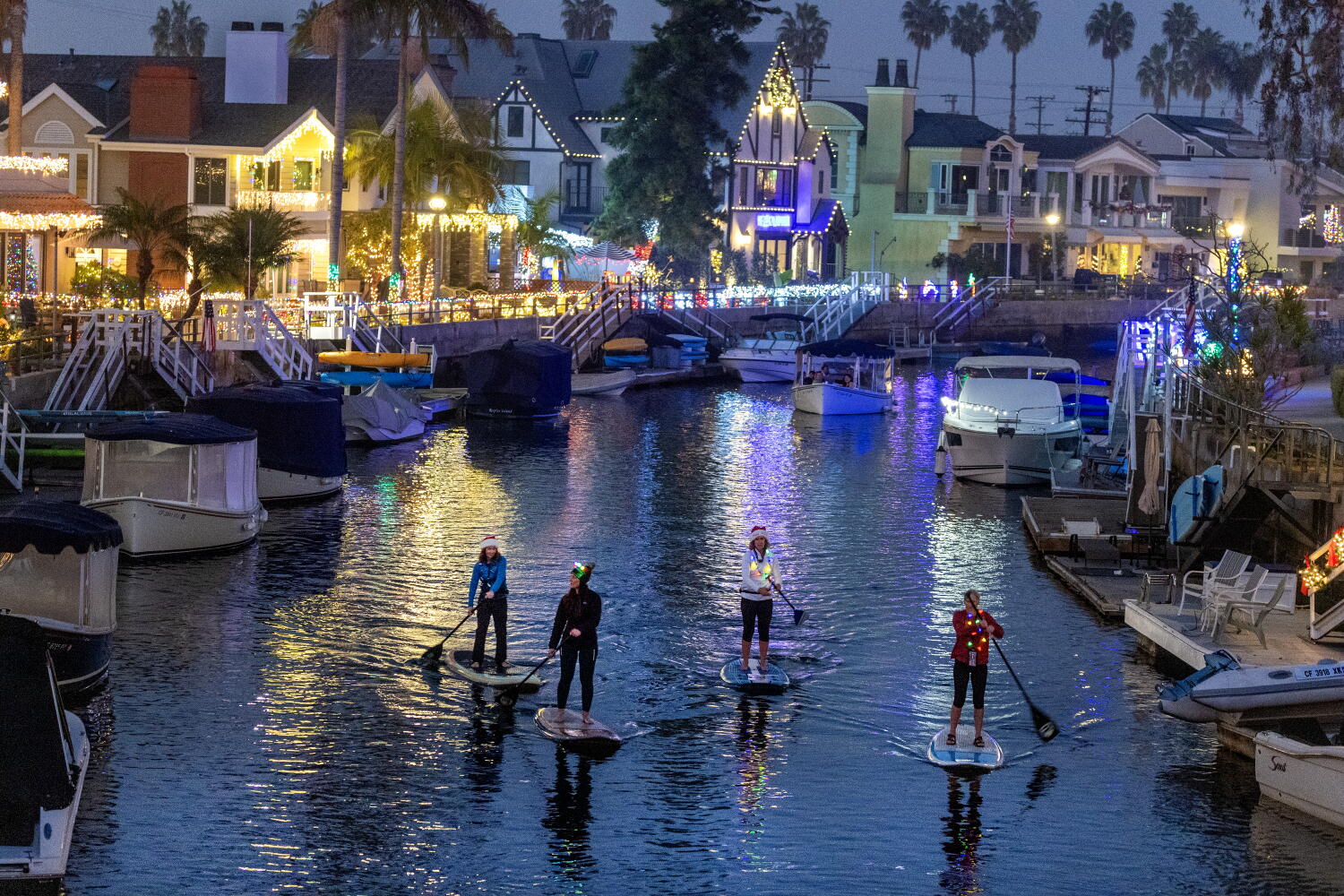
The annual Naples Boat Parade has been officially canceled due to severe, El Niño-driven high tides and persistent onshore winds threatening Southwest Florida during Christmas week. While local organizers cited immediate marine safety hazards, the cancellation exposes a much deeper vulnerability along the Gulf Coast. King tides, compounded by a shifting climate pattern, have turned routine holiday traditions into high-stakes logistical gambles that coastal infrastructure is no longer built to survive.
Most people look at a canceled parade and see a ruined evening of hot cocoa and twinkling lights on the water. They miss the real story. When a premier maritime community like Naples has to pull the plug on its signature winter event because the water is literally too high for boats to safely clear fixed bridges, that is a flashing red warning light for every coastal municipality in the country.
The Anatomy of a Marine Cancellation
To understand why the Naples Boat Parade could not go on, you have to look at the mechanics of Naples Bay. The parade route winds through narrow channels, past residential canals, and beneath fixed bridges with strict vertical clearances. Under normal winter conditions, December brings dry weather, offshore breezes, and predictable tidal swings. Captains know their draft, they know their air draft, and they know the water.
El Niño changes the math entirely.
During an El Niño winter, the subtropical jet stream shifts south, steering low-pressure systems directly across the Gulf of Mexico and into the Florida peninsula. Instead of calm, crisp December nights, Southwest Florida gets hammered by persistent westerly and southwesterly winds. Those winds push water from the open Gulf directly into Gordon Pass and pile it up inside Naples Bay.
It gets worse when you factor in astronomical tides. King tides—the highest tides of the year, occurring when the sun, moon, and Earth align—already push water levels inches or even feet above normal high-tide marks. When an El Niño wind surge collides with a winter king tide, the water simply has nowhere to go. Seawalls are overtopped. Floating docks reach the top of their pilings. And critically, the vertical clearance under fixed bridges shrinks to dangerous margins.
The Bridge Clearance Trap
Consider a hypothetical 45-foot sportfishing yacht decorated for the holidays. In the weeks leading up to the parade, the owner installs a towering, custom-welded frame on the flybridge to hold a ten-foot illuminated Christmas tree. On a normal tide, that vessel clears the local bridge with three feet to spare.
Add two feet of El Niño wind-driven surge on top of an already swollen king tide, and that three-foot margin vanishes. Suddenly, dozens of heavily decorated, top-heavy vessels are navigating tight, crowded channels in the dark, fighting strong cross-currents, with zero room for error. One miscalculation means a sheared radar arch, a snapped mast, or a vessel wedged beneath a concrete span while fifty other boats drift uncontrollably behind it.
Marine insurers and local harbor masters do not gamble with those odds. Once the National Weather Service issues coastal flood advisories and small craft warnings, liability becomes insurmountable. Organizers had no choice.
Follow the Money Behind the Cancellation
A boat parade is never just a parade in Collier County. It is an economic engine disguised as a community party.
For waterfront restaurants along Naples Bay, Tin City, and Bayfront, parade night is the single highest-grossing evening of the pre-Christmas week. Tables are booked months in advance. Kitchens order tens of thousands of dollars in perishable seafood and prime cuts. Extra bartenders, servers, and dockhands are scheduled on overtime.
When the cancellation drops days before the event, that financial chain reaction hits immediately:
- Hospitality losses: Waterfront dining rooms face instant waves of reservation cancellations, leaving restaurants holding excess inventory they cannot easily move before the holiday lull.
- Marine service cancellations: Local charter captains, boat rental outfits, and marine electricians who spend weeks rigging elaborate light displays lose peak seasonal revenue.
- Charitable shortfalls: Boat parades across Florida routinely serve as primary fundraising vehicles for local youth sailing programs, marine conservation groups, and holiday toy drives. Canceling the main spectacle slashes donation volume overnight.
The counter-argument from city planners is always the same: safety first, money second. Nobody disputes that. Nobody wants a vessel sinking in Gordon Pass or a spectator swept off a flooded seawall. Yet focusing purely on the weather forecast lets local governance off the hook for a problem that has been building for decades.
Coastal Infrastructure Built for Yesterday's Ocean
Naples is one of the wealthiest coastal cities in the United States, packed with multimillion-dollar waterfront estates and world-class marinas. Yet much of its foundational marine infrastructure—seawalls, drainage outfalls, bridge clearances, and dock pilings—was engineered based on twentieth-century tidal baselines.
Water levels along the Gulf Coast are measurably higher today than they were thirty years ago. When heavy winter rains fall during an El Niño pattern, the city's stormwater drainage systems rely on gravity to push runoff out into the bay. If the bay is already swollen with abnormally high tides, gravity stops working. Saltwater backs up through the storm drains, flooding low-lying streets from the bottom up even before a drop of rain hits the pavement.
The False Comfort of the "Rare Event" Label
Whenever a major coastal event gets scrubbed due to high water, official statements almost always lean on the same reassuring language. They call it a "freak weather alignment" or a "once-in-a-decade El Niño surge."
That framing is dangerous. It implies the problem is temporary and that next December everything will snap back to normal.
In reality, the baseline is shifting upward. What used to require a Category 1 hurricane to achieve in terms of bay surge now happens during a strong winter cold front paired with a full moon. Boaters in Southwest Florida are already adapting in quiet, practical ways—buying vessels with lower profiles, installing hydraulic radar arches, and paying closer attention to real-time NOAA tide gauges than to traditional paper tide charts.
Municipalities are moving much slower. Raising seawall height ordinances, retrofitting stormwater backflow valves, and redesigning waterfront public access points require massive capital outlays and brutal political battles over property taxes and unobstructed water views.
What Boaters and Spectators Actually Need to Do
If you are a boat owner in Southwest Florida, or a visitor planning winter waterfront activities during an active El Niño cycle, you cannot rely on historical norms anymore. The rules of winter boating on the Gulf have changed.
First, treat winter cold fronts with the same respect you give late-summer tropical systems. A strong winter low crossing the Gulf generates steep, tightly packed wave periods and persistent onshore fetch that turns shallow passes like Gordon Pass and Big Marco Pass into treacherous breaking-wave zones.
Second, audit your vessel's true vertical clearance. Most boat owners know their boat's advertised height from the factory spec sheet, which is almost always measured light—with empty fuel tanks, empty water tanks, and zero aftermarket gear. Add a full load of holiday guests, full tanks, and temporary decorations, and your boat sits lower in the water, which helps, until a sudden wake pitches your bow upward beneath a low bridge. Measure from the waterline to the highest fixed point on your vessel with a tape measure, and add a strict safety buffer before entering any confined canal during a king tide cycle.
Third, watch the wind direction, not just the tide chart. Tide tables only predict astronomical water movement based on gravitational pull. They do not account for meteorological forcing. A steady 20-knot wind blowing out of the west-southwest for forty-eight hours will easily add eighteen to twenty-four inches of water on top of the predicted high tide inside enclosed bays. Check the NOAA National Data Buoy Center stations offshore to see what the wind is actually doing to water levels in real time.
The New Reality on the Waterfront
The empty water in Naples Bay this Christmas week is more than a holiday disappointment. It is a preview.
For decades, Florida sold the dream of effortless, year-round waterfront living where the weather was always predictable and the water always stayed neatly below the seawall. El Niño didn't break that illusion; it simply forced everyone to look at the tide gauge. Until coastal cities rebuild their drainage, raise their seawalls, and rethink how they schedule life on the water, the high-water mark will keep deciding which traditions survive and which ones stay tied to the dock.