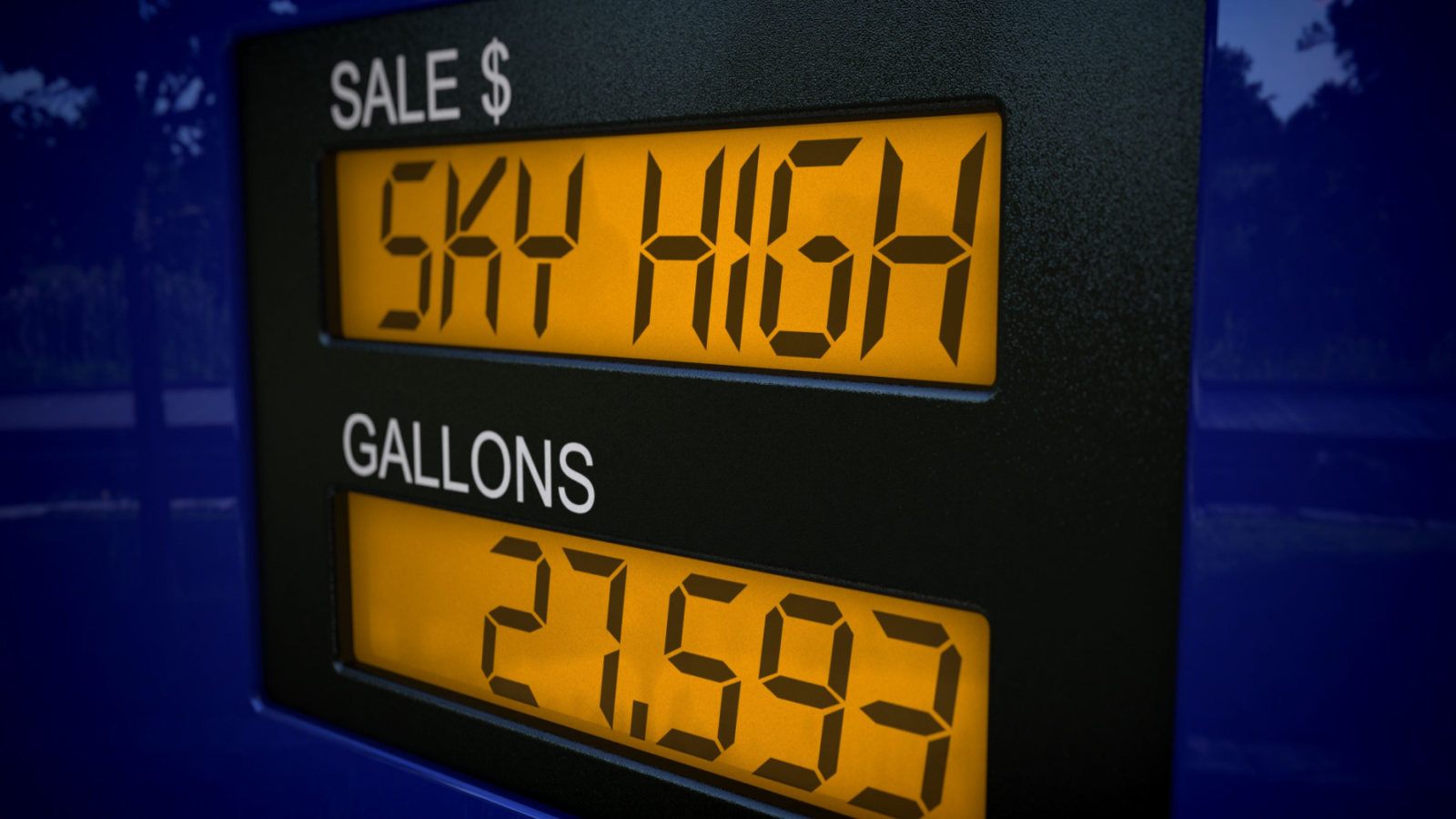
The collective panic over a few cents at the pump is the ultimate hallmark of a fragile economy. When news broke that Donald Trump shrugged off rising gas prices during a potential Iran operation with a simple "If they rise, they rise," the media treated it like a political death wish. They missed the point. They’re stuck in a 1970s mindset where an oil shock equals a national heart attack.
They’re wrong.
Cheap gas is a subsidy for inefficiency. It’s a sedative that keeps the United States tethered to old-world logistics and geopolitical blackmail. If you want to understand why the "pain at the pump" narrative is a manufactured crisis, you have to look at the math, the markets, and the cold reality of American energy dominance that most analysts are too scared to touch.
The Myth of the Gas-Price Hostage
Every time tension flares in the Middle East, the same tired script plays out. Pundits track the Strait of Hormuz like it's the only artery in the global body. They assume the American consumer is one $5 gallon away from total collapse.
This ignores the structural shift in the U.S. economy. We aren't the desperate importers we were during the Carter administration. The U.S. is currently the world’s largest producer of crude oil. When global prices spike, it isn't just a cost; it’s a massive revenue injection for American producers, tax bases in the Permian Basin, and the hundreds of thousands of workers in the domestic energy sector.
The "lazy consensus" says high gas prices kill the economy. The reality? High prices trigger a massive internal wealth transfer that keeps American energy infrastructure ahead of the rest of the world. By obsessing over the cost of filling a suburban SUV, we ignore the fact that price volatility is the only thing that forces innovation.
Why We Should Stop Praying for $2 Gas
Cheap fuel is a trap. When energy is artificially inexpensive, capital stagnates.
- Innovation dies in the shade of cheap oil. If gas stayed at $2 forever, nobody would bother building better batteries, more efficient freight systems, or localized supply chains. High prices are a market signal telling you to stop wasting resources.
- Geopolitical leverage. If the U.S. is terrified of a price hike, then every petty dictator with a coastline and a few missiles has a veto over American foreign policy. "If they rise, they rise" isn't an admission of defeat; it’s a declaration of independence. It tells the world that the U.S. economy is resilient enough to absorb a shock without begging for mercy.
- The Velocity of Money. The money you spend on high gas prices doesn't disappear into a void. In the current market, a significant portion of that "pain" stays within the domestic ecosystem. It funds exploration, pays dividends to American pensioners, and forces the transition toward a more diversified energy stack.
Dismantling the "Inflationary Spiral" Scare
You’ve heard it a thousand times: "Gas prices drive the price of everything."
It’s a half-truth used to justify policy cowardice. While transportation costs do impact goods, the correlation isn't 1:1. Modern supply chains are increasingly decoupled from raw fuel costs thanks to better logistics software and the electrification of short-haul delivery.
When people ask, "How will I afford groceries if gas goes up?" they are asking the wrong question. The real question is why our food system is so poorly designed that a 10% move in Brent Crude makes a head of lettuce unaffordable. The gas price isn't the problem; the fragility of the distribution network is.
Instead of subsidizing gas or depleting the Strategic Petroleum Reserve (SPR) to keep prices low for a news cycle, we should be letting the market run hot. High prices are the only mechanism that effectively reallocates capital away from waste.
The SPR Is Not a Piggy Bank
The most offensive part of the "low price at all costs" mentality is the misuse of the Strategic Petroleum Reserve. It was designed for physical supply disruptions—war, natural disasters, actual shortages. Using it to manipulate the price of 87-octane so voters feel better on Tuesday is a gross mismanagement of national security.
I’ve seen traders laugh at these releases. The market knows it's a temporary band-aid. It creates a "false floor" that prevents the necessary adjustments in consumer behavior and industrial efficiency. When the government tries to suppress the price, they are essentially telling you to keep driving that 12-MPG relic because "we'll fix the bill for you." It’s economic gaslighting.
The Middle East Doesn't Own Us Anymore
The fear of an Iran-driven spike is a relic of the past. Let’s look at the mechanics of a supply shock. If Iran closes the Strait of Hormuz, global prices jump. But because the U.S. is a net exporter of refined products, we have a buffer the rest of the world doesn't.
In this scenario, the "pain" is felt most acutely by our competitors—namely China, which is the world's largest importer of crude. A price spike during an Iran operation is actually a competitive advantage for a self-sufficient U.S. It’s an asymmetric tax on the rest of the world.
The Counter-Intuitive Truth: Higher Prices Create Stability
We think of stability as a flat line. That's wrong. True stability is antifragile. It’s the ability to take a hit and get stronger.
When gas prices rise, three things happen that actually benefit the long-term economy:
- The "Junk" Flush: Inefficient businesses that rely on cheap logistics go under, leaving more room for lean, modern competitors.
- Investment Surge: Capital floods into domestic renewables and nuclear power, which are the only real ways to achieve price stability.
- Behavioral Shift: Consumers finally stop buying oversized vehicles they don't need, reducing our total aggregate demand and making the next "crisis" even less impactful.
Stop Asking the Wrong Questions
People also ask: "When will gas prices go back down?"
They should be asking: "How do I make my life gas-independent?"
Brutal honesty: Gas prices are never going back to where you want them to be, and you shouldn't want them to. If you are waiting for a politician to "fix" the price of a global commodity, you are volunteering to be a victim.
The industry insiders I talk to aren't worried about $5 gas. They’re worried about $2 gas. Because at $2, we stop trying. We get fat, lazy, and dependent on the goodwill of regions that hate us.
High prices are the sound of the world changing. "If they rise, they rise" is the only adult response to a global energy market. It accepts the volatility as a cost of doing business and moves on to more important things—like winning the conflict that caused the spike in the first place.
The next time you see the numbers on the sign go up, don't look for someone to blame. Look for a way to stop needing the liquid in the first place. That’s the only way to actually win this.
If you can't handle a price hike during a major military operation, you don't have a country—you have a shopping mall with a flag. Move on.