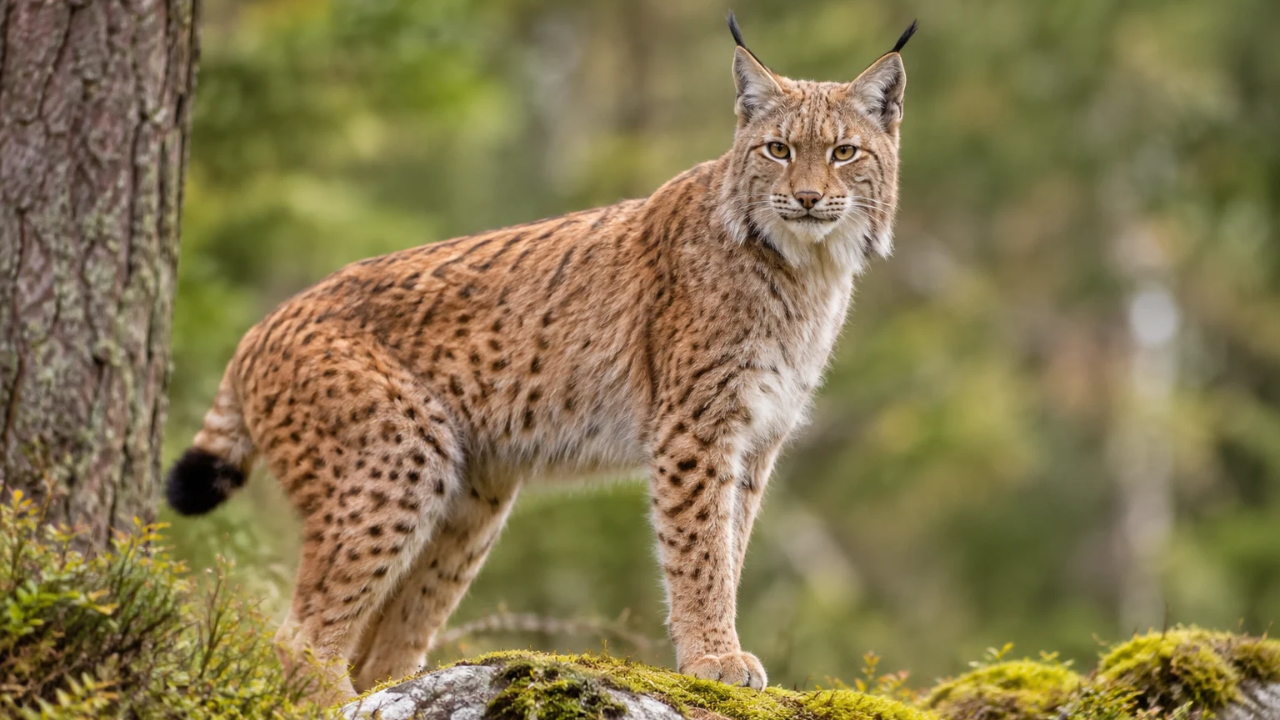
The High Court in London has blocked an attempt by conservationists to force the UK government to reconsider the reintroduction of the Eurasian lynx to England, ending a 1,300-year absence. The ruling hinges on administrative law rather than ecological merit, leaving the fate of apex predator rewilding trapped in a bureaucratic deadlock between environmental campaigners, rural landowners, and Natural England.
For years, the campaign to bring back Lynx lynx to the Kielder Forest in Northumberland has served as the ultimate litmus test for British conservation. It was supposed to be the flagship project that proved the United Kingdom could move beyond gardening its countryside and begin restoring genuinely wild ecosystems. Instead, the legal defeat exposes a deep structural flaw in how wildlife policy is governed, funded, and contested across the British Isles.
The court did not decide whether lynx belong in modern England. Judges rarely do. Judicial reviews examine whether public bodies followed the law when making their decisions, not whether those decisions were biologically optimal. When Natural England and the Department for Environment, Food and Rural Affairs (Defra) rejected the initial license application—and subsequently resisted attempts to overturn that refusal—they leaned heavily on procedural caution, insufficient stakeholder consensus, and unresolved questions regarding long-term financial liability.
The Legal Wall Facing British Rewilding
To understand why the High Court sided with the state, you have to look at the statutory framework governing non-native or long-extinct species. Under the Wildlife and Countryside Act 1981, releasing an animal that is not ordinarily resident in Great Britain requires a specific license. Because the Eurasian lynx was hunted to extinction in Britain roughly 1,300 years ago, during the early medieval period, the law treats it functionally as an alien species requiring extraordinary justification.
Natural England’s assessment criteria follow guidelines established by the International Union for Conservation of Nature (IUCN). Those standards demand far more than good intentions and suitable tree cover. They require exhaustive socio-economic impact assessments, ironclad exit strategies if the trial goes wrong, and verifiable buy-in from the communities living adjacent to the release zone.
The Lynx UK Trust, which spearheaded the Kielder Forest proposal, argued that the regulatory bar had been set impossibly high. Their case rested on the assertion that public bodies were failing in their broader statutory duties to halt biodiversity loss, effectively using the demand for unanimous local approval as a permanent veto.
The High Court disagreed. In administrative law, a regulator is granted wide discretion when weighing competing public interests, particularly where scientific uncertainty intersects with economic livelihood. Unless a decision is deemed irrational or procedurally flawed, the courts will not substitute their own judgment for that of government scientists.
This legal reality presents a sobering lesson for the broader rewilding movement. You cannot litigate a predator back into the wild. When campaigners attempt to use the courts to bypass political hesitation, they often end up cementing the very regulatory precedents they hoped to dismantle.
Ecological Necessity Versus Agricultural Anxiety
Strip away the legal briefs, and the battle over the Eurasian lynx comes down to a fundamental disagreement over what the British countryside is actually for.
Ecologists point to a landscape out of balance. Without apex predators, deer populations across England and Scotland—particularly roe, fallow, and non-native muntjac—have exploded to levels unseen in a millennium. Estimated at around two million animals nationwide, these unchecked herbivores strip woodland understories, prevent natural forest regeneration, and decimate ground-nesting bird habitats.
A single adult lynx consumes roughly one deer per week. More importantly, their mere presence creates what biologists call a landscape of fear. Deer stop lingering in vulnerable riparian zones and dense saplings, allowing native broadleaf trees to recover naturally. In the Harz Mountains of Germany and the Jura Mountains of Switzerland, reintroduced lynx populations have demonstrated this exact trophic cascade without causing catastrophic disruption to human activity.
Yet to hill farmers in Northumberland and the Scottish Borders, the ecological argument feels detached from economic survival. Upland sheep farming operates on razor-thin margins, heavily reliant on agricultural subsidies that are currently undergoing painful post-Brexit restructuring.
Farmers look at the return of a solitary ambush predator not as an ecological triumph, but as an uncompensated business risk. While conservationists point to continental data showing that lynx rarely target sheep—preferring woodland roe deer—agricultural unions counter that British upland grazing practices are fundamentally different. In continental Europe, flocks are often smaller, shepherded closely, or housed at night. In northern England, thousands of sheep roam unfenced across vast stretches of open moorland and forest edge.
The Compensation Trap
In an attempt to bridge this divide, reintroduction advocates frequently propose compensation schemes funded by private donations or eco-tourism revenue. On paper, paying a farmer full market value for every confirmed lynx kill seems like a clean solution.
In practice, compensation models breed deep resentment. Consider a hypothetical example in a remote upland valley: a shepherd finds a dead lamb days after the event, scavenged by foxes and crows. Proving to a regulator’s satisfaction that the initial kill was made by a lynx rather than a domestic dog or natural exposure becomes an administrative nightmare. Farmers end up feeling policed on their own land, forced to jump through bureaucratic hoops to recover losses they never asked to incur.
Furthermore, compensation addresses only direct mortality. It rarely accounts for the hidden costs of predation stress, such as reduced lambing percentages, lower weight gain in harassed flocks, or the labor required to alter grazing rotations. When Natural England scrutinized the Kielder proposal, these unresolved operational friction points weighed heavily against granting a license.
The Governance Deficit in Natural England
Beyond the clash between sheep and trees lies a quieter, more systemic problem inside Whitehall. British environmental agencies are chronically underfunded, risk-averse, and caught in a political crossfire.
Over the past decade, Natural England has seen its core grant-in-aid funding severely constrained while its statutory responsibilities have expanded. For a civil servant reviewing a high-profile predator release, the incentive structure is entirely asymmetrical. If a lynx trial succeeds, the credit goes to the conservation charity and the local tourism board. If a lynx wanders out of Kielder Forest, kills a prize pedigree ram, or sparks a tabloid panic, the political blowback lands squarely on the desk of the Secretary of State and the agency’s leadership.
This institutional caution explains why smaller, less controversial reintroductions have quietly succeeded while apex predators remain stalled. Beavers have returned to rivers across England, initially through unofficial releases on the River Otter in Devon and later through licensed enclosures and wild releases. Pine martens have been successfully translocated from Scotland to Wales and the Forest of Dean. White-tailed eagles now soar over the Isle of Wight.
None of these species trigger the visceral cultural resistance associated with a feline carnivore. Beavers flood fields, which annoys lowland farmers, yet solutions like flow devices and buffer strips are well understood. Eagles occasionally take lambs, yet their visibility and charismatic appeal insulate them from the worst political hostility.
The lynx sits in a different category altogether. It is elusive, nocturnal, and operates across massive home ranges—sometimes exceeding 100 square kilometers for a single male. Once released into the Kielder Forest, which straddles the Anglo-Scottish border, a lynx will not respect county lines or national jurisdictions. A release in England is, by biological necessity, a release into Scotland as well.
How Continental Europe Succeeded Where Britain Stalled
Looking across the English Channel reveals that the obstacles facing British conservationists are political rather than biological. Western Europe has experienced a remarkable resurgence of large carnivores over the last forty years, driven by rural depopulation, woodland expansion, and strict legal protections under the EU Habitats Directive.
Today, roughly 9,000 to 10,000 Eurasian lynx inhabit Europe outside of Russia. Successful reintroductions in Switzerland, France, Germany, and Slovenia relied on decades of patient groundwork, state-backed monitoring, and clear legal frameworks that balanced strict protection with pragmatic management tools.
Crucially, the most durable continental programs were rarely forced through via adversarial court battles. They evolved through multi-year stakeholder dialogues where agricultural representatives were given genuine influence over zoning, monitoring protocols, and rapid-response mechanisms for problem animals.
In contrast, the British approach has frequently been fractured. Rival conservation groups have sometimes disagreed publicly over methodology, release sites, and timelines. Some advocate for a slow, consensus-driven coalition—such as the Lynx to Scotland partnership, which has spent years conducting social feasibility studies before even drafting a license application. Others have favored aggressive media campaigns and legal challenges aimed at forcing the government's hand.
The High Court ruling has effectively settled that internal debate. The courtroom shortcut is closed.
The Path Forward for Apex Predators
If the Eurasian lynx is ever to return to English woodlands, the strategy must shift from legal confrontation to institutional design. The defeat in London provides a clear blueprint of what any future application must solve before it ever reaches a minister’s desk.
First, funding cannot rely on optimistic projections of wildlife tourism. A credible reintroduction requires an upfront endowment capable of underwriting decades of GPS-collar monitoring, veterinary oversight, and independent livestock verification. Without guaranteed multi-year capital, regulators will rightly view a trial release as an unfunded liability waiting to be dumped onto the public purse.
Second, the question of cross-border governance must be resolved prior to application. Because Kielder Forest connects seamlessly into the Southern Uplands of Scotland, English and Scottish conservation agencies need a unified regulatory protocol. Submitting an application solely to Natural England while treating the Scottish border as an administrative afterthought invites immediate judicial vulnerability.
Third, conservationists must accept that social carrying capacity is just as rigid a biological constraint as habitat size. Kielder Forest contains more than enough prey and tree cover to sustain a viable breeding population of lynx. What it currently lacks is a critical mass of local residents who view the animal's presence as compatible with their way of life.
Building that tolerance requires shifting power toward rural communities rather than lecturing them on trophic cascades. It means offering tangible economic incentives for coexistence—such as biodiversity credits or premium payments for farms operating within predator zones—rather than merely promising to pay for dead livestock after the fact.
The High Court’s decision preserves the ecological status quo in England for now. Deer will continue to browse the regenerating woodlands of Northumberland unchecked, and the ancient predator that once kept them moving will remain confined to wildlife parks and continental forests. Until conservationists build a coalition sturdy enough to survive outside a courtroom, the return of the lynx will remain an abstract ambition rather than a wild reality.