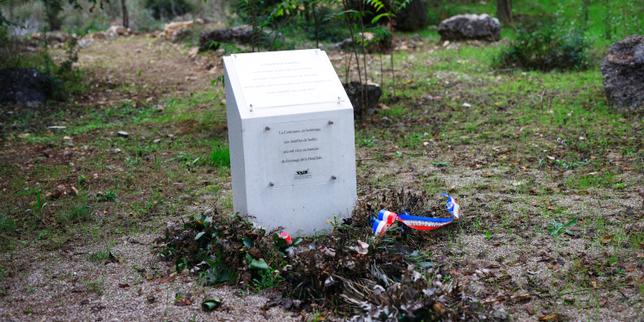
In the dense woodlands of the Alpes-Maritimes, far from the sun-drenched promenades of Nice and Cannes, a new memorial and educational center is forcing France to confront one of its most systematically buried postwar failures. For decades, the Harki forestry camps—isolated compounds built in the 1960s to house Algerian auxiliaries who fought alongside the French army—operated as sites of state-sponsored segregation. Survivors describe being penned in like animals, hidden deep inside state forests because the French government viewed their presence as an embarrassment. This new commemorative space in southeastern France finally transforms these forgotten woodland enclaves into documented historical territory.
History rarely vanishes on its own. It gets pushed into the trees.
To understand why a memorial in the Alpes-Maritimes carries such explosive weight today, you have to look at the mechanics of French state amnesia following the Evian Accords of March 1962. When the Algerian War of Independence ended, roughly 200,000 Harkis—Muslim Algerians who served as auxiliaries in the French military—were left behind in Algeria despite repeated assurances of protection. Tens of thousands were massacred in reprisals. Those who managed to escape to mainland France, numbering around 90,000 including their families, did not arrive to a hero’s welcome. Instead, they encountered a bureaucracy determined to make them invisible.
The Architecture of State Concealment
The French administration faced a logistical and political problem in 1962. Housing tens of thousands of displaced Algerian families in major urban centers risked igniting domestic political friction and reminding the French public of a brutal colonial defeat. The solution devised by Paris was spatial isolation.
While tens of thousands were initially funneled into massive transit camps like Rivesaltes and Saint-Maurice-l'Ardoise—enclosed with barbed wire and guarded by armed personnel—the government needed a longer-term way to absorb the population without integrating them into French cities. Enter the hameaux de forestage, or forestry hamlets.
Established primarily across southern France, including several remote sites in the Alpes-Maritimes such as Mouans-Sartoux, Valbonne, and Breil-sur-Roya, these camps served a dual purpose. Officially, they provided employment through the National Forestry Office (ONF), putting Harki men to work clearing brush, building firebreaks, and reforesting Mediterranean hillsides. Unofficially, the forestry camps functioned as open-air containment zones.
Consider the geography of these settlements. They were deliberately placed kilometers away from the nearest villages, accessible only by narrow, winding dirt roads. Residents lived in prefabricated wooden barracks or basic concrete blocks lacking adequate insulation against winter cold or summer heat. Movement was strictly monitored by camp directors—often former colonial administrators or military officers who treated the inhabitants not as French citizens, but as colonial subjects requiring supervision.
Mail was frequently opened. Visitors required authorization. Children were often schooled inside the camps rather than in neighboring municipal schools, ensuring that the local French population rarely interacted with the newcomers. The physical distance reinforced a psychological reality: these families were treated as a stain on the national conscience, tucked away where tourists and voters would never see them.
Why the Alpes-Maritimes Became a Focal Point
The French Riviera is globally synonymous with wealth, leisure, and postcard perfection. Yet just inland from the coast, the rugged terrain of the Alpes-Maritimes offered the exact topographical cover the French Ministry of Repatriates wanted in the early 1960s.
In places like the forest of Valbonne or the steep valleys near the Italian border, the terrain naturally isolated the camps. Harki workers spent grueling hours hacking through thick maquis scrubland under the Mediterranean sun, performing essential fire-prevention labor that protected the very coastal properties from which they were excluded. Their wages were minimal, and a portion was routinely deducted to pay for the substandard housing the state forced them to occupy.
The psychological toll of this arrangement lingered long after the barracks were eventually dismantled in the late 1970s and 1980s. When families were finally relocated into public housing projects on the outskirts of cities like Nice, Grasse, or Cannes, they moved from rural isolation to urban marginalization without ever receiving genuine social integration.
Creating a permanent historical site in the Alpes-Maritimes disrupts the curated image of the region. It forces locals and visitors alike to recognize that the manicured landscapes of southern France were physically maintained by a population kept under quasi-carceral conditions.
The Battle Over Historical Memory and State Reparation
For nearly half a century, the French state maintained a wall of silence regarding the treatment of the Harkis. Successive governments across the political spectrum avoided acknowledging institutional responsibility, framing the tragedy as an unfortunate byproduct of decolonization rather than a deliberate policy of abandonment and segregation.
That official posture began to crack only under relentless pressure from Harki associations and second-generation activists—the children who grew up behind the wire of the forestry camps and refused to accept their parents' shame.
The legal and political turning points arrived slowly:
- 2001: President Jacques Chirac inaugurated the first National Day of Homage to the Harkis, acknowledging their sacrifice during the war, though still stopping short of admitting state fault for their post-1962 treatment.
- 2016: President François Hollande officially recognized the responsibility of French governments in the abandonment of the Harkis in Algeria and the inhumane reception conditions in France.
- 2021: President Emmanuel Macron asked for forgiveness on behalf of the nation and introduced a landmark reparation law.
- 2022: Parliament passed legislation establishing a national commission to compensate Harkis and their children who lived in designated camps and forestry hamlets between 1962 and 1975.
While financial reparations marked a significant legal milestone, money alone cannot reconstruct erased history. Many former residents and historians pointed out that the initial list of eligible camps excluded several forestry hamlets, sparking bitter administrative battles over which sites qualified as places of deprivation of liberty. Establishing a dedicated historical site in the Alpes-Maritimes addresses a different deficit: the physical erasure of the camps themselves.
Once the forestry camps closed, the state moved quickly to demolish the barracks. Trees grew back over the foundations. Within two decades, an outsider walking through the woods of southern France would have no idea that hundreds of families had spent fifteen years living there under strict surveillance. Without physical markers, oral testimonies risked dying out with the first generation of survivors.
Inside the New Memorial Space
The initiative in the Alpes-Maritimes is designed not merely as a static monument, but as an active archive and pedagogical tool. Unlike traditional war memorials that focus exclusively on battlefield valor, this space centers on the post-war civilian experience inside mainland France.
Survivors who contributed to the project insisted on raw honesty over sanitized nationalistic narratives. Their testimonies anchor the exhibition, detailing the daily humiliations of camp life: the lack of basic sanitation, the arbitrary authority of camp supervisors, the confusion of children who were told they were French yet barred from participating in normal French life, and the crushing silence of fathers who felt betrayed by the flag they had defended.
The site brings together several critical elements:
- Archival Documentation: Administrative records, camp regulations, and blueprints showing how the forestry hamlets were planned and policed by state authorities.
- Oral Histories: Recorded interviews with elderly Harkis and their children who lived in the Alpes-Maritimes camps, preserving firsthand accounts before the remaining witnesses pass away.
- Topographical Mapping: Detailed guides linking the memorial space to the actual former camp locations scattered throughout the surrounding state forests.
- Educational Programming: Structured curricula designed for middle and high school students in the region, integrating the Harki experience into broader lessons on decolonization and civil rights.
By situating the historical narrative directly within the department where several major forestry camps operated, the project prevents the history from becoming an abstract footnote in a Parisian museum. It anchors the memory in the exact soil where the events occurred.
The Uncomfortable Counter-Arguments and Lingering Friction
Memorializing contentious history never happens without friction, and the establishment of a Harki historical center in the Alpes-Maritimes exposes deep fault lines within both French society and the Harki community itself.
One major point of tension involves the framing of the Harki identity. For decades, conservative political factions in France appropriated the Harki cause to score points against post-colonial critics, portraying the Harkis exclusively as hyper-loyal patriots who loved France above all else. Meanwhile, segments of the political left historically viewed the Harkis with suspicion, seeing them through the lens of their military alignment with the colonial power during the Algerian War.
Both caricatures flatten a complex reality. Historians who have studied the recruitment of Harkis emphasize that many men joined the French auxiliaries not out of deep ideological attachment to French colonialism, but out of survival, local clan rivalries, economic desperation, or coercion by both the French military and the Algerian National Liberation Front (FLN). A serious historical center has to navigate these nuances without sanitizing the brutal realities of the war or alienating the survivors who suffered in its aftermath.
There is also friction regarding the role of local municipalities and the National Forestry Office. For years, local officials in towns adjacent to the forestry camps maintained that they knew little about what transpired inside the compounds, or claimed they lacked the resources to intervene. Historical records paint a more complicated picture, showing frequent complaints from local residents about the proximity of the camps alongside economic reliance on the cheap labor the Harkis provided. Confronting that local complicity remains sensitive in small Provençal towns where family memories run deep.
Furthermore, many second- and third-generation descendants argue that state-backed memorials risk serving as a convenient closure mechanism for the government. Building a museum allows officials to inaugurate a plaque, deliver a solemn speech, and declare the chapter closed, even as socioeconomic disparities rooted in decades of ghettoization persist among Harki descendants.
Why Physical Places of Memory Matter Now
We live in an era where historical narratives are increasingly contested online, stripped of context, and reduced to partisan slogans. Against that backdrop, physical sites of memory perform work that digital archives cannot replicate.
Standing in the middle of a dense forest in the Alpes-Maritimes, miles from the nearest town square, forces a visceral understanding of what spatial segregation actually looks like. You do not need a sociology textbook to grasp the intent behind placing a community in the middle of nowhere when you have to drive twenty minutes up a mountain road just to reach the perimeter of where they lived.
The survivors who spoke of being hidden away like a source of shame were not speaking metaphorically. The forestry camps were engineered to keep a specific population out of sight and out of mind until the political trauma of the Algerian War faded from public consciousness. That strategy worked for over fifty years.
By carving out a permanent space to write the history of the forestry camps in the Alpes-Maritimes, survivors and historians are reversing the original purpose of those woods. The trees that once served to conceal a national disgrace now frame the evidence of it. For the aging generation of Harkis who spent their youth behind invisible woodland walls, recognition arrives far too late to undo the lost decades, yet just in time to ensure their erasure is never completed.


