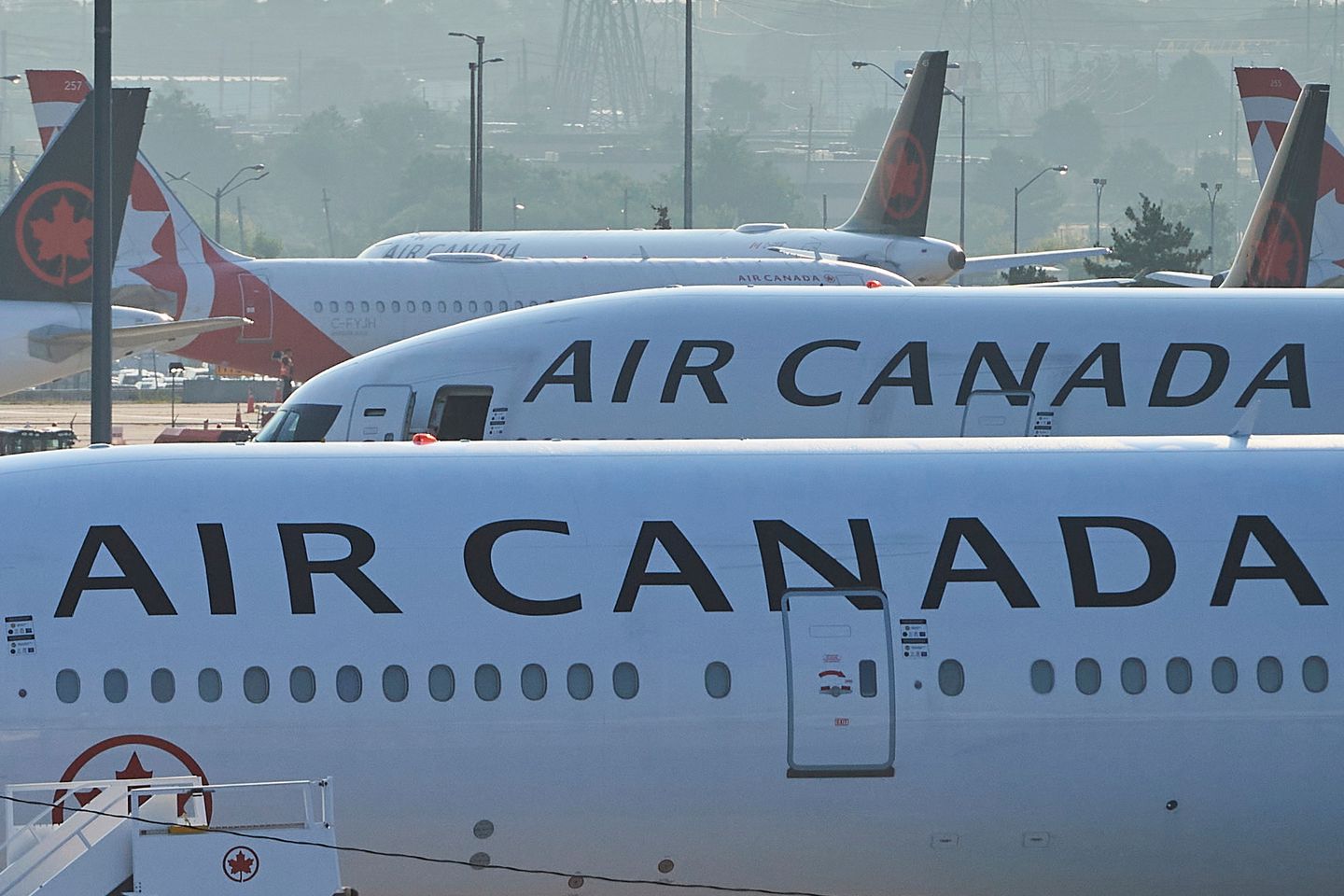
A mid-flight medical crisis involving a captain forced an Air Canada flight to divert to Boston, highlighting a growing point of failure in the modern aviation industry. While the airline and regulators point to the successful landing as proof that redundancy systems work, the incident exposes a deeper, systemic vulnerability. Commercial aviation relies heavily on the physical and psychological resilience of two pilots. When one fails, the margin for error shrinks to near zero. This diversion is not an isolated piece of bad luck, but a symptom of an industry operating at the absolute limit of its human infrastructure.
The Breakdown in the Cockpit
Air Canada Flight 861 was routing through standard international airspace when the captain became incapacitated. The first officer assumed sole command of the aircraft, declared an emergency, and initiated a rapid descent into Logan International Airport.
On paper, the system worked exactly as designed. Cockpit redundancy is built for this exact scenario. Pilots train relentlessly for single-pilot operations during emergencies. Yet, looking at the raw mechanics of the event reveals how close the situation came to a catastrophe.
When a captain goes down, the remaining pilot faces an immediate, overwhelming spike in cognitive load. They must simultaneously fly the aircraft, manage automated systems, communicate with Air Traffic Control (ATC), and coordinate with the cabin crew to ensure the incapacitated pilot receives medical attention without interfering with the flight controls.
[Incapacitation Event]
       │
       ▼
[Cognitive Load Spikes] ──► (Fly Aircraft / Manage Automation)
       │
       ▼
[Communication Split] ───► (ATC / Cabin Crew / Medical Guidance)
       │
       ▼
[Single-Point Vulnerability]
This is not a seamless transition. It is a high-stress scramble where a single misstep or a secondary mechanical failure can lead to total loss of control. The industry refers to this as a single-point vulnerability.
The Fiction of the Automated Flight Deck
A dangerous myth persists among the traveling public, and even among some airline executives, that modern commercial jets practically fly themselves. This belief drives the push toward single-pilot operations for cargo and eventually passenger flights.
The Air Canada diversion shatters that narrative. Automation is a tool, not a replacement. In an emergency, automation often complicates the situation rather than simplifying it. Systems require constant monitoring, programming, and correction. If the first officer had encountered severe weather, a system glitch, or an ATC miscommunication while managing the captain's medical crisis, the outcome could have been drastically different.
Aviation safety has improved over the decades not because machines got smarter, but because two human minds could cross-check each other's decisions. Removing one of those minds, even temporarily due to a medical emergency, removes the primary safety net of the entire operation.
Aging Captains and Changing Regulations
The aviation industry faces a demographic shift. A massive wave of retirements, coupled with a lingering pilot shortage, has forced airlines to rely heavily on senior captains who are closer to the mandatory retirement age.
At the same time, regulatory bodies face intense pressure to extend the working age of pilots. The regulatory framework currently requires rigorous medical screenings, including electrocardiograms (ECGs) and cognitive assessments, for pilots over a certain age. However, these screenings are snapshots in time. They cannot predict a sudden cardiac event, a stroke, or severe neurological distress occurring at 35,000 feet.
- Pilot Scarcity: Airlines are running schedules with minimal staffing buffers, meaning pilots are flying the maximum allowable hours under flight time limitation regulations.
- Accumulated Fatigue: Chronic fatigue degrades the immune system and exacerbates underlying health conditions, making sudden medical events more likely.
- The Squeeze: The intersection of an aging workforce and high-stress scheduling creates a predictable spike in inflight medical incidents.
The focus on individual health histories misses the broader point. The environment itself is toxic to longevity. Sleep deprivation, circadian rhythm disruption, and prolonged exposure to high-altitude radiation create a cocktail of health risks that the standard regulatory medical exam is poorly equipped to flag.
The Real Cost of Cost Cutting
For years, major airlines have optimized their operations for financial efficiency. This means leaner crews, shorter turnaround times, and maximum utilization of human assets.
When an incident like the Boston diversion occurs, corporate communications teams spin it as a triumph of training and safety culture. They praise the professionalism of the crew. They reassure passengers that safety is their top priority. This is public relations damage control designed to obscure a harsher reality.
The reality is that airlines are operating with almost zero margin for error. When a pilot becomes incapacitated, the airline's immediate concern shifts from safety to logistics and liability. The aircraft is grounded, passengers are stranded, and schedules across the network fracture. The financial penalty of a diversion is severe, which puts implicit pressure on crews to push through minor health issues rather than grounding themselves and risking the ire of management.
This culture of compliance over genuine well-being creates a silent hazard. Pilots are reluctant to report medical anomalies or mental health struggles because doing so can mean the immediate suspension of their medical certificate and the loss of their livelihood. They fly sick, they fly exhausted, and occasionally, they collapse at the controls.
Reevaluating the Redundancy Model
The current approach to cockpit redundancy is reactive. It assumes that as long as one pilot survives, the flight can land safely. This is a gamble that will eventually fail.
True safety requires a proactive approach to the human element. This means rewriting scheduling algorithms to prioritize circadian biology over crew utilization metrics. It means establishing non-punitive medical reporting systems that allow pilots to step aside when they are unfit, without facing financial ruin or career stagnation.
It also requires a serious reevaluation of the push toward single-pilot operations. The Air Canada incident proves that the second pilot is not a luxury or a cost-sink. They are the ultimate backup system.
The aviation industry stands at a crossroads. It can continue to squeeze the human element to maximize profit, accepting the occasional terrifying diversion as the cost of doing business, or it can reinvest in the resilience of its workforce. Until airlines acknowledge that human endurance has limits, passenger safety remains hitched to a very fragile thread.