The sound does not come from the sky. It comes from the soles of your feet. It is a low, guttural groan, less of an audible noise and more of a vibration that bypasses your ears to rattle your ribcage directly. If you have ever stood on a fault line when the earth decides to shift, you know that the most terrifying part isn't the shaking. It is the immediate, visceral realization that the one thing you trusted to be permanent—the solid ground beneath you—is entirely fluid.
For those of us who travel through Latin America, the history is written in the architecture. You see it in the reinforced concrete of modern Santiago, the jagged ruins of Antigua Guatemala, and the heavy colonial churches of Lima built with thick, sloping walls meant to survive the wrath of an angry planet.
But history books have a frustrating habit of flattening these cataclysms into dry ledger entries. They give us numbers. Magnitudes. Death tolls. A list of the ten deadliest earthquakes in the region reads like a cold statistical summary, but behind every digit lies a quiet Tuesday afternoon that was suddenly torn to shreds.
To understand the geology of this landscape, we have to look past the Richter scale and look at the hands that had to rebuild what was lost.
The Day the Coast Moved
Consider May 22, 1960, in Valdivia, Chile. The instrument needle swung to a 9.5 magnitude. It remains the most powerful earthquake ever recorded by modern science.
To put that in perspective via a simple analogy: think of a tight guitar string snapping. Now imagine that string is a 600-mile stretch of the Earth's crust, snapping with enough force to warp the geography of an entire nation.
The math tells us that thousands died, but the survivors remember something far more surreal than numbers. They remember the ocean disappearing. The water retreated miles from the shore, exposing shipwrecks and flopping fish on the bare sea floor, a quiet, terrifying vacuum before the tsunami returned as a wall of water towering over thirty feet high. Entire coastal villages were simply erased from the map. The earth altered its own shape; parts of the Chilean coast sank permanently into the sea, turning former pastures into saltwater marshes.
When you walk through Valdivia today, the riverfront looks peaceful. Cafes serve fresh seafood, and sea lions sun themselves on the docks. But beneath the surface of the local culture is a profound, inherited resilience. The locals don't view the earth as static. They view it as an active neighbor with a volatile temper.
The Concrete Trap of Port-au-Prince
If Valdivia showed the raw, terrifying power of nature, the January 12, 2010 earthquake in Haiti revealed a different kind of tragedy: the intersection of geology and human vulnerability.
The magnitude was a 7.0. On paper, it was significantly smaller than the Chilean giant. Yet, the devastation was disproportionately catastrophic.
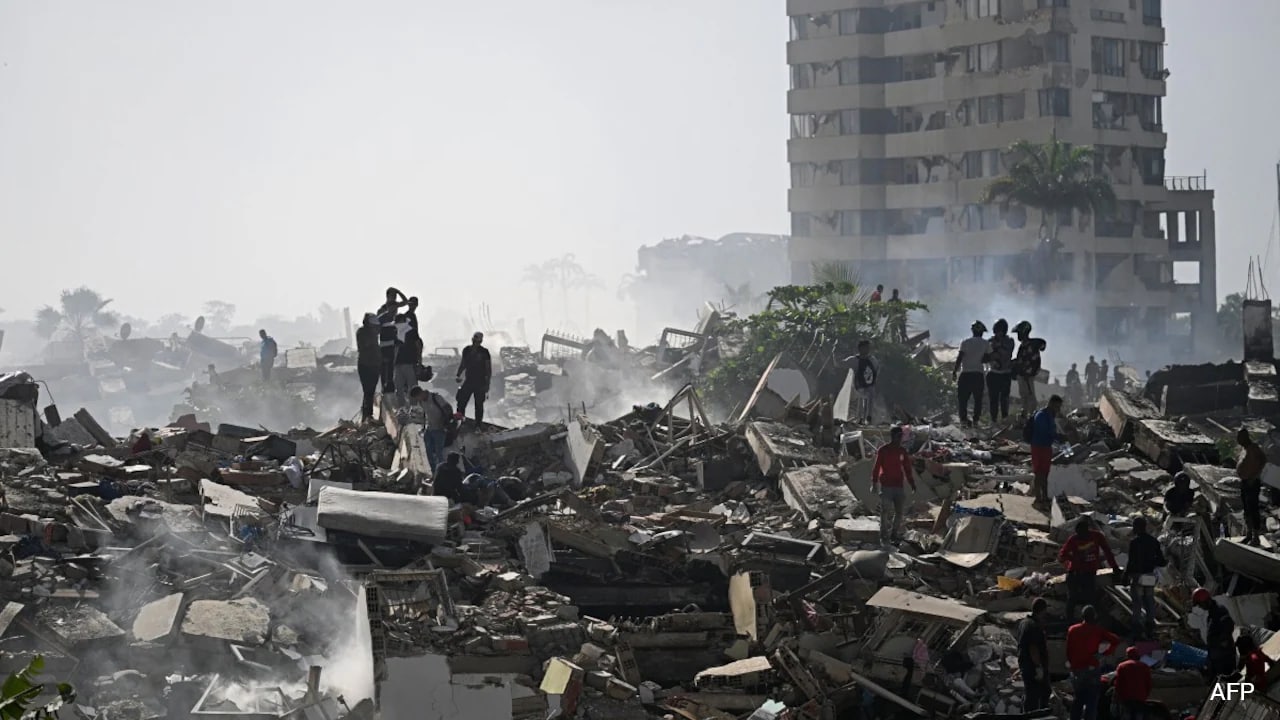
The fault line zipped right beneath the densely populated capital of Port-au-Prince. Because of decades of economic hardship and lack of building regulations, the city was a grid of unreinforced concrete, heavy cinderblock homes, and precarious hillside slums. When the ground shook for just thirty seconds, those heavy roofs became weapons.
An estimated 200,000 to 300,000 lives vanished in less than a minute. The presidential palace collapsed like a house of cards. The absolute scale of the loss made it clear that an earthquake's deadliest component isn't the movement of the tectonic plates; it is the vulnerability of the structures we build on top of them.
The contrast between the 1960 Chilean quake and the 2010 Haitian quake highlights a painful truth. Wealth and infrastructure dictate who survives when the earth moves. Chile, accustomed to frequent tremors, had developed strict building codes that saved countless lives despite facing a much larger physical event. Haiti, caught unprepared by a long-dormant fault, paid a price that still echoes through its economy and society today.
The Avalanche That Erased a Valley
Go back further to May 31, 1970, in Peru. A 7.9 magnitude earthquake struck off the coast, shaking the towering peaks of the Cordillera Blanca.
Consider a hypothetical traveler standing in the picturesque valley town of Yungay that afternoon. The shaking itself was violent, cracking walls and panicking residents, but the real danger lay miles away and thousands of feet above. The tremor detached a massive slab of glacial ice and rock from the north face of Mount Huascarán.
A wall of mud, ice, and boulders rushed down the mountain at over 120 miles per hour. It traveled eleven miles in a matter of minutes. By the time it reached the valley, the debris avalanche was over eighty feet high. It swept over Yungay, burying the town and virtually all of its 20,000 inhabitants under feet of solid mud.
Only a handful of people survived, mostly those who ran to the highest point in town: the elevated cemetery hill. Today, that cemetery remains, overlooking a peaceful green meadow where a vibrant city once stood. Palm trees that once lined the main plaza still poke their tops out of the earth, grim monuments to a city buried alive.
The Living Scars
It is easy to look at these historical markers and see them as distant anomalies, isolated events from a bygone era. That is a dangerous mistake. The tectonic tension along the Pacific Rim—the infamous Ring of Fire—never dissipates. It only recharges.
When you explore the historic centers of Latin America, you are walking through places that have been broken and mended repeatedly. In Mexico City, built on the soft, gelatinous bed of an ancient lake, the ground amplifies seismic waves like a bowl of jelly. The 1985 earthquake there killed thousands and reshaped the civic identity of the city, giving birth to a legendary network of volunteer rescue teams known as the Topos (Moles) who still risk their lives tunneling through collapsed concrete worldwide.
These events leave a permanent mark on the collective psyche. They alter how families build their homes, how children are taught to react to a sudden tremor, and how governments budget for the unpredictable.
The ground beneath Latin America is alive. It breathes, it stretches, and occasionally, it fractures. To travel here is to appreciate the sheer beauty of the mountains and coasts while respecting the quiet, sleeping giants that created them in the first place.
The true history of these earthquakes isn't found in the archives of geological surveys. It is found in the open plazas that were built wide enough to serve as refuge zones, the retrofitted steel beams hidden behind colonial facades, and the quiet strength of communities that look at a cracked wall, reach for a trowel, and begin to build again.