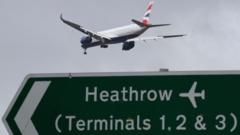
The Civil Aviation Authority and industry watchdogs are peddling a fantasy. They claim that by encouraging "rival" expansion plans—specifically at Heathrow—we might finally see a spade in the ground or a drop in passenger fees. This isn't just optimistic; it’s delusional.
The current narrative suggests that the main barrier to UK aviation growth is a lack of competitive tension in the construction process. The watchdog thinks that if we let a third party build the third runway, the incumbent's "monopoly" on expansion breaks, costs fall, and everyone wins.
They are wrong.
The problem isn't who builds the runway. The problem is that the runway itself is a 20th-century solution to a 21st-century logistical nightmare. We are obsessed with centralizing every long-haul flight into a single, congested corner of West London while ignoring the structural decay of the UK’s wider aviation strategy.
The Myth of the Competitive Expansion
Watchdogs love to talk about "market-driven solutions" for Heathrow. The idea is simple: if Heathrow Airport Limited (HAL) won't build it cheaply, let a billionaire or a rival consortium do it.
I have seen boards waste years on these "rival" proposals. In reality, the complexity of integrating a third party into the operations of one of the world's busiest hubs is a recipe for a decade of litigation and operational gridlock. You cannot simply drop a "competitive" runway into a private ecosystem and expect it to function.
- Land Ownership Realities: HAL owns the land. They own the terminals. They own the infrastructure. A rival builder isn't a competitor; they are a squatter in a high-stakes zone.
- The Cost-Plus Trap: The CAA regulates Heathrow’s income based on its capital expenditure. There is a perverse incentive to spend more, not less. Introducing a rival builder doesn't fix the regulatory architecture that rewards bloated budgets.
- Safety and Security: Fragmenting the responsibility for the airfield’s most critical assets introduces risks that no regulator is actually prepared to sign off on.
Why Lower Fees Are a Pipe Dream
The primary argument for "rival" expansion is that it will keep passenger fees low. This is a fundamental misunderstanding of aviation economics.
Expansion costs money. Massive amounts of it. Whether HAL builds it or a "rival" builds it, that debt must be serviced. In the aviation world, the passenger pays. Always.
If we add a third runway, the landing charges will go up to pay for the $18 billion—or likely $30 billion—price tag. No amount of "competitive bidding" for the concrete will offset the interest on the debt required to move the M25 motorway. To suggest otherwise is to lie to the public.
The Regional Betrayal
While London bickers over a few kilometers of tarmac, the UK’s regional airports are starving.
The "Heathrow or bust" mentality has sucked the oxygen out of the room for decades. We are told Heathrow is the only "hub" that matters. This is a convenient lie told by London-centric lobbyists.
Manchester, Birmingham, and Edinburgh have the capacity to handle increased volume today. They don’t need an $18 billion tunnel under a motorway. They need a government that stops viewing the UK as a city-state with a few provincial outbuildings.
If you want competition, don't build a rival runway at Heathrow. Build rival connectivity to the North.
The Environmental Elephant
Let’s be honest about the carbon math. The industry keeps talking about "Sustainable Aviation Fuel" (SAF) as if it’s a magic wand.
I’ve looked at the supply chains. We don't have the feedstock. We don't have the refineries. We don't have the price parity.
Building a third runway based on the assumption that we will have zero-emission long-haul flight by the time the concrete dries is a gamble with the taxpayer's money and the planet's future. The watchdog isn't just ignoring economics; they are ignoring physics.
The Real Future: Point-to-Point and Tech
The hub-and-spoke model—where you fly from a small city to a giant hub like Heathrow just to catch a second flight—is dying.
Modern aircraft like the Airbus A321XLR are changing the game. These are smaller, highly efficient narrow-body planes that can fly 4,000 miles. They don't need Heathrow. They can fly from Bristol to New York, or Newcastle to Dubai.
The watchdog is trying to optimize a 1980s business model. They are obsessed with making the hub more efficient while the market is moving toward decentralization.
What No One Wants to Admit
The third runway will probably never happen. Not because of a lack of competition, but because it is an economic albatross.
The "rival" expansion talk is just a smoke screen to keep the project alive in the minds of investors. It allows the regulator to look busy while avoiding the hard truth: Heathrow has reached its physical and social limit.
Instead of trying to find a "cheaper" way to build a flawed project, we should be:
- Taxing Frequent Flyers: Focus on the 10% of people who take 70% of the flights.
- Investing in High-Speed Rail: Not just to Birmingham, but as a genuine replacement for domestic short-haul.
- Digital First: Stop assuming business travel will return to 2019 levels. It won't. Zoom didn't just replace meetings; it replaced the need for the infrastructure we are now trying to build.
Stop asking who should build the third runway. Start asking why we are still talking about it. The watchdog is barking at a ghost. Heathrow expansion is a sunk-cost fallacy dressed up as national necessity. If we keep trying to solve yesterday's capacity problems with tomorrow's debt, the UK will remain grounded while the rest of the world flies past us.
Move the money. Move the focus. Move on.