Sensational headlines love a good spy thriller. When customs officials at Chattogram Port intercepted a suspicious shipment from China in late 2024, social media exploded with claims that Beijing was secretly arming Dhaka with enough fuel to launch a hundred ballistic missiles.
That's not quite what happened.
Don't get me wrong—the seizure was real, and the chemical inside those containers is genuinely dangerous. Customs officers flagged a consignment declared as industrial raw materials and discovered roughly 25 metric tons of ammonium perchlorate. That specific compound is the primary solid oxidizer used in rocket motors and military-grade missile propellants. It's the exact chemical that gives solid-fuel rockets their violent, sustained thrust.
So yes, someone tried to sneak dual-use missile ingredients through a major South Asian seaport. The real story isn't a Hollywood plot where Beijing's military leadership secretly shipped war-ready fuel to Bangladesh's armed forces. It's a much messier, and honestly more concerning, look at how global dual-use supply chains get exploited by private brokers, shell companies, and lax customs declarations.
What Actually Happened at Chattogram Port
Let's strip away the cable news exaggeration and look at the shipping manifest.
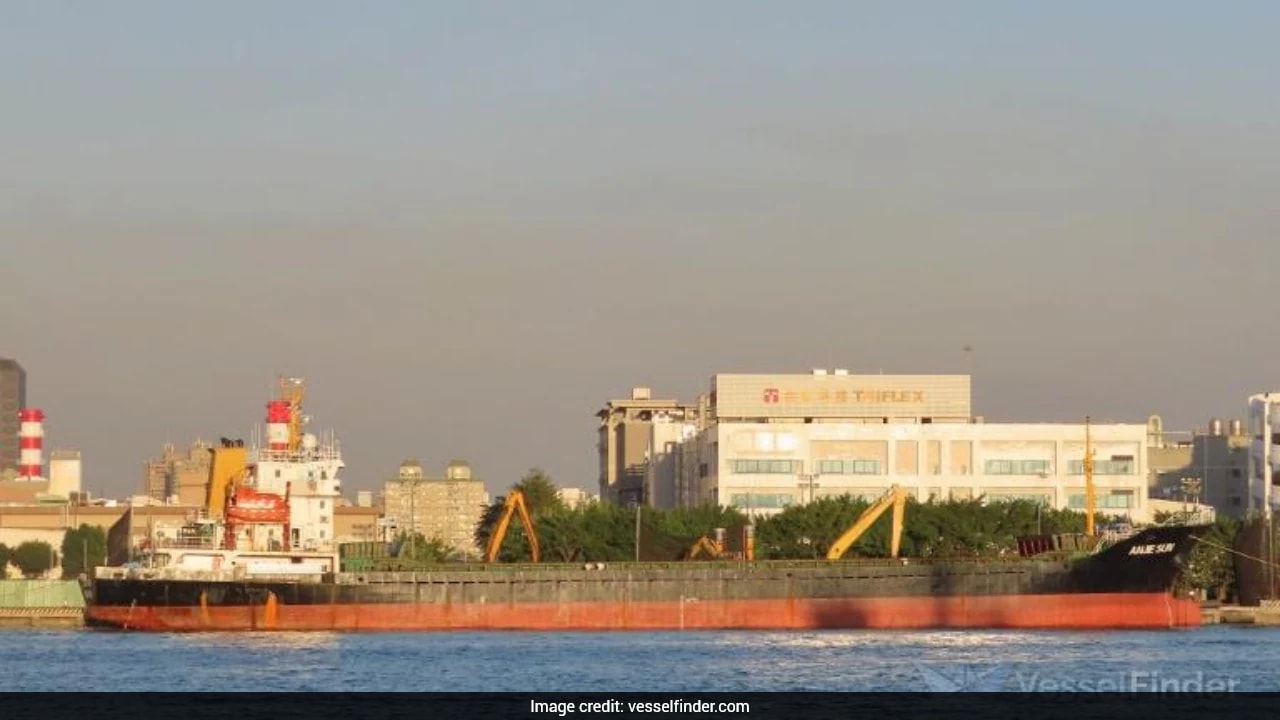
The cargo arrived at Chattogram Port, which handles over 90 percent of Bangladesh's international maritime trade. Because the port processes millions of containers every year, smugglers routinely rely on volume to hide restricted goods in plain sight. In this case, the shipment originated from a Chinese port and carried paperwork claiming the drums contained benign industrial chemicals—the kind used in everyday manufacturing, water treatment, or commercial textiles.
Intelligence tips and risk-profiling algorithms flagged the container before it could clear customs. When port authorities opened the shipment and ran chemical assays, they didn't find textile dye or fertilizer. They found high-purity ammonium perchlorate.
Why did defense analysts immediately throw around the "100 missiles" figure? Simple math. Depending on the size and range of a tactical ballistic missile or a heavy artillery rocket, a single solid-fuel motor requires anywhere from 150 to 300 kilograms of ammonium perchlorate as its oxidizer. Divide 25,000 kilograms by 250 kilograms per rocket, and you get 100 missiles.
It makes for a killer headline. It also skips over how missile manufacturing actually works.
Why Ammonium Perchlorate Isn't Just a "Missile Chemical"
If you've ever watched a space shuttle launch or seen a military parade rolling out solid-fuel rockets, you've seen ammonium perchlorate in action. In defense circles, it's treated as a tightly controlled strategic material. Under the Missile Technology Control Regime (MTCR)—an informal political understanding among 35 member states aimed at limiting the proliferation of missiles and missile technology—ammonium perchlorate is explicitly listed as a controlled item.
Here's the catch. China isn't a full member of the MTCR, though Beijing has pledged for decades to adhere to its original guidelines and maintains its own national export control lists that restrict missile precursors.
More importantly, ammonium perchlorate is a classic dual-use chemical. While militaries use it to launch warheads, civilian industries use it too:
- Commercial fireworks and pyrotechnics: Large-scale aerial shells rely on perchlorates for bright, reliable combustion.
- Civilian space launch vehicles: Private aerospace companies use ammonium perchlorate composite propellant (APCP) in booster stages.
- Industrial explosives and airbag inflators: Certain specialized mining charges and older automotive safety systems use small quantities of perchlorate compounds.
Because civilian demand exists, chemical factories in China produce thousands of tons of the stuff every year. You can't ban the molecule entirely without shutting down legitimate industries. Instead, global security relies on export licenses, end-user certificates, and honest customs declarations. When an exporter lies on the bill of lading, that entire regulatory wall collapses.
Did Beijing Actually Smuggle It?
Let's address the elephant in the room. When a headline asks, "Did China Smuggle Chemical For 100 Missiles To Bangladesh?" it implies state-sponsored covert action by the Chinese government.
There's zero public evidence that the Chinese state orchestrated this shipment.
In fact, state-to-state defense transfers between China and Bangladesh don't need to be smuggled inside mislabeled shipping containers. China is already Bangladesh's largest arms supplier by a wide margin. According to data from the Stockholm International Peace Research Institute (SIPRI), Beijing has supplied over 70 percent of Bangladesh's major conventional weapons over the past decade, including tanks, fighter jets, submarines, and naval frigates. If Beijing wants to sell military hardware to Dhaka, they sign a government-to-government contract and ship it openly with diplomatic clearance.
What we see in seizures like the Chattogram incident is almost always the work of illicit procurement networks or profit-driven chemical brokers.
Think about how international chemical trading works. A mid-sized chemical manufacturer in China wants to move product. A trading company in Hong Kong, Singapore, or mainland China buys the batch, falsifies the customs declaration to avoid the headache of applying for a dual-use export permit from China's Ministry of Commerce, and routes it to an importer in South Asia.
Sometimes the end buyer is an unscrupulous fireworks manufacturer trying to dodge import taxes. Other times, the port of Chattogram isn't even the final destination. It's a transshipment or diversion point meant to move restricted precursors onward to militant groups, regional insurgencies, or sanctioned regimes in neighboring regions like Myanmar.
The Geography Problem Nobody Mentions
Look at a map of the Bay of Bengal and the seizure suddenly makes a lot more sense.
Bangladesh shares a porous, rugged border with Myanmar—a country locked in a brutal, multi-front civil war. Both Myanmar's military junta and various ethnic armed organizations are desperate for propellants, explosives, and raw chemical precursors to manufacture rockets, mortars, and improvised munitions.
On top of that, Bangladesh has its own history of dealing with domestic extremist networks and illicit cross-border arms trafficking through the Chittagong Hill Tracts. When 25 tons of high-grade oxidizer lands in Chattogram without a valid military end-user certificate, intelligence agencies don't just worry about foreign armies. They worry about that cargo disappearing into a warehouse and showing up six months later in homemade rockets or massive vehicle-borne improvised explosive devices.
Chattogram Port has seen this movie before. In 2004, authorities made the largest arms seizure in Bangladesh's history at the very same port, intercepting ten truckloads of assault rifles, rocket-propelled grenades, and ammunition destined for separatist insurgents in Northeast India. Port security has improved dramatically since then, which is why this chemical shipment got caught before leaving the dock. Still, the routing strategy hasn't changed much.
How Dual-Use Smuggling Beats Standard Customs Checks
If you've ever dealt with international freight forwarding, you know that customs enforcement is a game of needles and haystacks. You can't physically open and lab-test every container coming off a mega-ship.
Smugglers exploit three specific blind spots in maritime trade:
- Harmonized System (HS) Code Manipulation: Every traded good has an international HS tariff code. Dual-use exporters simply assign the cargo the HS code of a chemically similar, unrestricted compound. Unless a customs officer notices a discrepancy in weight, packaging, or shipper history, the digital paperwork clears automatically.
- Shell Trading Companies: The company listed as the exporter in China rarely manufactures the chemical. It's usually a general logistics or trading firm with a clean record, insulating the actual chemical plant from regulatory scrutiny.
- Lack of Chemical Testing at Secondary Ports: Major hubs like Rotterdam or Singapore have handheld Raman spectrometers and mobile labs right on the docks. Smaller or heavily congested ports often rely on visual inspection. White crystalline powders all look pretty much the same inside a sealed 50-kilogram fiber drum.
When Chattogram customs caught this shipment, it was a win for intelligence sharing and targeted container profiling. It wasn't a lucky guess. Port authorities increasingly rely on data analytics that cross-reference shipper names, unusual trade routes, and historical red flags to pull specific containers out of the queue.
What This Means for Regional Security
Sensationalist reporting turns a serious regulatory failure into a cartoonish geopolitical crisis. Framing the Chattogram seizure as "China smuggling 100 missiles into Bangladesh" actually distracts from the real policy failures that let this happen.
First, it highlights a massive gap in export control enforcement inside China's sprawling chemical sector. While Beijing talks a big game about non-proliferation and responsible global governance, local enforcement at provincial ports remains inconsistent. Rogue chemical brokers know they can source controlled precursors domestically and push them out through freight forwarders who don't ask questions.
Second, it proves that South Asian ports are prime targets for diversion networks. Whether those chemicals were meant for illegal pyrotechnic factories, regional insurgents in Myanmar, or onward smuggling to the Middle East, the Bay of Bengal is an active transit corridor for dual-use materials.
If you're tracking defense news, supply chain security, or South Asian geopolitics, ignore the clickbait headlines about secret Chinese missile bases in Dhaka. Instead, keep your eye on customs enforcement bulletins from Chattogram, Mongla, and regional transshipment hubs. Watch how governments tighten HS code verification for industrial oxidizers, and pay attention to whether Beijing actually prosecutes the exporting firms named on those bills of lading. That's where the real accountability happens—and it's the only way to stop the next 25 tons from slipping through unnoticed.