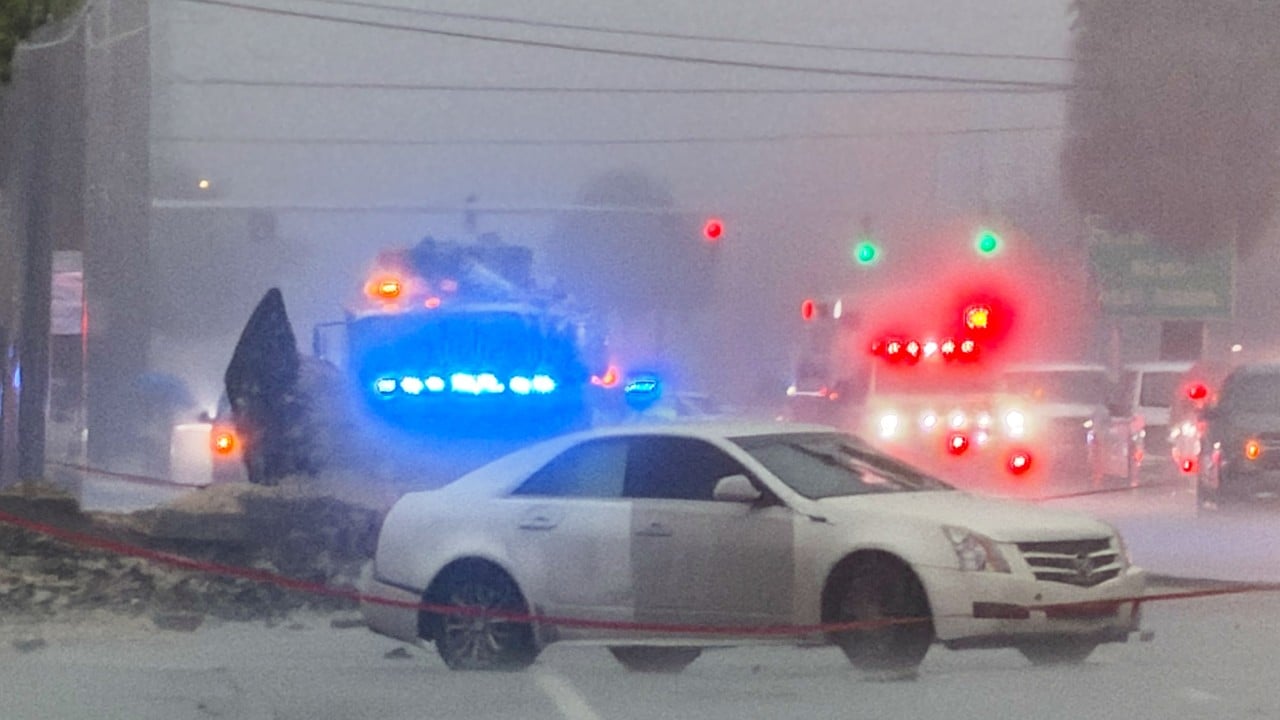
When you see a headline screaming about a plane crash near Donald Trump’s Florida home, your mind immediately jumps to security breaches, restricted airspace, or political drama. That's exactly what click-driven news outlets want you to think.
Let's clear the air right away. The URL provided in your prompt didn't resolve to a live article, and as of November 2026, there is no verified, factual record of a recent nine-fatality plane crash erupting into a fireball right outside Mar-a-Lago. If you're looking for breaking details on an active catastrophe in Palm Beach today, pause before sharing unverified social media posts.
Fake or recycled aviation headlines circulate constantly online, especially when they attach a high-profile name like Trump to a tragic event. Sometimes bots scrape old international crash reports—like the devastating 2024 Vinhedo crash in Brazil or regional charter accidents—and slap a sensationalized Florida location onto the headline to farm clicks. Other times, minor general aviation incidents in South Florida get wildly exaggerated in aggregate feeds.
Understanding how aviation reporting works in Palm Beach County will save you from falling for viral misinformation. It also explains why any real crash near Mar-a-Lago would trigger a massive, unmistakable federal response within minutes.
Why Airspace Around Mar-a-Lago Is Unlike Anywhere Else
If you've ever spent time in Palm Beach, you know the geography makes aviation both super common and heavily scrutinized. Mar-a-Lago sits on a narrow barrier island sandwiched between the Atlantic Ocean and the Lake Worth Lagoon. Less than four miles to the west sits Palm Beach International Airport (PBI).
Commercial jets, private charters, and flight school Cessnas fly directly over or adjacent to the estate every single day. Noise complaints from Palm Beach residents have been a local political battle for decades. Because PBI's main east-west runway aligns almost directly with the southern end of the island, low-flying aircraft are a normal sight.
That proximity changes drastically depending on who is in town.
Whenever a sitting president, former president, or high-level protectee stays at Mar-a-Lago, the Federal Aviation Administration (FAA) activates a Temporary Flight Restriction, commonly known as a TFR. In aviation circles, the Palm Beach TFR is famous for being one of the busiest and strictest in the country.
- The Inner Ring: Usually spans a 10-nautical-mile radius from the airport. No general aviation, flight training, banner towing, or drone operations are allowed inside this zone without explicit Secret Service and Air Traffic Control (ATC) clearance.
- The Outer Ring: Extends out to 30 nautical miles. Pilots operating here must remain in constant two-way radio communication with ATC and broadcast a discrete transponder code.
- Military Enforcement: North American Aerospace Defense Command (NORAD) routinely scrambles F-16 fighter jets from Homestead Air Reserve Base when a civilian pilot accidentally wanders into the restricted zone.
You can't have a major aviation incident near Mar-a-Lago without the entire national security apparatus lighting up. When a real airspace violation happens, NORAD issues public press releases within hours, often noting the deployment of flares to get an errant pilot's attention.
Real Aviation Incidents Near Palm Beach vs. Viral Rumors
South Florida does see its share of real plane crashes, largely because the region is a global hub for flight training and private charter traffic. When actual accidents happen near Palm Beach, they leave behind clear, verifiable paper trails from local first responders and federal investigators.
Take the February 2024 crash of a Hop-A-Jet Bombardier Challenger 600 on Interstate 75 near Naples, Florida. That was a real, tragic fireball crash involving a South Florida-based charter jet that killed two pilots after dual engine failure. Or look at historical incidents around Palm Beach County Park Airport (Lantana), located just south of Mar-a-Lago, where small single-engine planes occasionally suffer mechanical trouble during takeoff or landing.
When a genuine crash occurs in Palm Beach County, three specific agencies immediately go on the record:
- Palm Beach County Fire Rescue (PBCFR): They handle fire suppression and medical triage. Their public information officers post real-time incident updates on official channels, detailing exact cross streets, hospital transports, and apparatus deployed.
- The Federal Aviation Administration (FAA): Within 24 hours, the FAA logs a preliminary accident report on its public database, listing the aircraft tail number, make, model, and basic circumstances.
- The National Transportation Safety Board (NTSB): For any crash involving fatalities or substantial structural damage, the NTSB dispatches a "Go Team" to secure the wreckage and open a formal docket.
If you read an article claiming nine people died in a massive fireball near Trump's home, and you don't see citations from PBCFR, an FAA tail number, or an NTSB investigator-in-charge, you're looking at fabricated or misattributed content.
How Clickbait Farms Manufacture Fake Crash Stories
I've spent years tracking how misinformation spreads across news aggregators and social feeds, and aviation disasters are a favorite tool for bad actors. Why? Because plane crashes trigger an immediate emotional spike. People click without checking the source.
Here is the exact playbook these low-quality sites use to trick readers.
First, they take a real fatality count from an unrelated tragedy. Nine deaths is a specific number—it matches the tragic January 2020 Calabasas helicopter crash that killed Kobe Bryant and eight others, as well as the September 2022 Mutiny Bay floatplane crash in Washington state. By grabbing a real fatality figure from a past event, the headline feels grounded in reality.
Second, they inject a polarizing political figure or famous landmark. Attaching "near Trump's Florida home" guarantees the algorithm will push the link to both supporters and critics. The geography is kept intentionally vague—words like "near" or "miles from" allow the writer to stretch the truth across an entire state.
Third, they use visceral, cinematic phrasing like "erupting in a massive fireball." Real aviation journalists and NTSB investigators rarely use tabloid phrasing in initial reports; they describe "post-impact fire" or "thermal damage." Tabloid language is a dead giveaway that the piece was written to provoke shock rather than inform.
What Actually Happens During a Real Investigation
If a multi-fatality aircraft accident ever does occur near Palm Beach, you won't have to guess whether it's real. The investigative machinery moves with rigid transparency.
First responders secure the perimeter to protect both the public and perishable physical evidence. Jet fuel fires burn hot, often exceeding 1,500 degrees Fahrenheit, which melts aluminum airframes and complicates victim identification. Local medical examiners work alongside federal specialists to confirm fatalities—a process that takes days, not minutes.
Meanwhile, NTSB investigators look at three primary pillars: the human, the machine, and the environment.
They pull ATC audio recordings from LiveATC and official FAA radar tracks to see the aircraft's final altitude, airspeed, and heading. They examine maintenance logs to check for missed inspections or recurring mechanical defects. If the aircraft was a twin-engine turboprop or business jet capable of carrying nine people—such as a Beechcraft King Air, Cessna Citation, or Pilatus PC-12—it likely carried a Cockpit Voice Recorder (CVR) or Flight Data Recorder (FDR). Those hardened boxes get shipped straight to the NTSB laboratory in Washington, D.C.
Real journalism reflects this methodical reality. Credible reporters name the specific aircraft model, confirm whether a flight plan was filed under Instrument Flight Rules (IFR) or Visual Flight Rules (VFR), and quote named officials rather than anonymous "witnesses" or vague "sources."
How to Verify Breaking Aviation News Yourself
You don't need press credentials to fact-check a suspicious plane crash headline. The aviation industry maintains some of the most transparent public records in the world, and you can verify an incident in less than two minutes.
Start by checking the FAA Aviation Safety Information Analysis and Sharing (ASIAS) portal. The FAA updates its preliminary accident and incident notifications every business morning. If a plane went down anywhere in the United States yesterday, the tail number and city will be listed there.
Next, search the NTSB CAROL query tool (Case Analysis and Reporting Online). Even before a preliminary report is published—which usually takes two to three weeks—the NTSB posts basic docket entries for fatal crashes within days.
Finally, look at local Palm Beach journalism. Outlets like The Palm Beach Post, WPTV NewsChannel 5, and WPBF 25 News have reporters stationed minutes away from Mar-a-Lago and Palm Beach International Airport. A major crash in that corridor would dominate their live broadcasts, push notifications, and front pages instantly.
Bookmark the FAA preliminary accident page and your trusted local news feeds, skip the sensationalized aggregator links, and always demand a tail number before believing any breaking crash report.


