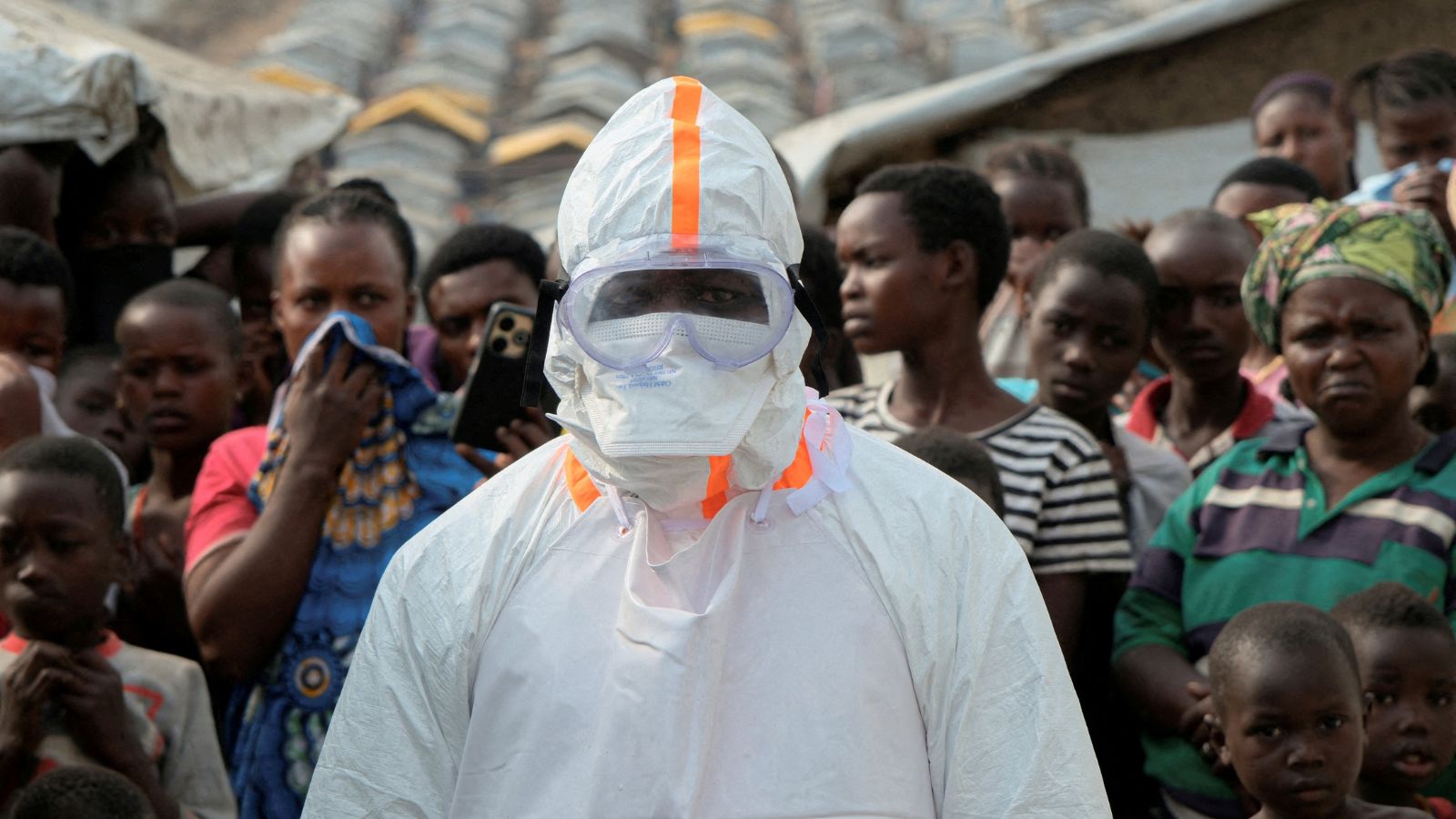
When a headline claims Congo's Ebola deaths have topped 5,000 amid fears of continent-wide spread, stop and check the math. No single Ebola outbreak in the Democratic Republic of the Congo (DRC) has ever killed 5,000 people, and even the cumulative death toll across all fifteen recorded DRC outbreaks since 1976 sits below that threshold.
Sensational headlines distort how infectious diseases actually move. Panic makes for great clicks, yet it obscures the real, documented mechanics of how the Ebola virus spreads across Central and East Africa—and why the genuine risk of cross-border transmission has nothing to do with a fabricated 5,000-death milestone.
If you want to understand what is actually happening on the ground in the DRC, you have to separate viral rumors from verified epidemiological data. Here is the reality behind Congo's Ebola numbers, why border regions remain vulnerable, and how modern medical tools have completely changed the containment math.
The Real Numbers Behind Congo's Ebola History
To understand why a 5,000-death claim raises immediate red flags for epidemiologists, look at the World Health Organization (WHO) and DRC Ministry of Health records. Since the virus was first identified near the Ebola River in Yambuku back in 1976, the DRC has experienced more outbreaks than any other nation on earth.
Yet the scale of those outbreaks varies wildly.
The deadliest outbreak in Congolese history occurred between 2018 and 2020 in the eastern provinces of North Kivu, South Kivu, and Ituri. That crisis lasted nearly two years in an active conflict zone, resulting in 3,470 confirmed and probable cases and 2,287 deaths. It was the second-largest Ebola epidemic ever recorded globally, trailing only the 2014–2016 West African epidemic in Guinea, Liberia, and Sierra Leone, which killed 11,325 people.
Add up every other outbreak in the DRC's history—including the 1976 Yambuku outbreak (280 deaths), the 1995 Kikwit outbreak (254 deaths), the 2007 Luebo outbreak (187 deaths), and the smaller flare-ups between 2020 and 2022—and the cumulative historical total across fifty years still hovers around 3,800 fatalities.
Numbers matter in public health. When media outlets or viral posts inflate death tolls past 5,000, they erase the massive difference between an isolated rural flare-up and a regional catastrophe. Worse, inflated figures erode trust in local health authorities who spend months tracking every single contact chain to get accurate counts.
Why Fear of Continent-Wide Spread Keeps Resurfacing
Even when the death toll is exaggerated, the underlying anxiety about regional spillover isn't entirely baseless. Geography works against easy containment in the DRC.
The country shares borders with nine different nations, spanning thousands of miles of dense rainforest, river networks, and porous trade routes. In eastern Congo, cities like Goma and Beni sit right next to Uganda, Rwanda, and Burundi. Millions of people cross these borders every month to trade goods, visit family, or flee armed conflict.
When an outbreak hits a major transit hub, health officials rightly worry about cross-border transmission. We saw this happen in June 2019, when a five-year-old boy traveled from the DRC into Uganda's Kasese District and tested positive for Ebola, followed shortly by two of his family members. Uganda's rapid response teams isolated the cases immediately, preventing a wider epidemic, yet the incident proved how fast the virus can cross an international line.
Still, "cross-border risk" is not the same thing as "continent-wide spread."
Unlike airborne respiratory viruses such as measles or SARS-CoV-2, Ebola does not spread through casual contact in an airport terminal or across a crowded bus. Transmission requires direct physical contact with the blood, secretions, organs, or other bodily fluids of an infected person—or with surfaces and materials contaminated with those fluids.
People aren't even contagious until they develop visible symptoms like high fever, severe weakness, and muscle pain. Because symptomatic patients are typically too ill to travel long distances, the virus tends to spread in tight clusters among family caregivers, healthcare workers, and mourners participating in traditional burial practices. A continent-wide pandemic driven by Ebola simply does not match how the pathogen behaves biologically.
What Actually Drives Outbreaks in Eastern Congo
If you've ever followed field reports from Médecins Sans Frontières (Doctors Without Borders) or the WHO's emergency response teams, you know the virus itself is only half the battle. In the DRC, the hardest obstacles are human, political, and logistical.
Active Conflict and Militia Violence
During the 2018–2020 Kivu epidemic, health workers operated in a region plagued by dozens of armed militia groups. Ebola treatment centers in Katwa and Butembo were repeatedly attacked and burned. Contact tracers couldn't enter certain villages for weeks at a time because of active gunfire. Every time security deteriorated, surveillance went blind, allowing hidden chains of transmission to multiply unchecked.
Deep-Seated Community Mistrust
Imagine watching billions of international dollars pour into your town to fight a single virus while your community still lacks basic clean water, malaria treatment, and security from armed raids. For many residents in North Kivu, the sudden arrival of foreign medical teams in full hazmat suits felt invasive and suspicious. Rumors spread quickly—some claiming Ebola was a fabricated pretext to disenfranchise voters ahead of national elections, others alleging treatment centers were harvesting organs. When communities don't trust responders, families hide sick relatives at home instead of bringing them to isolation wards, which dramatically increases household transmission.
Gaps in Routine Infection Control
Many rural clinics in the DRC operate without reliable running water, gloves, or sterilization equipment. A patient arriving with an early-stage Ebola fever looks identical to someone suffering from malaria or typhoid. Before anyone suspects a hemorrhagic fever, healthcare workers often administer injections or draw blood without protective gear, inadvertently turning a local clinic into an amplifier for the virus.
How Modern Vaccines and Treatments Changed the Game
Ten years ago, an Ebola diagnosis in Central Africa was almost a coin flip for survival, with case fatality rates averaging 50% and sometimes climbing to 90% depending on the viral strain. Today, the clinical reality looks completely different, even if sensational headlines haven't caught up.
The turning point came with the rVSV-ZEBOV vaccine (marketed as Ervebo), which targets the Zaire ebolavirus species responsible for the deadliest outbreaks in the DRC. Field trials during the West African epidemic and mass deployment in Congo proved the vaccine is roughly 97.5% effective at preventing infection when administered via a "ring vaccination" strategy—vaccinating the contacts of confirmed cases, plus the contacts of those contacts.
Alongside prevention, doctors now have targeted monoclonal antibody therapies that actually cure the disease if given early.
During the landmark PALM clinical trial conducted in the DRC in 2018 and 2019, researchers tested four experimental treatments head-to-head. Two of them—Inmazeb (atoltivimab, maftivimab, and odesivimab) and Ebanga (ansuvimab)—proved so effective that the trial was stopped early so every patient could receive them. Among patients who arrived at treatment centers early with low viral loads, survival rates jumped to nearly 90%.
That doesn't make Ebola harmless. It remains a brutal, fast-moving pathogen that devastates under-resourced clinics. Yet the idea that health authorities are helpless against an unstoppable wave of death is outdated by nearly a decade.
How to Spot Misinformation During Disease Outbreaks
Whenever news breaks about a viral flare-up in Africa, social media algorithms reward the most terrifying framing possible. You don't need an epidemiology degree to filter out bad reporting—you just need to look for a few specific telltale signs.
- Check the viral species. There are multiple species of ebolavirus, including Zaire, Sudan, and Bundibugyo. The Ervebo vaccine and monoclonal antibodies work specifically against the Zaire species. If an article talks about an outbreak without naming the strain, it's missing the single most important clinical detail.
- Separate cumulative historical totals from active cases. A headline citing thousands of deaths is almost always lumping together decades of separate outbreaks—or misquoting figures from the 2014 West African epidemic—to make a localized flare-up sound apocalyptic.
- Look for primary sources. Reliable health reporting cites the WHO Disease Outbreak News, the Africa Centres for Disease Control and Prevention (Africa CDC), or the DRC Ministry of Health. If an article relies solely on anonymous social media posts or vague "local sources" for casualty numbers, treat the figures as unverified.
- Watch how transmission is described. Any report suggesting Ebola is spreading rapidly among casual travelers across multiple countries is contradicting established virology. Look for mentions of contact tracing and epidemiological links; when health teams know who infected whom, the outbreak is being tracked, not spiraling out of control.
Public health emergencies in the DRC deserve serious, sustained international attention—not because of imaginary 5,000-death milestones, but because frontline Congolese doctors, nurses, and community health workers routinely risk their lives in conflict zones to stop deadly pathogens before they ever reach an international border. Supporting local healthcare infrastructure, funding regional lab diagnostics, and verifying data through primary public health agencies like the WHO and Africa CDC remain the most effective ways to track and contain future outbreaks.