We finally have an Ebola vaccine. It works remarkably well, boasts regulatory approval, and sits in global stockpiles. Yet, when a fresh outbreak hits the Democratic Republic of the Congo (DRC), health workers on the front lines often cannot use it.
It sounds like a bureaucratic nightmare or a cruel logistical failure. You have a deadly pathogen killing people, you have a breakthrough medical tool locked in storage, and the two aren't meeting.
The reality isn't a failure of willpower. It's a failure of biology and geography.
Understanding why this lifesaving tool stays on the sidelines requires looking past the generic "Ebola" headline. You need to grasp how the virus mutates, how the global vaccine strategy is structured, and what actually happens when an outbreak flares up in a conflict zone.
The Wrong Lock for the Wrong Key
The biggest misunderstanding about Ebola is treating it like a single disease. It isn't. The genus Orthoebolavirus contains several distinct viral species. When people talk about the highly successful Ebola vaccine—specifically Ervebo, developed by Merck—they're talking about a weapon designed for one specific target: the Zaire strain.
Ervebo works incredibly well against Zaire. During previous historic outbreaks in West Africa and eastern DRC, it saved countless lives via ring vaccination campaigns.
But when an outbreak is triggered by the Bundibugyo or Sudan strains, that stockpile becomes practically useless.
- Zero cross-protection: The genetic differences between these strains mean antibodies generated by the Zaire vaccine don't reliably neutralize other variants.
- The Bundibugyo problem: Recent shifts in the region have seen a resurgence of the Bundibugyo strain. Because there's no fully approved, deployed vaccine for this specific variant, health officials cannot simply fly in the existing Ervebo supply and start pinning needles into arms.
- Experimental delays: While candidate vaccines for other strains exist in development pipelines, moving them from a lab fridge to an active conflict zone involves massive regulatory hurdles, clinical trial protocols, and limited dose availability.
Deploying a Zaire-specific vaccine against a Bundibugyo outbreak gives communities a false sense of security while wasting millions of dollars in logistics. It doesn't work. It's that simple.
Ultra Cold Logistics in a War Zone
Even when the Zaire strain hits, getting the vaccine to the people who need it is a nightmare. Ervebo requires an ultra-cold chain. We aren't talking about a standard medical fridge. We're talking about keeping vials at a constant temperature between -60°C and -80°C until just before injection.
Think about the geography of the eastern DRC.
Roads are frequently non-existent or turned to deep mud by torrential rains. Power grids are unstable or entirely absent. To make matters worse, these areas are often active conflict zones populated by various armed rebel groups.
To run a successful ring vaccination campaign, you must identify an infected person, trace every single individual they interacted with, and vaccinate that "ring" within days. Bringing specialized, heavy sub-zero freezers powered by generators into remote, insecure villages is a staggering security risk.
If the cold chain breaks for even a few hours because a generator fails or an armed group blocks a road, the entire batch of vaccines is ruined. You can't just fix that with better management. It's an inherent physical barrier to deployment.
Community Trust Over Medical Tech
You can have the best medicine in the world, but if people don't trust you, they won't take it. Decades of conflict, political instability, and exploitation have left a deep scar of suspicion in rural Congolese communities.
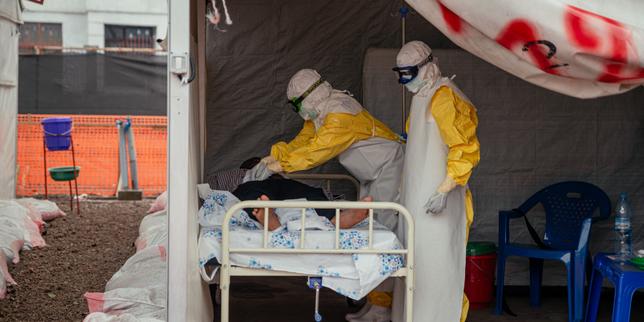
When outsiders arrive in full biohazard suits, driving expensive SUVs, and telling locals to abandon their traditional burial practices, the immediate reaction isn't gratitude. It's fear and anger.
- Misinformation: Rumors frequently spread that the vaccine itself causes the disease or is a tool for population control.
- Priorities mismatch: Locals often wonder why international agencies pour millions into Ebola—a disease that kills fast but occurs sporadically—while ignoring malaria, measles, and malnutrition, which kill thousands of their children year after year.
- Resistance to isolation: Forcing sick family members into specialized treatment units can feel like a death sentence to relatives who just want to care for their loved ones at home.
Without deep, sustained community engagement led by local leaders, forcing a vaccination campaign onto a population completely backfires. It leads to hidden cases, skipped contact tracing, and sometimes violent attacks on healthcare facilities.
The Real Strategy Moving Forward
If we want to stop these outbreaks from spiraling into global health emergencies, the playbook has to change. Relying on a single stockpile of a strain-specific vaccine isn't a strategy; it's a gamble.
First, we need to aggressively fund and test multivalent vaccines—shots that combine protections against Zaire, Sudan, and Bundibugyo strains in a single dose. Clinical trials for these candidates must be fast-tracked during peacetime, not scrambled together in the middle of a crisis.
Second, investment must shift toward heat-stable formulations. If scientists can develop a highly effective lyophilized (freeze-dried) vaccine that survives at room temperature for weeks, the logistical nightmare of the ultra-cold chain vanishes.
Until those tools are ready, the best defense isn't a syringe. It's basic, aggressive public health infrastructure. This means training local community health workers, stocking rural clinics with personal protective equipment, implementing rapid diagnostic tests that can identify the exact strain in hours, and using newly available antiviral treatments like obeldesivir or monoclonal antibodies to curb mortality early.
Stop waiting for a magic bullet vaccine to solve a complex systemic crisis. Fix the groundwork, fund the correct strains, and build trust before the next fever starts.
Take a look at this detailed analysis by the Institut Pasteur de Lille on Ebola strain dynamics to better understand how these distinct viral variants mutate and spread across Central Africa.