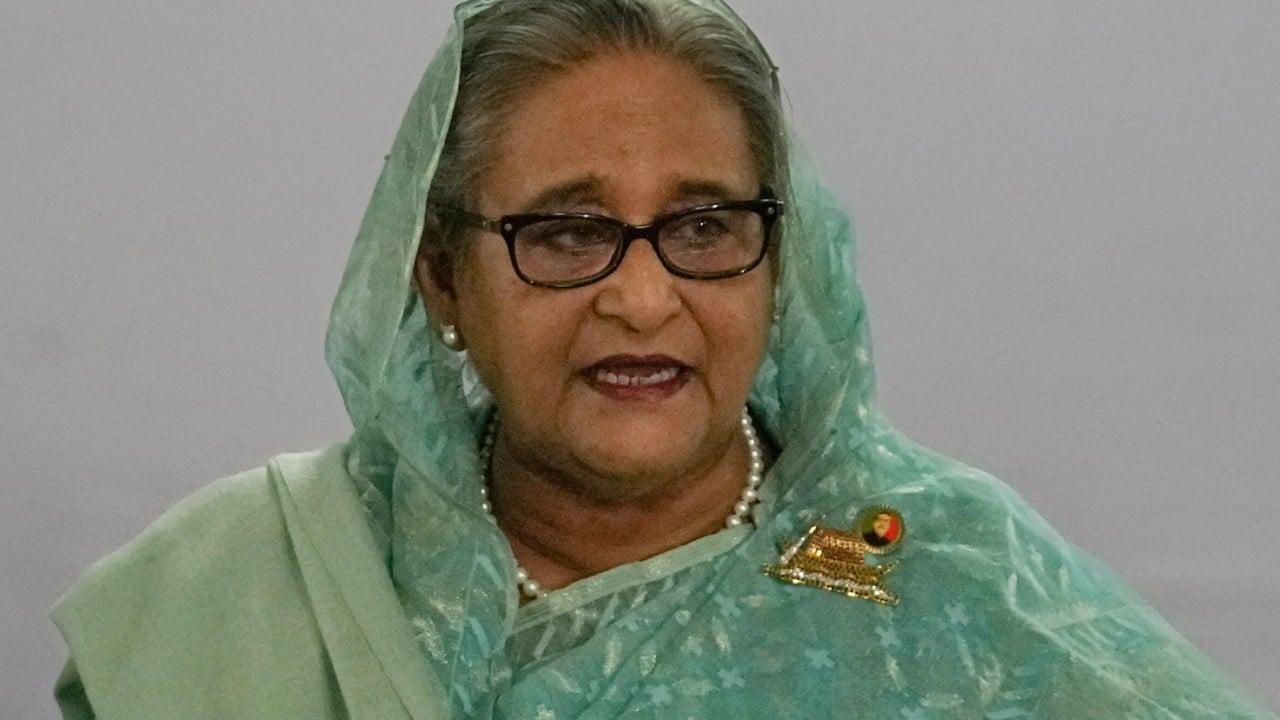
New Delhi is playing a high-stakes game of geopolitical theater, and the mainstream media is falling for the opening act. The narrative currently making the rounds—that India is "opening the door" to extraditing former Prime Minister Sheikh Hasina—is a fundamental misreading of how power operates in South Asia.
Extradition isn't about law. It is about leverage. And right now, Hasina is the most valuable piece of leverage India holds against a volatile, unpredictable interim government in Bangladesh.
The idea that a "thaw" in Delhi-Dhaka relations depends on shipping Hasina back to a cage in Dhaka is a fantasy. In reality, handing her over would be a strategic suicide note for India’s regional credibility.
The Sovereignty Trap
Mainstream analysts love to quote the 2013 Extradition Treaty between India and Bangladesh. They point to the 2016 amendments that supposedly make it easier to transfer "political" offenders. This is a surface-level reading that ignores the "political offense" exception—a massive, gaping hole in the legal framework that India can, and will, drive a tank through.
If India surrenders Hasina, it sends a chilling message to every other pro-India leader in the neighborhood: If your people turn on you, we will keep you safe—until it becomes slightly inconvenient.
Bhutan, Mauritius, and the friendly factions in Nepal are watching. The moment India prioritizes a temporary "thaw" with a transitional regime over the lifetime loyalty of a strategic asset, its influence in the "Neighborhood First" policy evaporates.
The Myth of the Clean Slate
The "thaw" narrative assumes that the interim government in Dhaka, led by Muhammad Yunus, is a stable entity capable of delivering a predictable partnership. It isn't. It is a fragile coalition of student protesters, technocrats, and hardline Islamist elements currently filling the vacuum left by the Awami League's collapse.
Why would Delhi trade a guaranteed asset for the hope of a friendship with a government that might not exist in eighteen months?
- The Islamist Factor: With the Awami League decapitated, groups like Jamaat-e-Islami are surging. For India, Hasina was the bulwark against radicalization on its eastern border.
- The Military Wildcard: The Bangladesh Army is currently the only thing holding the country together. History suggests that their alignment is fluid.
- The China Shadow: Dhaka’s new leadership will inevitably flirt with Beijing to balance Indian influence. Handing over Hasina doesn't stop this; it just removes India's best bargaining chip to prevent it.
The Extradition Treaty is a Shield Not a Sword
Let’s dismantle the legalistic optimism. The treaty has a specific clause: extradition can be refused if the request is "made for the purpose of prosecuting or punishing him on account of his political opinions."
Every charge currently being leveled against Hasina in Dhaka—from mass murder to corruption—is being framed by her supporters as political vendetta. India doesn't need to prove her innocence. It only needs to claim the process in Dhaka is biased.
Given the current state of Bangladesh’s judiciary, which is undergoing a massive "cleansing" of Awami League appointees, India has a mountain of evidence to suggest a fair trial is impossible.
A Thought Experiment in Betrayal
Imagine a scenario where India actually complies. Hasina is flown to Dhaka, tried in a kangaroo court, and imprisoned or worse.
What does India get? A "thank you" note from Muhammad Yunus?
What does India lose?
- Intelligence Networks: Decades of deep-state cooperation built under Hasina’s tenure would be compromised as her loyalists realize their patron has abandoned them.
- The "Safe Haven" Guarantee: India has long positioned itself as the regional big brother. If it cannot protect a leader who was its closest ally for 15 years, it is no longer a big brother. It’s just a neighbor with a bigger army.
The Real Play: The Long Game of "Cold Storage"
Delhi’s current strategy isn't "opening the door." It’s "managing the clock."
By signaling a willingness to talk about extradition, India buys time. It allows the temperature in Dhaka to drop. It lets the interim government deal with the brutal reality of governing—electricity shortages, inflation, and internal schisms.
Eventually, the demand for Hasina’s head will be replaced by the demand for Indian investment and regional stability.
The Economic Leverage Nobody Mentions
Bangladesh is India’s largest trading partner in South Asia. India is Bangladesh’s second-largest source of imports. The supply chains for textiles—the backbone of the Bangladeshi economy—are deeply intertwined with Indian raw materials and transit routes.
Dhaka cannot afford a cold war with Delhi. They might scream for Hasina’s extradition in public to satisfy the "Monsoon Revolution" crowds, but in the backrooms of the Secretariat, the conversation is about trade quotas, water-sharing treaties, and credit lines.
India knows this. They are betting that the belly will eventually outvote the heart.
The Cost of Compliance
If you think India is being "difficult," look at the precedent. The UK has ignored extradition requests for decades based on human rights concerns. The US selectively enforces them based on national security.
Why should India be the only global power to play by the "nice guy" rules when its core security interests are at stake?
The blood spilled during the August uprising is a tragedy, but foreign policy is not a branch of ethics. It is a branch of survival. For India, keeping Hasina in a safe house in the National Capital Region is a security necessity. Handing her over would be a moral gesture that yields a strategic disaster.
Stop Asking "When?" and Start Asking "Why?"
The media keeps asking when the extradition process will start. They are asking the wrong question.
The real question is: What is the price India will extract for simply keeping her quiet?
As long as Hasina is in India, she is a ghost that haunts the current administration in Dhaka. Her presence is a reminder that the old guard isn't entirely gone. It forces the interim government to stay on its best behavior with Delhi, lest India decides to stop "restricting" her political activities.
The "Thaw" is a Mirage
There will be no "thaw" because there was never a "freeze" in the way people think. There is only a recalibration. India is adjusting to a post-Hasina world by holding onto the one thing the new government wants most.
In the world of realpolitik, you never give up your best card just to be liked. You give it up when you have no other choice. And India has plenty of choices.
India will keep the "extradition talks" in a state of permanent bureaucracy. They will ask for more documents. They will raise concerns about legal precedents. They will wait for the next election cycle in Dhaka.
By then, the world will have moved on, and Hasina will be a footnote in history, safely tucked away in a Delhi suburb, while India continues to pull the strings of regional stability.
Don't mistake diplomatic politeness for a change in strategy. The door isn't open. It's just unlatched so India can see who's knocking before they decide to bolt it shut.
Pay no attention to the "thaw" headlines. Watch the border. Watch the trade deals. Watch the silence. That is where the real power lies.