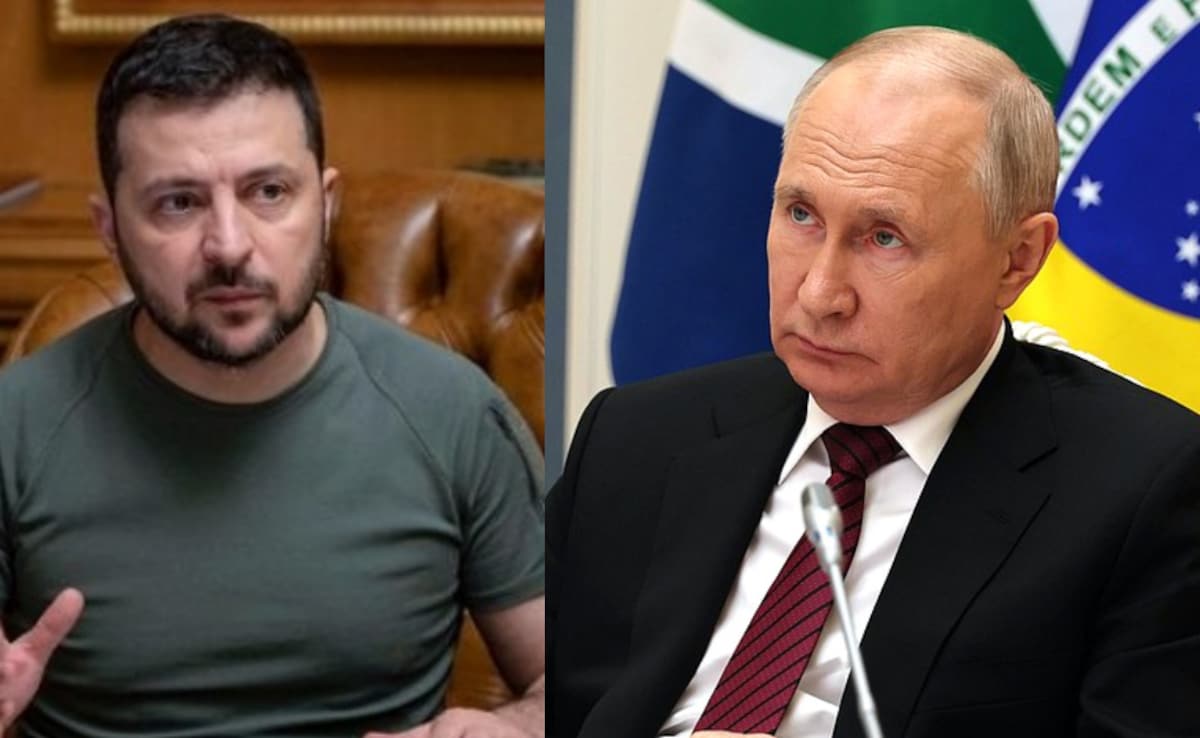
Vladimir Putin isn't interested in a photo op or a "get to know you" session with Volodymyr Zelensky. If you've been following the diplomatic back-and-forth coming out of the Kremlin lately, you'll see a very specific, rigid wall being built. The Russian presidency has made it clear that any face-to-face meeting between the two leaders will only happen to sign off on a finalized deal. Basically, the heavy lifting has to be done by everyone else first.
This isn't just standard pre-negotiation posturing. It’s a message to the West and to Kyiv that Moscow views the current state of affairs as too immature for high-level summits. They aren't looking for a dialogue to find a solution. They're looking for a ceremony to cement one.
The Kremlin's Hardline Stance on Direct Talks
Dmitry Peskov, the Kremlin's longtime spokesman, recently doubled down on this position. He argues that a meeting for the sake of a meeting is useless. In the Russian view, leadership summits are the "endgame," not the "opening move." This creates a massive hurdle because it requires both sides to agree on the "final conflict arrangements" before they even step into the same room.
Think about the logistical and political nightmare that creates. You’re asking two warring nations to hammer out the most sensitive details—territorial borders, security guarantees, and NATO status—through mid-level delegates who often lack the authority to make real concessions. It’s a recipe for a stalemate.
Russia's strategy here is simple. They want to avoid a situation where Putin sits down and is pressured into making spontaneous compromises. By demanding a pre-baked agreement, they ensure that by the time the cameras are flashing, the "victory" or the "terms" are already locked in stone. It protects Putin’s image at home while signaling strength abroad.
What Final Conflict Arrangements Actually Look Like
When the Kremlin talks about "final arrangements," they aren't being vague for fun. They have a specific set of demands that have remained remarkably consistent since February 2022. If you want to know what it would take for that meeting to happen, you have to look at the "Istanbul papers" and the subsequent demands made throughout 2024 and 2025.
First, there’s the issue of the "new territorial realities." Moscow expects Ukraine to legally recognize Russia's sovereignty over Crimea and the four regions it claimed to annex in late 2022: Donetsk, Luhansk, Kherson, and Zaporizhzhia. For Zelensky, this is a non-starter. It’s political suicide.
Second, the "neutrality" clause. Russia insists that Ukraine must abandon any ambition to join NATO. They want a "demilitarized" or "neutral" buffer state. Ukraine, meanwhile, sees NATO membership as the only way to prevent another invasion in five or ten years. These two positions aren't just far apart. They’re on different planets.
Why Zelensky Can’t Accept These Terms
You have to look at this from the Ukrainian perspective to understand why the Kremlin’s "final arrangements" rule is such a poison pill. Zelensky has spent the last few years rallying the world around his "Peace Formula." That plan involves the total withdrawal of Russian troops and the restoration of Ukraine's 1991 borders.
If Zelensky agrees to meet Putin only to sign a deal that gives away a fifth of his country, he isn't just ending a war. He’s potentially ending his presidency and the sovereignty of his nation. The Ukrainian public, despite the exhaustion of years of fighting, still shows high levels of resistance to "land for peace" deals.
The Kremlin knows this. By setting the bar for a meeting at "total agreement," they're effectively saying a meeting won't happen. It’s a way to blame Ukraine for the lack of diplomacy. "We're ready to meet," Moscow says, "but only if they agree to our terms first." It’s a brilliant, if cynical, piece of communication.
The Role of Middlemen and Failed Mediations
We've seen plenty of countries try to bridge this gap. Turkey, China, Brazil, and even various African nations have thrown their hats into the ring. They all hit the same wall. The Russians want the result before the process, and the Ukrainians want a process that leads to a fair result.
The Istanbul talks in early 2022 were the closest the two sides ever got. Back then, there was a draft on the table. It leaked, and it showed a Ukraine that was willing to discuss neutrality in exchange for international security guarantees. But then the world saw the images from Bucha. The trust evaporated instantly. Since then, the rhetoric has only hardened.
Russia now views Zelensky's government as "illegitimate" or at least "non-representative" of the people they claim to protect. This makes the "final arrangements" even harder to reach. Who are you even negotiating with if you don't acknowledge the other guy's right to lead?
Diplomacy in the Shadow of the Frontline
The reality is that diplomacy isn't happening in boardrooms right now. It's happening in the trenches of the Donbas. Both sides are trying to improve their "negotiating position" through force.
Putin believes time is on his side. He’s betting on Western fatigue. He thinks that if he waits long enough, the US and Europe will stop sending the high-tech hardware Ukraine needs to survive. If that happens, his "final arrangements" become a lot easier to swallow for a desperate Kyiv.
Zelensky is betting on the opposite. He’s pushing for more long-range capabilities and more direct support. He wants to make the cost of the war so high for Russia that Putin is forced to meet without these rigid preconditions. It’s a high-stakes game of chicken with millions of lives in the balance.
Breaking Down the Meaning of Finality
What does "final" even mean in a conflict this deep? Even if they signed a piece of paper tomorrow, the underlying issues wouldn't vanish. The trauma, the economic destruction, and the geopolitical shift of Ukraine toward the West are permanent changes.
The Kremlin’s insistence on "finality" suggests they want a clean break. They want the sanctions lifted, the borders recognized, and the world to move on. But you don't just "move on" from the biggest land war in Europe since 1945. Any agreement signed by Putin and Zelensky will be the start of a long, painful stabilization process, not the end of the story.
The Missing Pieces in Current Reports
Most news outlets are just repeating the "Putin won't meet" headline without explaining the internal Russian politics behind it. You have to understand the pressure Putin is under from his own hardliners. There are people in Moscow who think he hasn't gone far enough. If he meets Zelensky and comes back with anything less than a total win, he looks weak to the "Z-bloggers" and the military elite.
On the other side, Zelensky is dealing with a population that has sacrificed everything. Any "deal" that looks like a surrender could lead to internal unrest in Ukraine. This is why the "final conflict arrangements" are so elusive. It’s not just about what the two men want. It’s about what their respective bases will allow them to survive.
Moving Beyond the Headline
Stop waiting for a "summit" to save the day. The Kremlin has told us exactly what they're doing. They're waiting for a total capitulation or a shift in the global political landscape that forces Ukraine’s hand.
If you want to track where this is actually going, stop looking at the Kremlin's press releases and start looking at the following indicators instead.
- Track the flow of artillery shells. Negotiations only happen when one side can't shoot anymore.
- Watch the political shifts in Washington and Berlin. If the money stops, the "final arrangements" happen on Russia's terms.
- Monitor the Russian economy. If the ruble collapses or the energy revenue dries up, Putin might suddenly find a "preliminary" meeting more attractive.
- Pay attention to the "Global South." If countries like India or Saudi Arabia shift their stance, the diplomatic pressure on the Kremlin increases significantly.
The current standoff is a stalemate of will. The Kremlin is using the "meeting" as a carrot, but it's a carrot tied to a very long, very sharp stick. Until the cost of war exceeds the cost of compromise for both leaders, those final arrangements will remain a fantasy. Keep your eyes on the logistics, not the leaders. The battlefield decides the diplomacy, not the other way around.



