Jet fuel smells sharper in cold air. It cuts through the exhaust of limousines, the hum of security vans, and the faint, metallic tang of rain-slicked asphalt before the sun even clears the horizon.
Stand near an international tarmac when three of the most consequential leaders on earth step within arm's reach of one another, and you stop hearing policy papers. You hear boots on concrete. You hear camera shutters clicking in bursts like small-arms fire. You hear the sudden, unnatural quiet that falls over a crowd of diplomats and guards when nobody knows whether the next gesture will be a warm embrace, a stiff nod, or a lingering grip meant to test who blinks first.
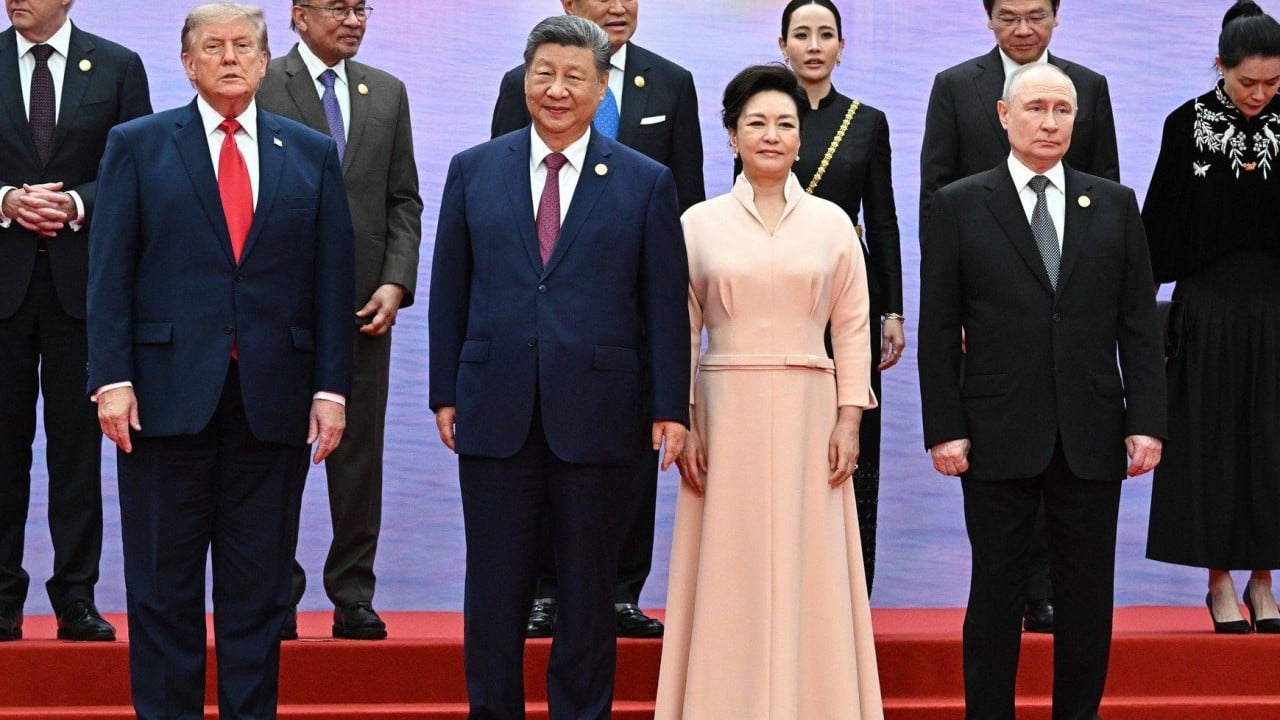
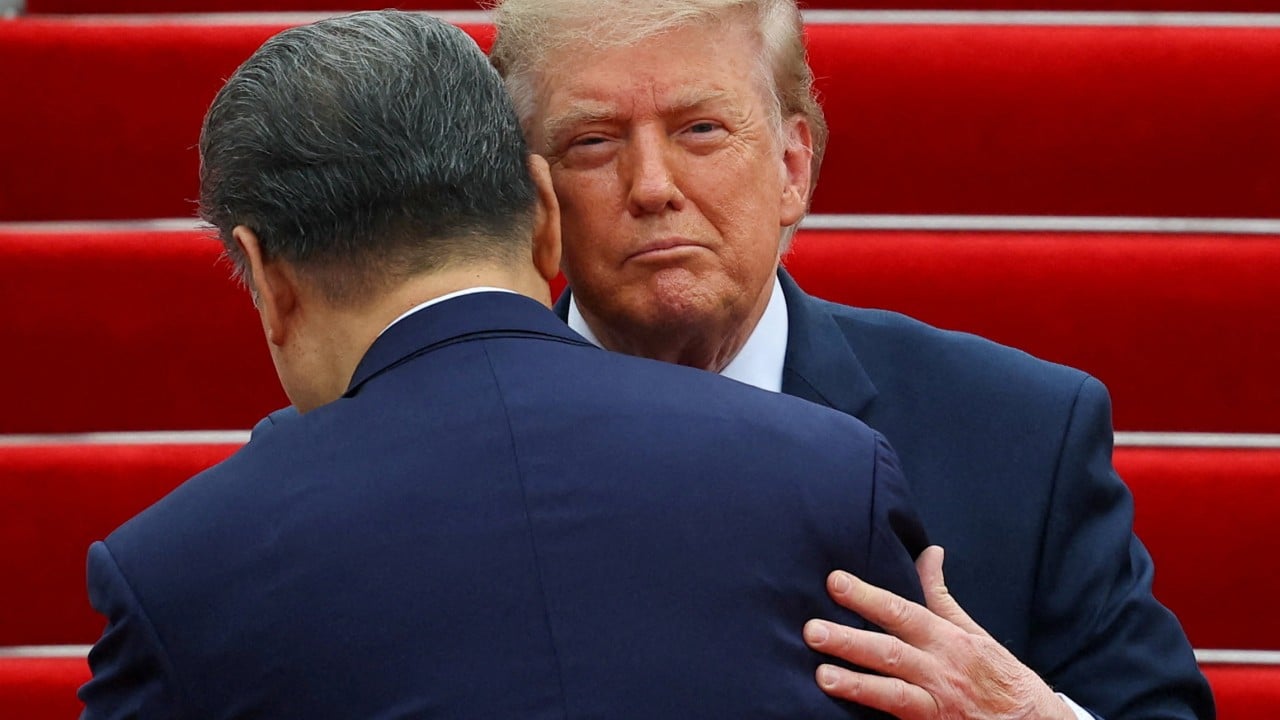
A tarmac hug with Xi Jinping and a handshake with Vladimir Putin as Donald Trump begins a visit to China sounds, on paper, like a routine dispatch from the front lines of global affairs. Three men. One concrete apron. A handful of seconds caught on high-definition lenses before heavy doors slide shut and motorcades peel away toward closed rooms where trade tariffs, security guarantees, spheres of influence, and fragile truces are negotiated line by line.
Yet treating those opening seconds as mere color misses how high-stakes diplomacy actually works. Leaders rarely reveal their true intentions during four-hour plenary sessions behind closed doors. They test the room on the runway. They measure body language in front of millions of watching eyes, knowing that an embrace, a smile held half a second too long, or a brisk handshake will be dissected in capitals from Washington to Beijing, Moscow, Tokyo, Brussels, and Taipei before the aircraft engines have even cooled.
Let me be honest right up front: I do not sit inside those armored sedans, and I cannot read what passes behind tight lips when cameras zoom in on a handshake. Watching great-power choreography from afar can feel dizzying, even unsettling, because the stakes reach into ordinary lives thousands of miles away while the people deciding them look almost theatrical on a screen. Still, having spent years tracing how diplomatic signals ripple through markets, supply chains, and kitchen-table budgets, I know that what happens on the tarmac rarely stays on the tarmac.
The Theater of First Contact
Consider what happens next: a plane touches down, a red carpet rolls out across gray concrete, and three figures whose countries shape the global balance of power occupy the same frame.
First comes the embrace with Xi Jinping. In diplomacy, a hug between two leaders of rival superpowers is never casual. Handshakes carry distance; they leave room for polite neutrality. An embrace closes space. It signals familiarity, personal rapport, or at least a deliberate choice to project warmth at the threshold of talks. To allies watching from afar, an embrace can look like a sudden thaw—or a warning that bilateral deals might bypass traditional consultations. To domestic audiences back home, it can be framed as strength, mastery of the room, or pragmatic dealmaking.
Then comes the handshake with Vladimir Putin. A handshake is a smaller gesture on paper, yet in high-stakes politics it can carry more tension than a speech. Eye contact, posture, the angle of the shoulders, who steps forward first, who lingers—every micro-detail becomes raw material for intelligence analysts, editorialists, and rival capitals. Shaking hands does not erase deep strategic divides or ongoing conflicts, nor does it settle disputes over security or sovereignty. What it does is establish a baseline of direct contact: these leaders are willing to stand face-to-face, look across the table, and test whether friction can be managed, contained, or traded.
To understand why those brief moments matter so much, picture a hypothetical scene. Note: The following character and situation are hypothetical, created to illustrate how diplomatic optics translate into real-world pressure.
Mei runs a mid-sized electronics assembly shop in southern China that ships components to buyers in North America and Europe. At six in the morning, her phone lights up with footage from the arrival tarmac. She watches the embrace with Xi, then the handshake with Putin, and feels a knot tighten in her stomach. She is not a geopolitical theorist. She thinks about aluminum prices, container bookings, customs rules, and whether her twenty-eight workers will have steady overtime next month. A warm photo on a runway does not automatically lift a tariff or reopen a shipping lane, yet it changes the mood in boardrooms and trading pits within hours. If buyers think a deal is brewing, they pause orders to see if prices drop; if they think tensions are merely being dressed up for the cameras, they hedge and hoard inventory. A few seconds of tarmac theater can reshape a small factory's cash flow before lunch.
That gap between high-level spectacle and everyday consequence is where the real story lives. Diplomacy is often talked about as if it happens in a vacuum—a chess match played by giants on an empty board. In reality, every move sends tremors through factories, ports, energy markets, and household budgets.
Why Runways Matter More Than Speeches
Speeches are rehearsed. Communiqués are vetted by dozens of lawyers and ministries until every sharp edge is sanded down into safe diplomatic prose. A runway arrival is different. Wind tugs at coats. Engines roar in the background. Schedules slip. Nobody can edit a stumble, a cold expression, or an unscripted laugh once the live feed is rolling.
Think of a runway like the opening break in a game of pool. The balls have not settled yet, and every angle matters. A hard break scatters options across the table; a soft tap keeps things tight and controlled. When Donald Trump arrives in China and crosses paths with both Xi Jinping and Vladimir Putin right at the start of the visit, the opening break sets the tone for everything that follows.
Historically, moments of direct contact among major powers have carried a double edge. During the Cold War, summits and chance encounters between rival leaders often drew fierce criticism at home—accused of granting legitimacy or appearing overly accommodating—even when back-channel contact helped prevent miscalculation. At other times, high-profile meetings raised hopes for rapid breakthroughs that never materialized, leaving behind deeper disillusionment when core interests collided.
We live in a multipolar era where relationships are rarely simple binaries of friend versus foe. China and the United States compete fiercely across technology, trade, and regional influence while remaining deeply entangled economically. Russia remains a central actor in security and energy calculations across Eurasia and beyond. When the leaders of these three powers cross paths at the start of a major visit, the optics suggest a world organized less around neat ideological blocs and more around hard-nosed bargaining among heavyweights.
Yet optics can deceive just as easily as they can illuminate. A smile on a tarmac does not mean disagreements over trade, security, or influence have vanished. A firm handshake does not guarantee a grand bargain. Sometimes leaders project bonhomie precisely to keep rivals off balance, or to signal that channels remain open even while pressure continues elsewhere.
For ordinary people trying to make sense of the news, that ambiguity is exhausting. One headline promises a reset; the next warns of renewed friction. It is completely reasonable to feel skeptical when coverage treats every photo opportunity as a historic turning point—or, conversely, to feel uneasy when a handshake brings together figures whose policies carry heavy human and economic costs.
The Invisible Stakes Behind the Cameras
Step back from the red carpet and look at what sits behind the three men in that frame.
Behind Xi Jinping stands a massive industrial engine, complex domestic economic pressures, supply-chain ambitions, and strategic priorities stretching across Asia and the global south. Behind Vladimir Putin stands a heavily sanctioned economy, wartime priorities, energy leverage, and contested borders that continue to reshape European and Eurasian security. Behind Donald Trump stands a domestic political stage, tariff and trade debates, alliance questions, and a voter base watching closely to see whether tough talk translates into tangible wins.
None of those pressures disappears because two leaders hug or shake hands beside an airplane. If anything, the pressure intensifies once the cameras cut away.
Consider what happens when leaders meet face-to-face after months or years of friction:
- Expectations rise fast. Markets, allies, and critics immediately look for deliverables—agreements on trade, agricultural purchases, technology controls, or crisis hotlines. When expectations outrun reality, disappointment follows quickly.
- Allies read between the lines. Partners in Asia and Europe watch closely to see whether bilateral deals strengthen collective stability or create new uncertainties about commitments and priorities.
- Domestic politics intrude. Every gesture is filtered through partisan lenses back home, turning a diplomatic opening into fuel for domestic debate.
There is also a human dimension that rarely makes the highlight reel: the diplomats, interpreters, logistics officers, and security teams working through the night so a ten-second greeting looks effortless at dawn. Months of quiet groundwork go into deciding where people stand, who walks beside whom, and how a trip begins. Then, in a matter of seconds, human chemistry—or the lack of it—takes over.
Why does that human element still matter in an age of satellites, algorithms, and instant global communication? Because states are run by people. People carry pride, grievances, memory, calculation, and instinct. A leader's read of another leader's mood can shape how boldly they push or how cautiously they step back when talks stall at two in the morning.
Reading the Moment Without Losing Your Bearings
When a story arrives wrapped in dramatic imagery—a hug with Xi, a handshake with Putin, the opening chapter of a high-stakes visit to China—the smartest move is neither blind hype nor total cynicism.
Hype mistakes choreography for resolution. A warm greeting at the start of a trip is an opening gambit, not the final score. Real shifts in trade policy, security arrangements, or global rules take sustained negotiation, enforcement, and compromise long after the arrival cameras pack up.
Total cynicism, on the other hand, misses genuine inflection points. Even tense or transactional encounters between major powers can alter incentives, open back channels, or prevent worst-case misunderstandings. Ignoring them because they look staged blinds us to early warnings and early openings alike.
Watch what happens next rather than what happens first. Look past the runway embrace and the firm handshake to see what changes in concrete terms: What gets announced? What stays silent? Which disputes cool down, and which ones harden?
Out on the tarmac, the jet engines quiet, the doors close, and the motorcade pulls away into the city—leaving millions of people watching a screen, wondering what those few seconds of contact will cost or save them in the months ahead.