Fluorescent tubes hum.
Not a loud hum, nothing that registers on a decibel meter, just that thin, persistent electrical vibration that lives inside airport ceilings and seems to settle directly behind the eyes. Somewhere above the concourse, a speaker clears its throat with a metallic click before offering a gate change in two languages. Below, rolling suitcases trace a dull, rhythmic thud across polished stone.
Every traveler knows this soundtrack. We have rehearsed it so many times that our bodies go on autopilot before our brains finish packing. Shoes off, belt in the bin, laptop flat, jaw clenched slightly as a stranger in a navy vest looks at a screen and waves us through. We treat the checkpoint like a toll booth on a highway we drive every week. Pay the attention, take the receipt, keep moving.
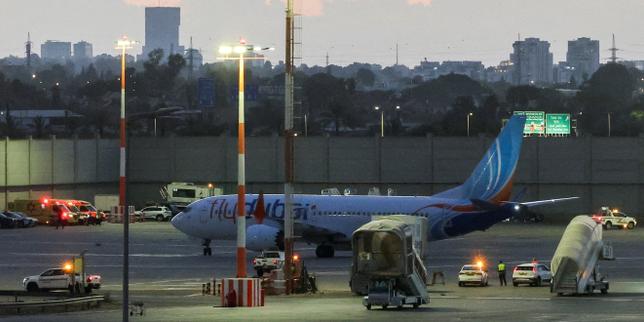
Until the day a directive lands on a desk in Jerusalem ordering a review of the security measures on international flights heading toward Israel, touching carriers like Flydubai.
On paper, that sentence looks like bureaucratic furniture. A press release. A line in a wire feed that gets scrolled past between a sports score and a weather alert. Standard coverage treats it as a diplomatic or regulatory note: an official in Jerusalem asks for an audit of how international flights to the country are screened and protected.
That framing misses the entire center of gravity.
Because security on a commercial flight is not a piece of software you patch overnight. It is a chain of human decisions stretched across thousands of miles, several jurisdictions, two or three different uniforms, and dozens of moments where someone has to decide whether a glance, a bag, a schedule, or a silence means nothing at all—or everything.
The Invisible Handshake at Gate B
Consider a hypothetical passenger, whom we will call Miriam, standing in a departure lounge in the Gulf before a flight bound for Tel Aviv. She is real enough in every detail that matters: mid-forties, carrying a canvas tote, checking her phone because her cousin’s wedding is tomorrow night and the catering list still has three missing names.
Miriam is not thinking about aviation doctrine. She is thinking about whether the airline will let her bring a jar of date paste in her carry-on.
Now step back thirty feet and look at the people watching Miriam. One is an airport authority officer checking travel documents. Another is a contracted screener watching an X-ray monitor where shapes appear in amber and blue. A third might be a carrier representative verifying manifest details, and somewhere behind a glass partition sits a security coordinator whose job is to knit those separate observations into a single picture.
Think of aviation security as a relay race run in the dark.
Each runner holds a baton made of trust. The airport authority trusts the document check; the airline trusts the baggage scan; the destination country trusts the layered protocol that sits on top of both. If one runner drops the baton—or passes it half-blind because two agencies use different thresholds, different training rhythms, or different assumptions about what counts as a red flag—the race does not stop. The plane still taxis. The doors still lock.
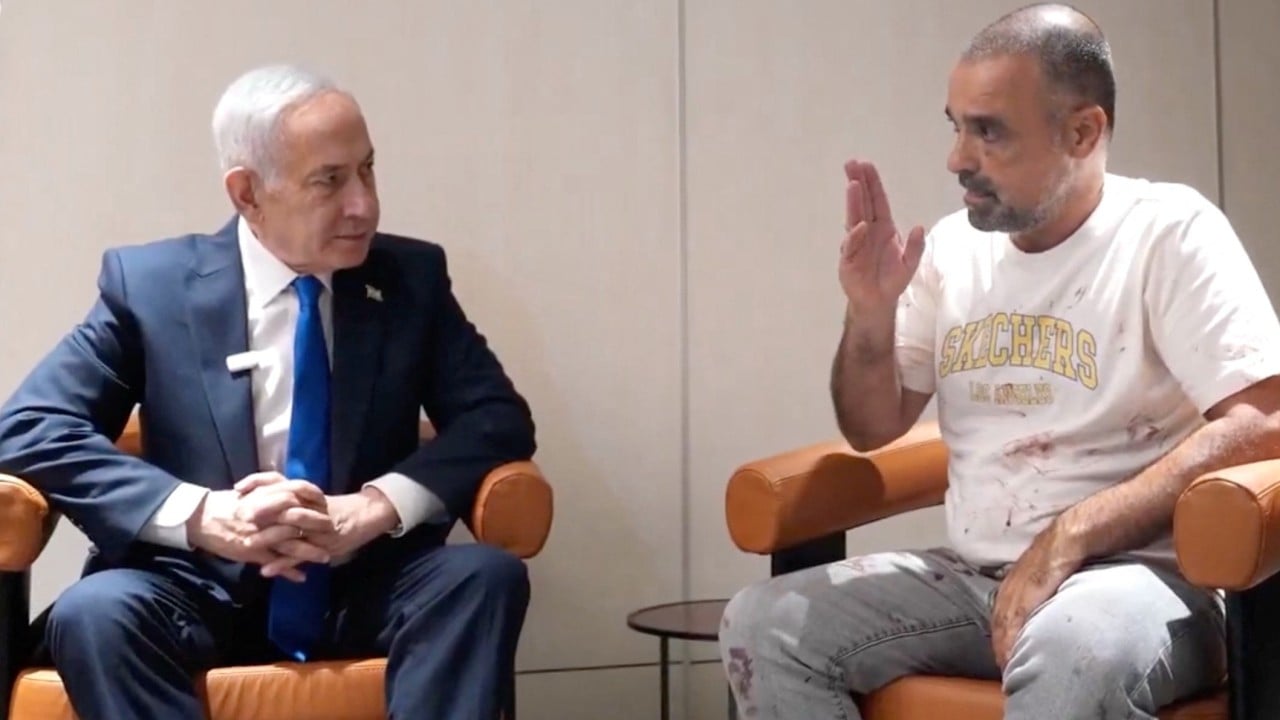
When Benjamin Netanyahu orders a review of security measures on international flights to Israel, the unspoken question underneath the headline is brutally simple: where is the baton being passed, and who is actually holding it?
I have stood in enough terminal corridors to know how exhausting that question feels from the inside. You learn early in frequent travel that safety is sold to passengers as a binary switch—safe or unsafe, cleared or held—while the reality on the ground is a continuous negotiation. A screener sees four hundred bags before lunch. Fatigue creeps in. Routine breeds generosity of interpretation. Meanwhile, intelligence assessments shift faster than airport standard operating procedures can be rewritten, translated, and drilled into shift workers earning modest wages on rotating nights.
That gap between a briefing room and a boarding gate is where anxiety lives.
Why a Flight to Israel Sits in a Different Category
A flight between two quiet regional hubs can treat security as a predictable checklist. Passports match, bags pass the rollers, fuel loads, climb out.
Flights into Israel operate under a heavier geometry. Even in periods when commercial schedules look normal on a booking screen, the airspace, the geopolitical temperature, and the operational stakes mean that an anomaly on a regional route—whether a Gulf carrier like Flydubai or another international operator—carries consequences that ripple straight into national security doctrine.
Let us be clear: ordering a review does not automatically mean a failure occurred or that an imminent plot was uncovered in the terminal. Governments order reviews for many reasons. Sometimes a new threat profile emerges in a neighboring theater. Sometimes an audit reveals inconsistency between how a foreign carrier’s ground staff operates and the standards expected by Israeli aviation authorities. Sometimes leadership simply wants to test whether paperwork matches practice before a crisis forces the question.
Still, imagine what happens inside the system the moment that order goes out.
Files get pulled. Camera feeds from weeks ago get re-examined with sharper questions. Interview protocols at check-in counters get scrutinized: were questions asked mechanically, or did staff actually listen to the answers? How are transit passengers handled when they step off a long-haul leg and connect onto a flight bound for Ben Gurion? Does the person scanning a boarding pass know what to do if a passenger’s itinerary was bought an hour before departure with cash or a newly issued card?
None of this is glamorous. Most of it is paperwork, video review, and uncomfortable conversations between ministries and airlines.
Yet every line of that review touches real people whose lives sit on opposite sides of the glass.
The Cost of Getting It Wrong—and the Cost of Getting It Heavy
There is a trap in public debates over airline security. People tend to swing between two poles.
On one side sits complacency: the comforting illusion that because thousands of flights land safely every day, the system is self-correcting and untouchable. On the other side sits paranoia: the assumption that every review signals disaster and every stranger in a queue is a threat.
Neither pole helps anyone on the tarmac.
Consider what happens if a review uncovers real friction—say, uneven screening standards at an outstation or gaps in how passenger data is shared before boarding. Fixing that takes coordination across borders. A carrier like Flydubai operates inside its own regulatory framework, its own commercial agreements, and its own airspace realities. Coordinating tighter or revised security expectations between an Israeli government directive and an international airline requires diplomacy as much as technical checklists. Move too abruptly, and you create delays, stranded travelers, and diplomatic friction. Move too slowly, and you leave a seam exposed.
Now imagine a second hypothetical character: Tariq, a ground operations supervisor watching his schedule board light up with new verification steps right before peak evening departures.
Tariq does not care about cable news commentary. He cares that his team now has to spend an extra ninety seconds per passenger at secondary checks while two hundred people are already staring at the clock, worried about missed connections or family waiting at arrivals. He knows that when lines back up and tempers fray, human error spikes. People rush. Supervisors wave bags through to clear the bottleneck. The very pressure meant to tighten security can accidentally loosen it if the workflow is not redesigned with human limits in mind.
That is the paradox nobody puts in a one-line wire summary. Security is not just rules on a page. It is human bandwidth under pressure.
A Metaphor Worth Taking Seriously
If you want to understand why a security review on international flights matters so much, picture a house built on a fault line.
Most days, the walls are straight. The doors close cleanly. You can host dinner parties in the kitchen and forget the earth beneath the foundation moves at all. An inspection—a review ordered from the top—is like bringing in a structural engineer with a flashlight and a plumb line. The engineer is not predicting an earthquake at midnight. The engineer is checking whether the mortar in the corner has dried brittle, whether the load-bearing beam still sits true, whether a small shift in the soil would turn a minor crack into a collapse.
That is a metaphor, not a literal description of an airport. Terminals are made of steel and glass, not plaster and timber.
Still, the logic holds. You do not wait for smoke in the cabin to ask whether the wiring behind the bulkhead was inspected properly.
What the Headlines Leave Out
When a short report says Netanyahu ordered a review of security measures on international flights to Israel, the reader is left with questions that rarely get answered in the first three paragraphs.
Why now? What specific layers are being examined? Does this affect ticketing, baggage handling, pre-flight vetting, or onboard protocols? How long does such a review take, and what happens if findings require changes from foreign carriers?
Those questions are entirely fair, and honestly, some of them do not have neat public answers right away. Sensitive security reviews rarely publish their full checklists while underway, for obvious reasons: publishing the exact seams you are inspecting is an invitation to test them. Even seasoned aviation analysts sometimes have to read between lines, piecing together subtle shifts in boarding procedures, updated advisories, or quiet diplomatic consultations.
I find it worth admitting how unsettling that opacity can be. As passengers, we are asked to surrender privacy, comfort, and time in exchange for safety, while the deepest mechanics of that safety stay behind closed doors. Trusting a system you cannot fully see requires a certain leap of faith.
Yet faith works both ways. Authorities ask passengers to trust the process; passengers have every right to expect that the process is honest, adaptive, and free of theater.
A genuine security review—the kind that actually protects people rather than merely generating a press release—has to ask uncomfortable questions. It has to look at whether protocols built five years ago still fit today’s routes and risks. It has to check whether airlines, airport authorities, and national security agencies are sharing warnings fast enough or hoarding information behind institutional walls. It has to ask whether screeners are trained to spot genuine behavioral and logistical anomalies, or merely trained to look busy.
The Human Thread Through the Terminal
Strip away the titles, the ministries, the flight numbers, and the geopolitics, and what remains is remarkably fragile.
A cabin pressurized at thirty-eight thousand feet. Aluminum skin thinner than a coin. Three hundred strangers breathing the same recycled air while reading books, sleeping with noise-canceling headphones on, or scrolling through photos of children they have not seen in months.
Miriam, with her jar of date paste and her cousin’s wedding list. Tariq, trying to keep a boarding gate calm while new instructions come down the line. The screener staring at gray silhouettes on a monitor at 4:00 a.m. The official in Jerusalem signing an order to look closer at how international flights to Israel are guarded.
None of them live inside a wire-service headline. They live in the space between one check and the next, where small choices—a second look at a bag, a clear handoff between agencies, a calm voice at a crowded counter—decide whether a journey ends in an embrace at arrivals or a story nobody wanted to tell.
Look up the next time you stand in that fluorescent hum, shoes in a plastic tray, waiting for a stranger to wave you forward. The real story of a security review is never the order itself. It is whether the people holding the baton remember who is on the plane.