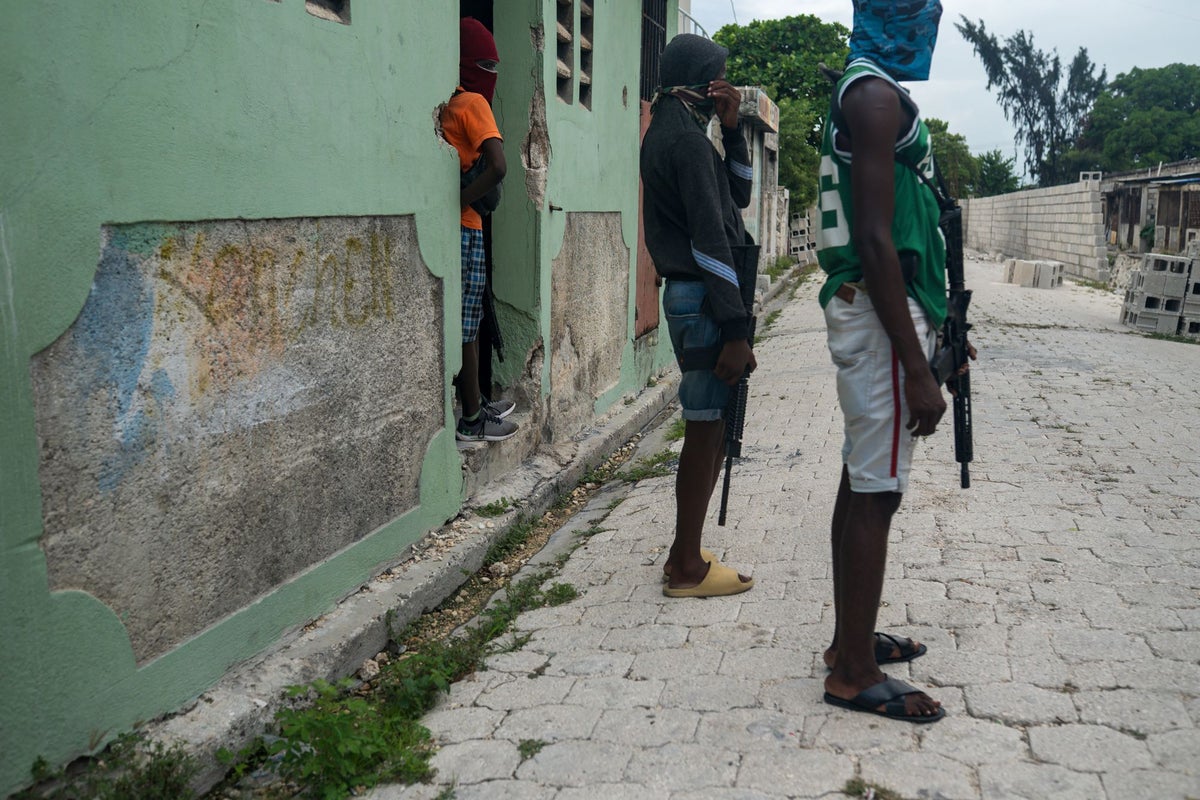
Stop reading the tear-jerkers about "hungry children" and "empty promises." If you think a bowl of rice is the only reason a teenager picks up an AR-15 in Port-au-Prince, you aren't just wrong—you’re dangerously naive.
The mainstream media loves a simple victim narrative. It’s easy to digest. It makes for great fundraising emails. But it ignores the brutal, cold-blooded logic of survival in a failed state. The "recruitment" of Haiti's youth isn't a kidnapping or a trick; it is a rational, calculated career move in a country where the state has effectively ceased to exist.
The Myth of the "Tricked" Child
The common narrative suggests that gang leaders are Pied Pipers, luring innocent kids away from a "better life." Here is the reality: there is no better life. When the government provides zero security, zero infrastructure, and zero economic mobility, the gang becomes the only institution with a functioning HR department.
In Port-au-Prince, the gang is the employer of last resort. And often, they’re the employer of first resort too.
International observers talk about "radicalization" or "exploitation." They miss the point. To a kid in Cité Soleil, the gang leader isn't a monster; he's the CEO, the mayor, and the police chief rolled into one. He provides what the Prime Minister cannot: a paycheck, a social circle, and the only form of life insurance that actually pays out—the protection of the group.
Gangs as Alternative Governance
We need to stop using the word "gang" as if we’re talking about a bunch of bored kids tagging walls in a Chicago alley. We are talking about G9 an Fanmi e Alye and the Gpèp. These are paramilitary administrative bodies.
They collect taxes (extortion). They provide security (territorial control). They resolve civil disputes. They distribute resources. When the international community sends "aid," it often ends up being distributed by these very groups because they are the only ones with the logistics to reach the people.
The "hunger" narrative focuses on the stomach. It ignores the ego and the need for order. A child joining a gang isn't just looking for a meal; they are looking for a system that works. In their world, the gang is the only system that isn't a lie.
The ROI of a Kalashnikov
Let’s talk numbers. The "lazy consensus" says we need to fund more food programs to stop gang recruitment.
Imagine a scenario where you are fifteen years old in Port-au-Prince.
- Option A: Wait for a UN-backed NGO to drop off a bag of grain that might get hijacked before it reaches your street. Hope you can find a job as a day laborer making less than $2 a day.
- Option B: Join the local set. Carry a rifle. Earn a weekly salary that dwarfs the national average. Gain the ability to protect your family from the rival set three blocks over.
Which one would you choose? If you say Option A, you’re lying to yourself to feel morally superior.
The gang isn't "recruiting" through hunger; they are offering a competitive market rate for the only skill set that matters in a war zone: violence. Until the "legal" economy can beat the gang's ROI, the gang wins every time.
[Image showing the economic disparity between gang-controlled and government-controlled zones]
Why Foreign Aid is the Gang’s Best Friend
Here is the truth that gets you banned from the dinner parties in Pétion-Ville: Foreign aid sustains the gang ecosystem.
For decades, we have flooded Haiti with "solutions" that bypass local structures. We’ve turned the country into a "Republic of NGOs." By doing this, we have systematically gutted the incentive for any legitimate state to form. Why build a water system when a French NGO will do it? Why fix the roads when the UN will drive over the potholes in armored SUVs?
The gangs aren't stupid. They know how to play this. They allow the NGOs to operate because it keeps the population just fed enough not to revolt against them. The aid becomes a subsidy for the gang's rule. We provide the bread; they provide the circus and the bullets.
The Failed Logic of "Disarmament"
Every few years, some "expert" proposes a DDR (Disarmament, Demobilization, and Reintegration) program. They think if they offer a gang member a vocational training course in carpentry, he’ll hand over his weapon.
This is a delusional fantasy. You are asking a young man to trade power, status, and a living wage for a hammer and a life of poverty.
Disarmament only works when there is a state powerful enough to maintain a monopoly on violence. In Haiti, that monopoly is currently up for grabs. The gangs aren't going to disarm because someone gave them a sandwich. They will disarm when they are either dead or incorporated into a new, legitimate power structure.
The Brutal Reality of "Community"
We look at these kids and see tragedy. They look at themselves and see soldiers.
There is a psychological component to this that the "hunger" articles always skip. Joining a gang provides a sense of belonging in a world that has discarded you. It’s the same impulse that drives kids to join the Marines or a high-stakes startup. It’s the desire to be part of something bigger than yourself.
When a gang leader gives a kid a pair of sneakers and a gun, he isn't just "grooming" him. He’s acknowledging his existence. For many of these kids, the gang is the first time anyone has ever told them they are useful.
Stop Asking the Wrong Questions
The question isn't "How do we stop gangs from recruiting hungry kids?"
The question is "Why is the gang the only functional institution in the country?"
If you want to solve the problem, you have to stop treating it as a humanitarian crisis and start treating it as a political and economic competition. You have to out-govern the gangs. You have to provide better security than a warlord. You have to provide a better future than a 7.62mm round.
Anything else is just decorative empathy.
The Hard Truth About Stability
Real stability in Haiti won't come from a "food for guns" program. It will come when the cost of being in a gang outweighs the benefits. Right now, being in a gang is the most logical, high-status, and profitable career path available to a young man in Port-au-Prince.
The gangs have won because they understood the market. They understood that in the absence of a state, people will trade their freedom for a semblance of order and a chance to eat. They aren't "preying" on the chaos; they are the logical conclusion of it.
If you want to change the outcome, change the incentives. Until then, keep your "awareness" and your "outreach." The gangs are busy building the only government Haiti has left.
Burn the white papers. Stop the hand-wringing. The kids aren't being tricked. They’re just the only ones in the room who understand the rules of the game you’re pretending doesn’t exist.



