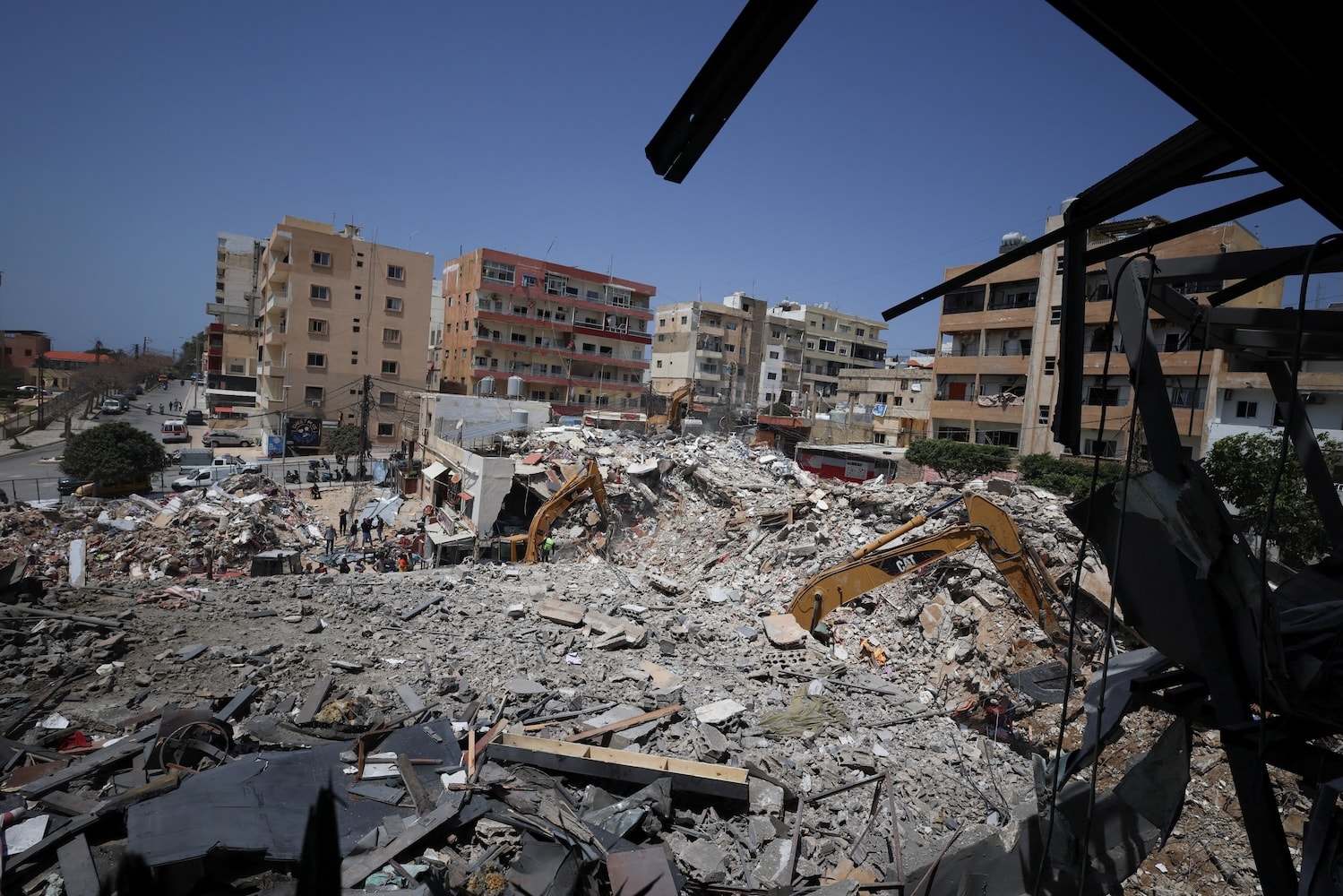
The mainstream media wants you to believe we are one drone strike away from global economic collapse.
When Israeli jets targeted the Mahshahr petrochemical complex in Iran, followed by a retaliatory strike on an industrial facility in Haifa, the financial press immediately trotted out the usual suspects. Analysts predicted soaring crude prices, broken supply chains, and a localized industrial apocalypse. Don't forget to check out our earlier coverage on this related article.
They got it completely wrong.
The breathless reporting surrounding the Mahshahr-Haifa exchange unmasks a deep, systemic ignorance about how global energy infrastructure actually functions. The consensus view treats these industrial nodes like fragile glass ornaments. In reality, they are reinforced concrete fortresses built to absorb punishment, backed by global supply networks that view localized disruption as a rounding error. If you want more about the context here, Reuters offers an excellent summary.
Stop looking at the smoke plumes. Start looking at the redundancy networks.
The Fragility Myth and the Chemistry of Resilience
The immediate reaction to the Mahshahr strike assumed that hitting a massive petrochemical footprint equates to knocking out a nation's economic heart. It shows a fundamental misunderstanding of downstream chemical processing.
Petrochemical complexes are not single, monolithic factories. They are sprawling networks of independent, highly modular production trains.
- Cracking Units: Ethylene crackers are built with massive thermal inertia and automated isolation valves.
- Redundancy By Design: If Train A takes a hit, the feedstocks are diverted to Train B or routed into salt-cavern storage within minutes.
- The Fire Walls: Modern industrial sites are designed to sacrifice isolated storage tanks while keeping the primary processing cores pressurized and safe.
When a missile hits a facility like Mahshahr, it creates a spectacular fireball for the evening news. It rarely creates a permanent halt in production. Having spent years analyzing asset risk for infrastructure syndicates, I have watched executives panic over satellite imagery, only to see the targeted facility resume partial operations before the insurance adjusters even land.
The media calculates damage by counting the craters. The markets calculate damage by looking at the repair turnaround time. In the case of Mahshahr, the actual core refining and synthesis capacities remained largely untouched. The fire was put out, the valves were reset, and the supply lines adapted.
The Haifa Counter-Strike: Pure Theater
The subsequent retaliation against Haifa’s industrial sector was flagged as a terrifying escalation. It was nothing of the sort. It was a calculated, symbolic media event masquerading as military strategy.
Haifa has been the theoretical bullseye of regional conflict for decades. Because of this, it is arguably one of the most hardened industrial zones on the planet.
The Reality of Hardened Infrastructure: You cannot easily trigger a catastrophic failure at a modern Western-aligned refining facility with a conventional drone payload. The storage arrays are bunded, the control rooms are bunkered, and the automated fire-suppression systems can starve an oxygen-rich chemical fire in seconds.
To think that a handful of retaliatory strikes can permanently cripple Israel’s industrial output ignores the sheer volume of defensive engineering baked into the soil of Haifa. The attack did not disrupt long-term operations; it disrupted a afternoon shift. By treating these symbolic tit-for-tat exchanges as structural shifts in regional power, analysts expose their lack of boots-on-the-ground technical expertise.
Why the Oil Markets Boredly Shrugged
If these strikes were truly foundational threats to the global economy, the futures market would have reacted with a violent spike. Instead, Brent crude and petrochemical benchmarks barely registered a hiccup.
Why? Because the market understands what talking heads do not: The world is currently drowning in supply flexibility.
Global Ethylene & Petrochemical Capacity Status (Post-Strike)
+-------------------+-----------------------+-------------------------+
| Region            | Status                | Market Impact           |
+-------------------+-----------------------+-------------------------+
| Middle East       | Short-term localized  | Zero systemic change    |
| US Gulf Coast     | Running at surplus    | Absorbing export gaps   |
| East Asia         | Overcapacity          | Depressing global price |
+-------------------+-----------------------+-------------------------+
Even if Mahshahr were taken completely offline for six months, the US Gulf Coast and massive new refining mega-complexes in China are operating at such high capacity that they can fill the market gap without breaking a sweat. The global supply chain for plastics, polymers, and refined products is no longer dependent on a single geographic choke point.
The consensus view fails because it views geography as destiny. In 2026, logistics and overcapacity trump geography every single day.
Dismantling the Premise: The Questions You Should Be Asking
Look at the standard inquiries clogging up financial forums and intelligence briefings right now. They are fundamentally flawed.
"Will this conflict permanently halt maritime trade in the region?"
No. Shipping lanes do not close because two land-based facilities took superficial damage. Freight insurance premiums fluctuate, yes, but logistics networks are inherently fluid. Ships reroute, costs are absorbed by midstream operators, and goods continue to move. The global merchant fleet is driven by profit, not panic.
"Does this mark the beginning of an unmanageable regional infrastructure war?"
This question assumes both actors are irrational. Neither side wants to completely destroy the other's economic foundations because both sides rely on the tacit compliance of global trading partners like China and the European Union. The strikes are calibrated to send political messages without crossing the line into total industrial erasure. It is violent diplomacy, not total war.
The Real Risk Nobody Wants to Talk About
If you want to worry about something, stop staring at missile defense footage. The real vulnerability in modern petrochemical and energy infrastructure is not kinetic. It is digital.
A physical strike requires immense political capital, military hardware, and visible execution. It leaves a clear signature and invites immediate geopolitical blowback. Furthermore, as we saw in both Mahshahr and Haifa, physical infrastructure is remarkably resilient against localized explosions.
A sophisticated cyber offensive targeted at the Industrial Control Systems (ICS)—specifically the safety instrumented systems (SIS) that prevent thermal runaways—can destroy a plant from the inside out without firing a single shot. By tricking the software into overriding physical pressure thresholds, an attacker can cause a catastrophic, permanent failure that takes years to rebuild.
Yet, when a cyber incident occurs, it rarely makes the front page because there are no dramatic videos of smoke billowing into the sky. The industry spends billions hardening physical perimeters while leaving legacy SCADA networks held together by digital duct tape and prayer.
Stop Reacting to the Noise
The playbook for surviving these cycles of geopolitical anxiety is simple: ignore the immediate media panic.
When the next headline screams about an industrial facility taking a hit, do not look at the stock prices of the companies involved. Look at the global inventory data. Look at the regional refining margins. If the margins remain flat, the event is noise.
The Mahshahr and Haifa strikes proved that modern industrial complexes are not dominoes waiting to fall. They are shock absorbers designed to take the hit, reset, and keep the global machinery moving. Stop buying into the narrative of immediate collapse. The system is far uglier, far tougher, and far more cynical than you think.