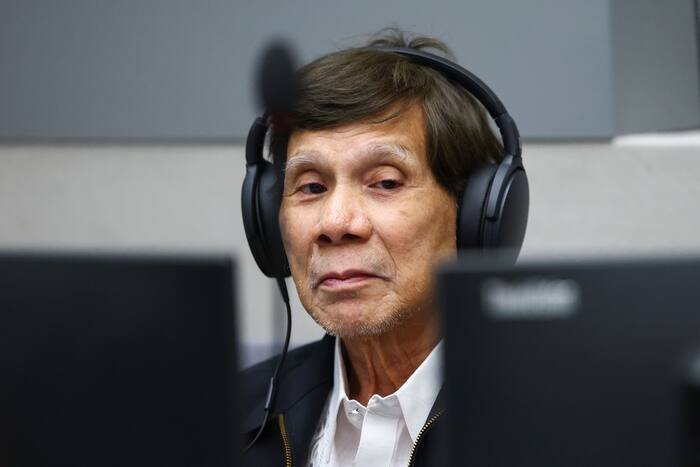
International Criminal Court judges have formally determined that former Philippine President Rodrigo Duterte is mentally and physically fit to stand trial, clearing the final procedural hurdle for a courtroom showdown that will test the limits of global justice. For years, the architect of the violent Philippine drug war operated under the assumption that state sovereignty and political bluster would insulate him from accountability. Now, that calculus has collapsed. Medical panels evaluated his capacity behind closed doors, weighing his advanced age against the gravity of the allegations, and concluded he can face the bench in The Hague.
This decision marks a critical fracture in the architecture of impunity. When powerful heads of state launch domestic crackdowns, they frequently bank on the exhaustion of international bodies and the protection of national borders. Duterte built his entire political brand on defiance. He cursed international observers, withdrew the Philippines from the Rome Statute, and insisted that domestic police forces answer only to his directives. Yet, international jurisprudence works on a longer timeline than domestic political cycles. The determination of fitness removes the last legal ambiguity, setting the stage for a proceeding that will examine the command responsibility behind thousands of extrajudicial killings.
Understanding how this case reached The Hague requires looking past the courtroom drama into the mechanics of international investigations. Prosecutors do not secure arrest warrants for former presidents on a whim. They build dossiers over years, tracking financial flows, secret operational memos, and testimonies from whistleblowers within the police apparatus. The fitness ruling is not merely a medical clearance. It is the green light for an unprecedented confrontation between an international tribunal and a populist leader who once dared the court to arrest him.
The shadow of the Philippine drug war looms heavy over these proceedings. Between 2016 and 2022, police operations left thousands dead in the streets, with authorities claiming suspects resisted arrest during legitimate anti-narcotics sweeps. Human rights organizations and domestic investigators documented a systematic pattern of extrajudicial executions, widespread fabrication of evidence, and financial incentives for police officers who hit kill quotas. Duterte himself repeatedly encouraged law enforcement to shoot suspects, publicly promising protection from prosecution.
For the families of the victims, the Hague proceedings represent a vindication that seemed entirely out of reach during the height of the administration. Domestic courts in the Philippines moved at a glacial pace, hampered by political intimidation and institutional inertia. When the state fails or refuses to prosecute crimes against humanity, the international system is theoretically designed to step in as a court of last resort. That theory is now facing its ultimate practical test.
Yet, the path to a conviction is fraught with systemic hurdles. International criminal trials are notoriously complex, expensive, and prolonged. Prosecutors must prove beyond a reasonable doubt that Duterte exercised effective control over the perpetrators of the violence and that he possessed the requisite intent. Defense attorneys will undoubtedly challenge the admissibility of intelligence reports, question the credibility of insider witnesses who participated in the violence, and argue that the former president's public rhetoric was political hyperbole rather than direct command.
Furthermore, the enforcement of any eventual judgment remains an open question. The current political landscape in the Philippines features shifting alliances among powerful political dynasties. While the administration of President Ferdinand Marcos Jr. has shown ambivalence toward cooperating with international investigators, local political dynamics can shift overnight. If political winds in Manila turn again, or if domestic loyalists rally around the defense, cooperation could become strained. International justice possesses moral authority, but it lacks an independent police force; it relies entirely on the compliance of states to execute warrants and transfer defendants.
Beyond the specific details of the Duterte case, this trial carries profound implications for other authoritarian leaders around the globe. Too often, international criminal law is accused of a geographic bias, disproportionately targeting figures from failing states in Africa while leaving powerful leaders in Asia and the Americas untouched. By prosecuting a prominent, democratically elected Asian leader who commanded immense domestic popularity, the International Criminal Court is attempting to reassert its universal mandate. If the prosecution succeeds, it establishes a powerful precedent that populist mandates do not grant license to commit systematic violence against civilian populations.
The courtroom will soon fill with lawyers, diplomats, and victims watching every movement. Rodrigo Duterte entered national politics as a tough-talker promising immediate solutions through absolute force, dismissing human rights norms as obstacles to order. His defense in The Hague will likely mirror that posture, framing his tenure as an existential struggle to save the nation from societal collapse.
As the proceedings commence, the focus shifts from the political speeches of campaign rallies to the cold, evidentiary standards of international law. The judges have determined he is fit to stand trial. The greater question is whether the international legal order is fit to deliver accountability in an era where populist strongmen routinely test its boundaries.


