When a footballer dies following an on-pitch collision, the news cycle follows a predictable, sanitized script. A family releases a grieving statement, clubs lower flags to half-mast, and governing bodies issue brief expressions of sorrow before returning to the business of fixtures and broadcast rights. Yet beneath the public mourning lies a persistent, systemic failure in how football manages acute trauma, enforces concussion protocols, and protects athletes at every level of the game.
The pattern is brutally familiar. A player goes down after a high-speed impact—head-to-head, knee-to-temple, or a violent clash with a goalkeeper. Within hours, local outlets publish tributes from devastated parents and teammates. Those tributes are vital human records, capturing the life behind the jersey. However, by stopping at the obituary, mainstream sports coverage routinely misses the structural questions that actually determine whether the next collision ends in a hospital discharge or a funeral.
The Anatomy of an On-Pitch Collision
Football is marketed as a non-contact sport, a legal fiction that collapses the moment twenty-two athletes sprint at twenty miles per hour inside a confined rectangle. Unlike rugby or American football, where players wear protective padding or brace for impact as a primary mechanic of play, footballers absorb kinetic energy while completely unguarded. Their eyes are fixed upward on a falling ball, leaving the neck muscles relaxed and the skull vulnerable to rotational forces.
Biomechanical research into sports trauma demonstrates that rotational acceleration is far more destructive to brain tissue than a straight, linear blow. When a player’s head is struck from the side during an aerial challenge, the brain twists inside the cranial cavity, shearing microscopic axons and rupturing delicate bridging veins. A player does not need to lose consciousness to sustain a fatal subdural hematoma or catastrophic diffuse axonal injury.
Consider a hypothetical scenario common in weekend amateur and semi-professional matches. A center-back and a forward leap for a corner kick, colliding temple-to-temple. Both men fall, sit up after thirty seconds, and wave away the volunteer physio. Because neither player blacked out, the referee allows them to continue. Forty minutes later, in the dressing room, one of them collapses from second-impact syndrome or an expanding intracranial bleed that went undetected during the match.
The physiology of delayed brain swelling does not care whether a match is played at Wembley or on a muddy municipal pitch in the seventh tier. Once bleeding begins inside the closed vault of the skull, pressure rises rapidly. Without immediate neuroimaging and neurosurgical intervention, brain tissue is forced downward through the base of the skull, shutting down respiratory and cardiac centers within minutes.
Why Tributes Mask Systemic Negligence
Grief makes editors cautious. When a family steps forward to honor a lost son, brother, or father, journalists naturally shift into a reverent register. Asking hard questions about medical staffing, referee authority, or emergency response times during the week of a funeral feels intrusive, even callous. As a result, the institutional accountability that should follow a preventable tragedy quietly evaporates.
In the aftermath of fatal on-pitch collisions, official statements almost always describe the death as a "freak accident." That phrase does enormous political work for football associations and league organizers. Calling a death a freak accident implies that it was an act of fate, completely outside human control, thereby absolving administrators of the obligation to alter rules, fund sideline trauma doctors, or penalize reckless aerial challenges.
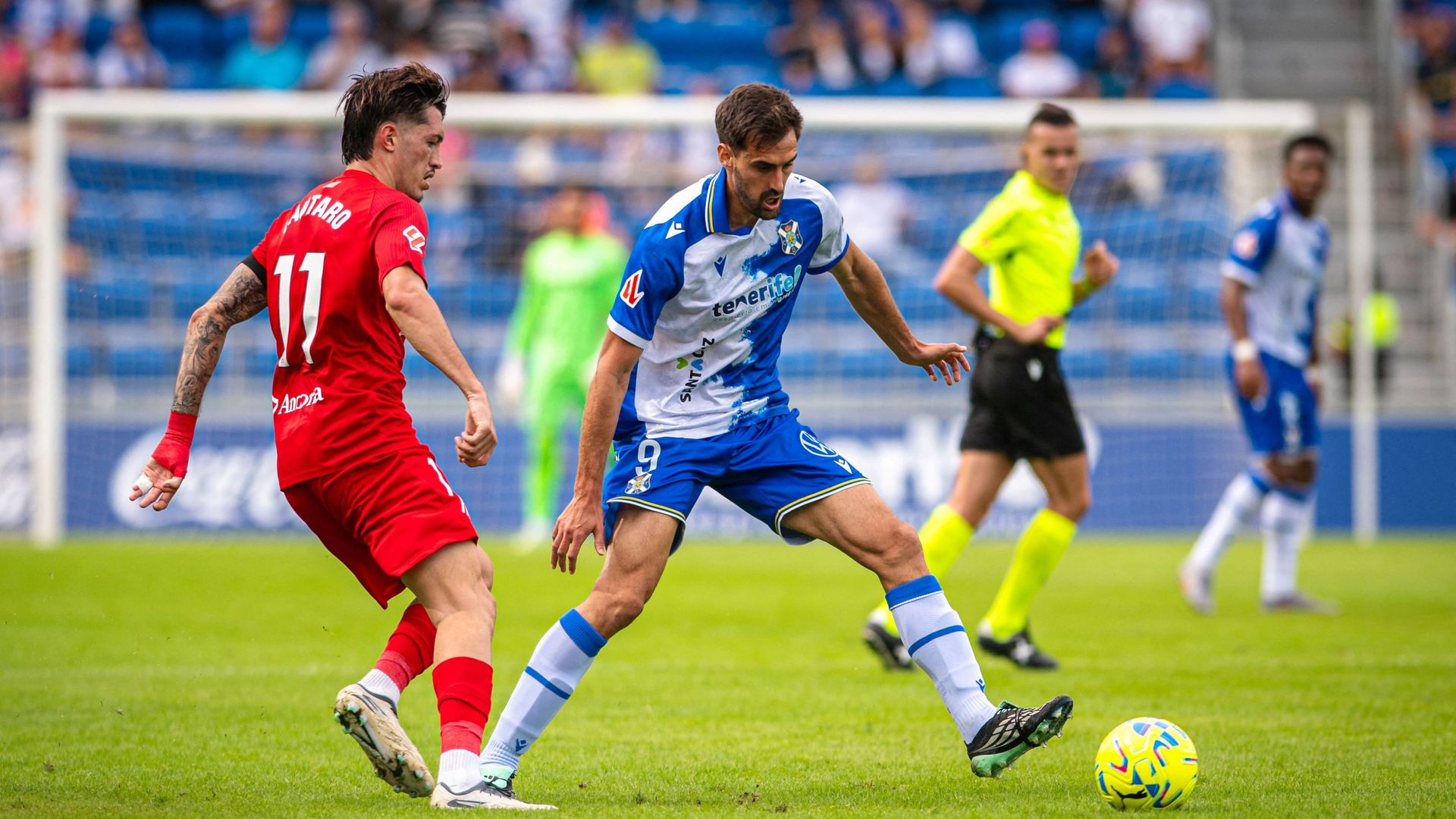
Look closely at the historical record of severe head and torso injuries in football, and the "freak accident" narrative falls apart. Collisions between goalkeepers rushing off their lines with raised knees and oncoming strikers have caused dozens of life-threatening injuries over the past three decades. Aerial duels where players use their elbows as leverage or launch themselves backward without looking at surrounding opponents happen dozens of times in every single match.
The sport tolerates these mechanics because fans love physical commitment and broadcasters sell intensity. A striker who pulls out of a fifty-fifty header is labeled soft by pundits; a goalkeeper who hesitates to dive into a crowd of boots is dropped by their manager. Until the incentive structure on the pitch changes, players will continue to treat their own skulls as battering rams.
The Gap Between Elite Care and Grassroots Reality
If you suffer a severe head or internal injury during a Premier League or Champions League fixture, you are surrounded by one of the most sophisticated mobile trauma units in civilian life. Top-flight stadiums are legally required to have dedicated crowd doctors, pitch-side paramedics, spinal boards, defibrillators, and an ambulance idling in the tunnel with a pre-cleared route to a designated major trauma center.
Drop down two or three divisions, or step into youth and amateur football, and that safety net vanishes entirely.
The Medical Staffing Deficit
At the semi-professional and amateur levels, medical coverage often consists of a single sports therapist armed with an ice pack, magic spray, and a basic first-aid certificate. These individuals are dedicated, frequently underpaid, and placed in an impossible position. They are expected to diagnose complex neurological trauma in under sixty seconds while twenty-one players, two managers, and an impatient referee stare at them.
Without independent spotters or video replay monitors on the touchline, a lone therapist cannot see the angle of an impact that occurred sixty yards away. They have to rely on what the injured player tells them. And athletes, conditioned from childhood to play through pain and terrified of losing their spot in the starting eleven, lie constantly about their symptoms.
The Failure of Temporary Concussion Substitutions
For years, medical campaigners and player unions have pushed the International Football Association Board (IFAB) to introduce temporary concussion substitutions. The logic is straightforward. Brain injuries evolve over ten to fifteen minutes; a two-minute assessment on the grass is medically worthless. Allowing a team to bring on a temporary substitute while a doctor conducts a thorough, quiet evaluation in the dressing room removes the tactical pressure to rush a damaged player back onto the field.
Yet football’s rule-makers have repeatedly dragged their feet, opting instead for permanent concussion substitutions—a half-measure that still forces managers to make an irreversible tactical gamble before a diagnosis is even complete. When a club has already used its standard substitutes, losing a key midfielder for the rest of the game creates an overwhelming psychological incentive to keep them on the pitch if they can stand upright.
What Actually Happens in the Emergency Window
When a catastrophic collision occurs, survival hinges on the golden hour—and more specifically, on the first ten minutes after impact. The protocol required to save a life is rigid, yet it is routinely botched in the chaos of live sport.
First, the airway must be secured without hyperextending a potentially fractured cervical spine. When a player is knocked unconscious, the tongue can fall back and obstruct breathing, causing hypoxia that accelerates secondary brain damage within three minutes. Rolling an unconscious athlete onto their side into the recovery position requires trained personnel who know how to stabilize the neck simultaneously.
Second, emergency services must be summoned immediately, not after ten minutes of waiting to see if the player "comes around." In countless grassroots tragedies, precious minutes are lost because club officials hesitate to call an ambulance, worried about halting the match or causing unnecessary alarm. By the time the player vomits, develops unequal pupils, or slips into a coma on the touchline, the ambulance is still fifteen minutes away in weekend traffic.
Third, automated external defibrillators (AEDs) must be accessible within ninety seconds of any pitch. While head trauma is the primary killer in aerial collisions, blunt-force impact to the chest—known as commotio cordis—can trigger instant ventricular fibrillation if a ball, elbow, or boot strikes the precordial area during a specific twenty-millisecond window of the heartbeat cycle. Without immediate defibrillation, survival rates drop by ten percent with every passing minute.
The Legal and Financial Vacuum Left Behind
Once the flowers fade from the stadium gates and the memorial match is played, the families left behind often discover how little protection amateur and lower-league players actually have.
Professional footballers at the top level carry comprehensive loss-of-career insurance and death-in-service benefits negotiated through strong unions like the PFA or FIFPro. Their families are financially shielded, even if no sum of money repairs the loss.
Down the pyramid, the picture is grim. Many semi-professional contracts contain minimal accident clauses, and amateur players are often covered only by basic county association policies that pay out a fraction of a year’s salary in the event of permanent disability or death. Families who relied on a young player’s dual income—working a day job while playing semi-pro football on weekends—suddenly face mortgage defaults and funeral expenses alongside crushing grief.
Even when negligence is suspected—such as a lack of functioning medical equipment at a licensed ground or a failure to maintain clear emergency vehicle access—proving liability in court is an exhausting, multi-year battle. Governing bodies shield themselves behind waivers and layered administrative structures, leaving grieving relatives to fight well-funded insurance lawyers on their own.
How Football Must Rewrite Its Duty of Care
Honoring a dead footballer requires more than a minute’s applause before kickoff. If the sport wants to stop issuing condolences, it has to implement structural reforms that prioritize human survival over the uninterrupted flow of a ninety-minute broadcast.
- Mandatory Independent Medical Spotters: Every professional and semi-professional match needs an independent, league-appointed medical professional with direct radio contact to the referee. This person must have the unilateral authority to stop play and remove any player suspected of sustaining a significant head or torso impact, stripping that decision away from managers and team doctors who face inherent conflicts of interest.
- Universal Temporary Concussion Subs: IFAB must immediately mandate twelve-minute temporary substitutions across all levels of competitive football. No club should ever be tactically penalized for prioritizing a neurological examination.
- Strict Liability for Emergency Readiness: No match at any level—from under-12 youth leagues to senior amateur divisions—should legally kick off unless a verified, working AED is physically present within fifty yards of the touchline and an unobstructed emergency vehicle access route is confirmed by the match official.
- Enforcing Aerial Duel Rules: Referees must be instructed to penalize dangerous aerial challenges—specifically jumping into an opponent without playing the ball, leading with elbows, or "tunneling" under an airborne player—with automatic red cards, regardless of whether the offending player intended harm.
The family of a fallen footballer speaks to the press because they want the world to remember who their loved one was before a routine Saturday afternoon turned lethal. Journalists owe those families more than a rewrite of their press release. Real respect means refusing to accept another avoidable death as just part of the game, and holding every league, referee, and administrator accountable until walking onto a football pitch no longer carries a hidden death sentence.