The Myth of the Imperial Presidency in Energy Markets
Mainstream media loves a simple hero-versus-villain narrative. The conventional press looks at the American energy sector and sees a cartoon: a pro-coal administration pulling levers in Washington to crush renewable energy, while plucky solar developers fight the good fight against all odds.
It is a comforting story for pundits. It is also completely wrong.
The lazy consensus screams that executive branch posturing dictates the trajectory of trillion-dollar infrastructure markets. We are told that when a president vows to revive coal, coal wins. We are told that without progressive cheerleading from the White House, solar power should naturally wither on the vine.
The numbers tell a vastly different story. Coal plants are closing at near-record speeds, and solar installations are hitting historic highs. This is not happening because of Washington policy; it is happening in spite of it.
The media looks at executive orders. Smart capital looks at the levelized cost of energy (LCOE).
The hard truth that partisan commentators refuse to admit is that the presidency is largely irrelevant to the macro-trends of the US power grid. The deployment of utility-scale solar is driven by cold, hard, merciless economics, state-level mandates, and corporate procurement strategies that look thirty years into the future. Wall Street does not build asset portfolios based on four-year election cycles.
The Trillion-Dollar Misunderstanding of Grid Economics
To understand why the mainstream narrative is broken, you have to look at how a power plant actually gets built.
I have sat in rooms where utility executives map out thirty-year integrated resource plans. They are not looking at the current president’s Twitter feed or campaign speeches. They are looking at the cash-flow models.
When you strip away the subsidies, the tax equity structures, and the political rhetoric, the fundamental metrics of power generation come down to capital expenditure (CapEx) and operational expenditure (OpEx).
$$\text{LCOE} = \frac{\sum_{t=0}^{N} \frac{I_t + M_t + F_t}{(1+r)^t}}{\sum_{t=1}^{N} \frac{E_t}{(1+r)^t}}$$
Where $I_t$ is investment expenditures, $M_t$ is operational and maintenance expenditures, $F_t$ is fuel expenditures, $E_t$ is electricity generation, and $r$ is the discount rate.
Look at the variable $F_t$ (fuel expenditures) for a coal plant. It is a recurring, volatile cost. You have to mine the coal, load it onto a train, transport it across state lines, and burn it.
For a solar array, $F_t$ is zero. Permanently.
Once the capital cost of solar modules dropped below the threshold of economic parity, the game was over. No amount of regulatory relief from Washington can make a fuel-dependent thermal power plant cheaper to operate than a system that collects free photons from the sky.
The financial sector figured this out years ago. Institutional investors like BlackRock and Vanguard are not funding solar because they are environmental idealists; they are doing it because it offers predictable, de-risked yields. Coal, by contrast, has become unbankable. Insurance companies are refusing to underwrite new coal-fired assets because the long-term liability is a financial suicide mission.
The competitor press laments that federal policy is "boosting coal." This reveals a profound ignorance of how the Federal Energy Regulatory Commission (FERC) and regional transmission organizations (RTOs) operate. A president can give a speech in West Virginia, but they cannot force PJM Interconnection or MISO to dispatch expensive coal power ahead of cheaper solar and natural gas in the wholesale day-ahead market. The dispatch curve is merit-based, and merit is defined by marginal cost. Solar wins the marginal cost battle every single day.
The Red State Solar Paradox
If the mainstream media’s thesis were correct—that conservative politics equal clean energy death—then solar deployment should be concentrated exclusively in progressive strongholds.
The reality is an embarrassing contradiction for that worldview. The states leading the charge in new solar capacity are not blue bastions like California or New York. The real heavy hitters are Texas and Florida.
Let’s look at Texas. The Lone Star State’s grid, managed by ERCOT, is the wild west of deregulated energy. There is no state-level mandate forcing utilities to buy green energy to save the planet. Yet, Texas is systematically outpacing the rest of the nation in utility-scale solar installations.
Why? Because the market design rewards low-cost generation. Texas has cheap land, abundant sunshine, and a fast-track interconnection process compared to the bureaucratic nightmare of PJM. Developers can secure land in West Texas, plug into the CREZ transmission lines, and sell power directly into the merchant market at a price that crushes fossil fuel competitors during peak afternoon demand hours.
The irony is thick: the most aggressively capitalist, politically conservative grid in America is decarbonizing faster than almost anywhere else, driven entirely by market forces.
The media misses this because they confuse political rhetoric with economic reality. They think that because a governor or a senator rails against green mandates, their state must be a solar wasteland. In doing so, they miss the entire mechanism of corporate procurement. Companies like Amazon, Google, and Meta are signing massive Power Purchase Agreements (PPAs) in red states to power their data centers. They do this to meet corporate sustainability goals, yes, but primarily to lock in fixed, long-term energy prices as a hedge against natural gas volatility.
The Subsidized Elephant in the Room
Here is the contrarian take that will upset both sides of the aisle: the solar industry needs to stop crying about federal opposition, and the fossil fuel industry needs to stop crying about solar subsidies. Both sides are high on their own supply of grievance.
The renewable energy lobby frequently panics that a hostile administration will repeal tax credits like the Investment Tax Credit (ITC) or the Production Tax Credit (PTC). They claim this would freeze the industry.
It wouldn't. It would cause a temporary bump in the road, followed by a healthier, more disciplined market.
Subsidies are a double-edged sword. I have seen developers overpay for land, accept ridiculous terms from engineering procurement construction (EPC) firms, and tolerate massive inefficiencies simply because the federal tax equity structure guaranteed a return anyway. Subsidies breed corporate rot. They artificially inflate the cost of project development because suppliers know they can skim off the top of the government’s check.
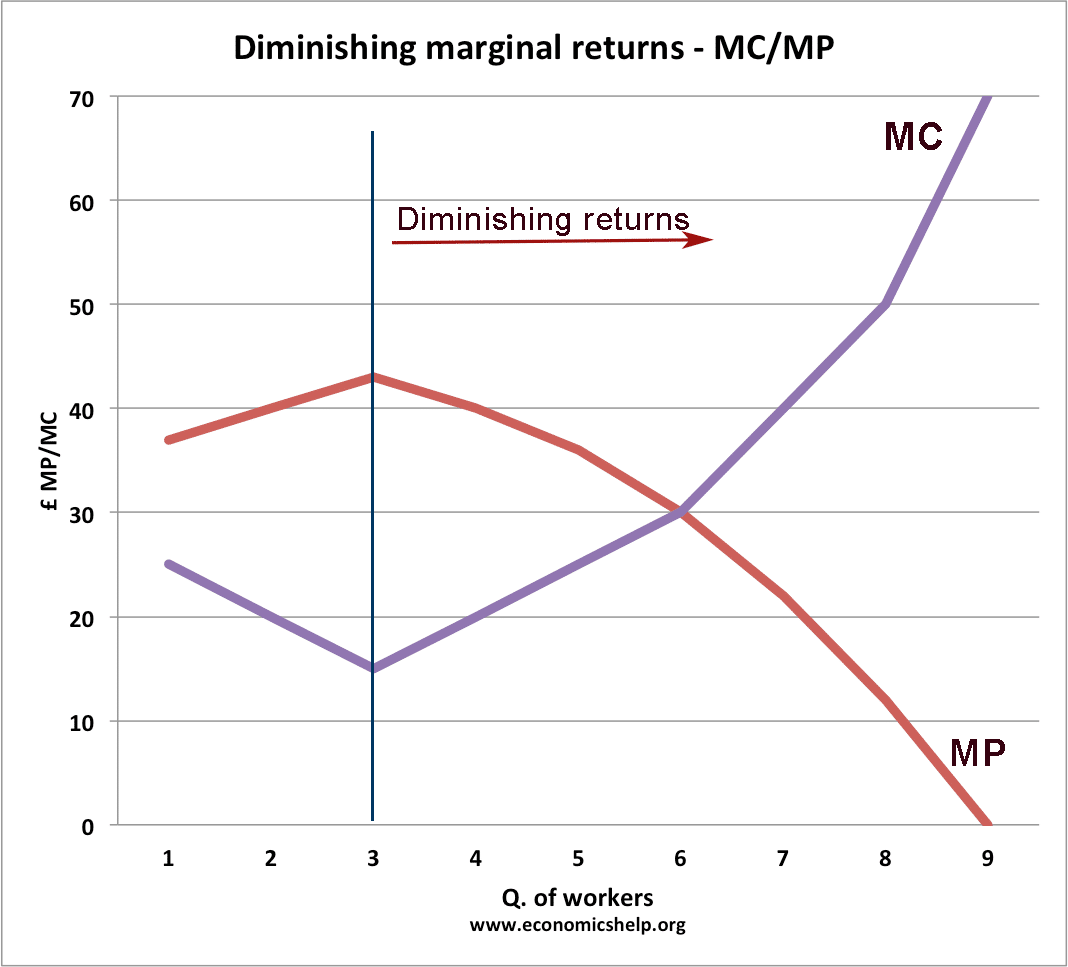
If you removed all federal energy subsidies tomorrow—both the permanent depletion allowances given to oil and gas and the tax credits given to renewables—solar would still win the long game. Why? Because the underlying technology curve is exponential, while fossil fuel extraction is on a curve of diminishing returns.
Solar is technology; fossil fuel is resource extraction.
Technology follows Wright’s Law: the cost of a technology decreases by a constant percentage for every doubling of cumulative production. Every time global solar manufacturing capacity doubles, the cost drops by roughly 20 percent. Coal mining and natural gas fracking do not follow Wright’s Law. You cannot optimize the physics of digging rocks out of the ground beyond a certain point.
The mainstream press writes about solar as if it is a fragile infant requiring constant federal nursing. It isn't. It is an industrial juggernaut that has already achieved escape velocity.
The Unseen Crisis: It's Not Policy, It's Interconnection
If you want to write a relevant article about the barriers to clean energy, stop talking about the White House. Start talking about regional transmission organizations and the absolute disaster that is the interconnection queue.
This is the real story that the superficial competitor piece completely ignored. The bottleneck for US solar is not a lack of political will or a revival of coal. The bottleneck is grid infrastructure.
Right now, there are over two terawatts of generation and storage capacity waiting in interconnection queues across the United States. That is more than the entire existing generation capacity of the current US grid. The vast majority of that backlog is solar, wind, and battery storage.
Projects are sitting in bureaucratic limbo for five, six, or seven years just to get an interconnection study completed by grid operators. When the study finally comes back, developers are often hit with surprise network upgrade costs—sometimes to the tune of tens of millions of dollars—to pay for upgrading transmission lines miles away from their actual project site.
This is where projects go to die. Not because a politician gave a speech about clean coal, but because a regional grid operator is using twentieth-century software and arcane regulatory frameworks to manage a twenty-first-century decentralized resource mix.
If the federal government actually wanted to impact solar deployment, they wouldn't do it through grants or subsidies. They would pass sweeping permitting reform that strips local zoning boards of the ability to block interstate transmission lines. They would force FERC to standardize the interconnection loop so developers aren't playing roulette every time they submit a project.
But that requires understanding the unsexy, technical mechanics of macro-grid engineering. It is much easier for a journalist to write a surface-level piece about executive branch posturing than it is to parse a 500-page FERC order on transmission cost allocation.
The Blind Spot of the Solar Evangelists
To maintain credibility, we must acknowledge the fundamental flaw in the current solar boom: the duck curve and the reality of intermittency.
The solar lobby loves to report capacity numbers. "We installed 30 gigawatts this year!" That sounds impressive. But capacity is not generation.
Solar generates power when the sun shines. It does nothing to meet the steep ramp-up in demand that occurs between 5:00 PM and 9:00 PM when people come home from work, turn on their air conditioners, and plug in their vehicles. This creates the infamous "duck curve" in high-penetration markets like California, where net load plummets midday and skyrockets at sunset.
Without massive, cheap energy storage, utility-scale solar hits a hard ceiling of economic utility. When solar penetration reaches a certain level, the midday wholesale price of electricity drops to zero or even goes negative. This is called economic curtailment. If a developer builds a solar plant but has to turn it off at noon because there is too much power on the grid, that plant ceases to be a profitable asset.
This is the structural vulnerability that the clean energy cheerleaders ignore. The growth of solar cannot continue on its current trajectory without a concurrent, massive expansion of four-hour and long-duration battery storage. Natural gas is not being kept alive by political favors; it is being kept alive because it is the only asset class currently capable of ramping up at 5,000 megawatts per hour to prevent the grid from collapsing when the sun goes down.
Stop Asking the Wrong Questions
The question is not whether policy choices in Washington will derail the solar transition in favor of coal. That question was answered a decade ago by the financial markets. Coal is dead; it just hasn't stopped breathing yet.
The real questions are far more uncomfortable for both political factions:
- Can the US supply chain decouple from Chinese wafer and ingot manufacturing fast enough to avoid catastrophic geopolitical disruption?
- Will the transmission grid be upgraded quickly enough to handle the massive influx of localized, intermittent power?
- How do we price reliability in a market where the marginal cost of energy is trending toward zero?
If you are evaluating the future of American energy based on the occupant of the Oval Office, you are playing a fool's game. The transition is not being legislated into existence by politicians, nor can it be dismantled by them. It is being executed by spreadsheets, capital efficiency, and the immutable laws of physics. The market has made its decision. The rest is just noise.