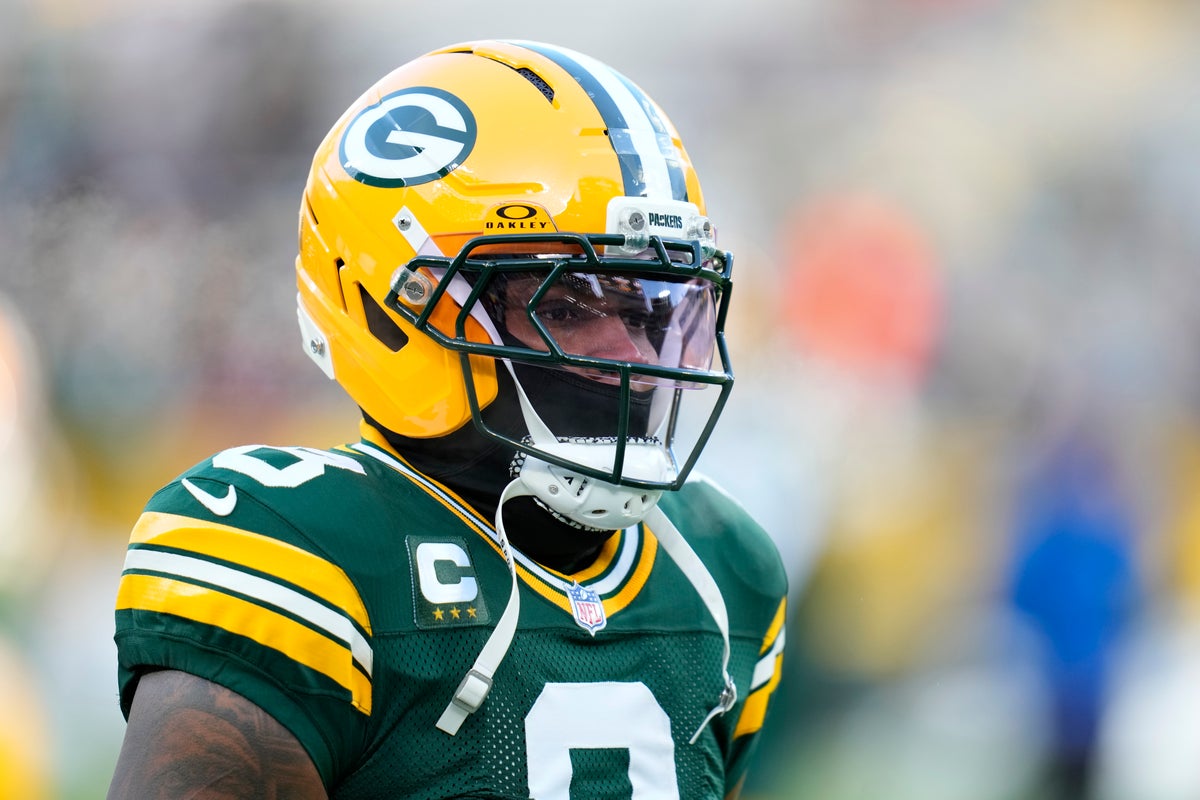
Green Bay Packers running back Josh Jacobs was arrested on five criminal charges, including a felony count of strangulation and suffocation, following a domestic disturbance call. The incident, which originated Saturday morning in the Hobart-Lawrence municipality of Wisconsin, culminated in Jacobs being booked into the Brown County Jail. Alongside the felony charge, the three-time Pro Bowler faces four misdemeanor counts: battery-domestic abuse, criminal damage to property-domestic abuse, disorderly conduct-domestic abuse, and intimidation of a victim.
Through his legal team, Jacobs has vehemently denied all allegations. The franchise and the NFL have acknowledged the situation, but the sheer gravity of the charges immediately shifts the spotlight from offseason conditioning to the stringent protocols of the league's Personal Conduct Policy. Don't miss our recent article on this related article.
The Police Response and the Legal Matrix
Law enforcement handled the situation with measured deliberateness. According to Hobart-Lawrence Police Chief Michael Renkas, officers originally responded to a disturbance complaint at 8:37 a.m. on Saturday. The actual arrest and subsequent jail booking did not occur until Tuesday, signaling that investigators spent days processing statements and physical evidence before executing the arrest.
The inclusion of an intimidation of a victim charge suggests a timeline that extended beyond the initial physical altercation. In Wisconsin, domestic abuse enhancements modify standard misdemeanor charges, raising the stakes for bail conditions and eventual sentencing. The cornerstone of the state's case is the felony strangulation charge, an offense that carries significant prison time if a conviction is secured. If you want more about the background of this, CBS Sports provides an informative summary.
Jacobs’ defense council, led by high-profile attorneys David Chesnoff, Richard Schonfeld, and Clarence Duchac, issued a joint statement urging the public to wait for facts that have not yet been made public. Their defense will likely look to scrutinize the initial police report and any available audio or visual evidence from the scene.
The NFL Personal Conduct Mandate
The league operates on its own timeline. Under the NFL Personal Conduct Policy, Commissioner Roger Goodell holds the unilateral authority to place a player on the Commissioner’s Exempt List if they are charged with a crime of violence. This is an administrative designation, not a punishment. It allows the league to pay the player while barring them from practicing or attending games while an independent investigation occurs.
The league routinely conducts its own investigation, often utilizing former federal law enforcement officers to interview witnesses and review police files. Crucially, the NFL does not require a criminal conviction to hand down a multi-game suspension. The standard of proof for league discipline is a preponderance of the evidence, a much lower bar than the "beyond a reasonable doubt" standard required in a criminal courtroom.
A look at historical precedents reveals how the league typically handles similar accusations.
| Player | Year | Initial Charge | NFL Discipline Outcome |
|---|---|---|---|
| Greg Hardy | 2014 | Domestic Abuse / Strangulation | Placed on Exempt List; later suspended 10 games (reduced to 4) |
| Adrian Peterson | 2014 | Reckless Assault | Placed on Exempt List; suspended for remainder of season |
| Kareem Hunt | 2018 | Assault (Video Evidence) | Released by team; suspended 8 games |
| Ray Rice | 2014 | Aggravated Assault | Indefinitely suspended after video disclosure |
The On-Field Void in Green Bay
The timing of the arrest severely complicates Matt LaFleur’s offensive planning. The Packers officially began their Organized Team Activities (OTAs) the very day Jacobs was booked into jail.
Jacobs is the undisputed anchor of Green Bay's ground game. Last season, he logged 929 rushing yards and 13 touchdowns, serving as the primary engine for a run-heavy scheme that finished near the bottom of the league in dropback rate. With number-two rusher Emanuel Wilson departing for the Seattle Seahawks in free agency, the drop-off behind Jacobs is precipitous.
The current depth chart consists of unproven commodities. MarShawn Lloyd and Chris Brooks have minimal starting experience at the professional level. If Jacobs faces a prolonged absence via the Exempt List or a formal suspension, General Manager Brian Gutekunst will be forced to look at the remaining free-agent market or seek a trade to stabilize a backfield designed to protect quarterback Jordan Love.
Corporate and Financial Fallouts
The financial implications for both the franchise and the player are immense. Modern NFL contracts include strict "morality clauses" that allow teams to void guaranteed money if a player is arrested for violent crimes or conducts themselves in a manner that damages the reputation of the organization.
Jacobs signed a lucrative multi-year deal with Green Bay through the 2027 season. Depending on the exact wording of his contract structure, a felony charge could trigger the immediate forfeiture of future salary guarantees, giving the Packers a mechanism to cut ties without absorbing catastrophic dead-cap hits.
Beyond the team contract, corporate sponsorships present an immediate vulnerability. National brands rarely tolerate association with domestic violence allegations, and endorsement deals can dissolve within hours of a formal indictment.
The legal process moves slowly, but the NFL calendar waits for no one. With training camp looming in the summer, the Packers face the grim reality of navigating a championship window with their star offensive weapon entangled in a severe criminal prosecution.