The fluorescent lights in the accounting department hum at a frequency designed to flatten human emotion.
Picture a guy named Marcus. He is a hypothetical composites-specialist in his early thirties, staring at a spreadsheet that refuses to reconcile, his second cup of lukewarm coffee sweating onto a stack of quarterly projections. On his second monitor, hidden behind a minimized browser window, sits a countdown clock. It isn't ticking down to his wedding, his child's birth, or a long-awaited vacation to the Amalfi Coast. It is counting the seconds until a fictional criminal named Lucia walks out of a fictional prison in a sun-drenched, neon-soaked parody of Miami.
Marcus is already drafting the email. His throat will miraculously tighten on a Tuesday afternoon. By Wednesday morning, a sudden, virulent strain of twenty-four-hour flu will render him entirely incapable of operating Microsoft Excel, though his thumb reflexes on a dual-sense controller will remain mysteriously intact.
Multiply Marcus by ten million, and you begin to see the shape of an impending economic tremor.
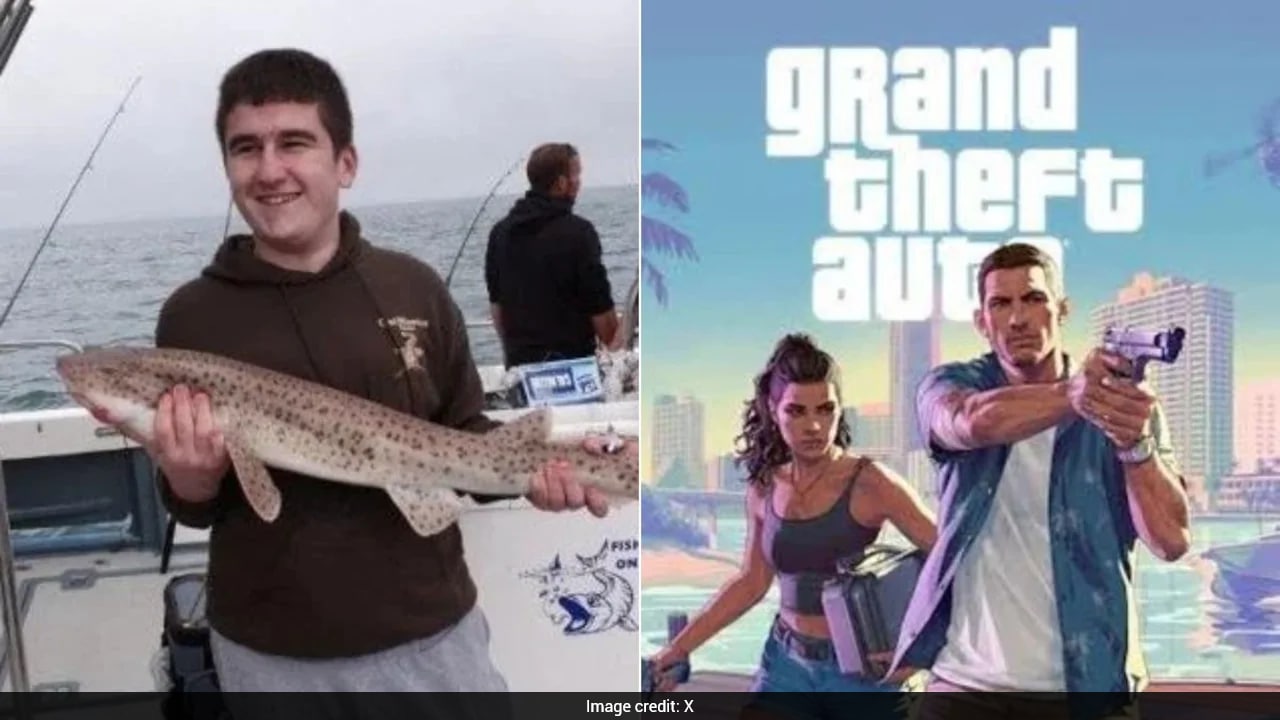
When Rockstar Games finally drops Grand Theft Auto VI, it will not merely be a software launch. It will be a synchronized global vanishing act. Across time zones, from Tokyo call centers to London law firms, slack statuses will turn yellow, out-of-office auto-replies will flare to life like distress signals, and middle managers will suddenly find themselves presiding over ghost towns. Critics and corporate commentators love to frame this phenomenon as a symptom of modern immaturity—a generation of perpetual adolescents shirking adult responsibility for a video game.
They have it completely backward.
What looks on the surface like mass truancy is actually the last remaining vestige of the shared cultural campfire. In an era where algorithms have atomized our attention into millions of isolated, solitary feeds, the collective urge to skip work for GTA VI is a radical act of communal synchronization.
The Architecture of a Global Sick-Out
To understand the sheer scale of the coming absenteeism, you have to look at the numbers without blinking. When Grand Theft Auto V launched back in September 2013, it generated $800 million in its first twenty-four hours and crossed the billion-dollar mark in three days. That made it the fastest-selling entertainment product in human history, outpacing Avengers: Endgame and Avatar before most people had even finished the prologue.
That was over a decade ago. The gaming audience has grown exponentially since then, and the pent-up demand for the sixth installment has fermented for thirteen years.
Industry analysts and workplace productivity trackers have long observed what happens during major cultural tentpoles. During the 2015 release of Fallout 4, adult-oriented streaming platforms and workplace telemetry data recorded massive dips in mid-week office activity. When Red Dead Redemption 2 arrived in 2018, human resources departments across North America and Europe reported anomalous spikes in Friday personal days. Yet, GTA VI operates in a different stratosphere entirely. With the first reveal trailer shattering YouTube records by amassing over 90 million views in twenty-four hours—more than any non-music video in the platform's history—the signal is unmistakable.
Consider what happens next in the typical corporate ecosystem. Paid time off requests are already being quietly banked months in advance. In sub-reddits and Discord servers dedicated to the franchise, entire threads are devoted to strategic PTO hoarding. Workers are trading shifts, front-loading deliverables, and hoarding sick days like wartime rations.
For the millions who cannot secure formal leave, the informal route beckons. Economists call it "presenteeism" when sick workers show up and produce nothing; GTA VI will trigger its inverse, a wave of "strategic absenteeism" where perfectly healthy adults vanish into darkened living rooms.
Why We Crave the Digital Escape
I remember the exact smell of the carpet in my cramped apartment during the midnight launch of GTA IV in 2008. It smelled like cheap detergent and cold pizza. I had called out of a retail shift I desperately needed to pay rent, lying to a manager who definitely knew I was full of it. When Niko Bellic stepped off that cargo ship into Liberty City, the sheer density of the world felt like a physical weight lifting off my chest. For seventy-two hours, I didn't have to worry about overdraft fees or an uncertain future. I had agency.
That sensation is the secret engine driving this entire phenomenon.
Modern knowledge work is largely abstract and deeply alienating. You spend forty hours a week moving digital boxes from one column to another, answering emails that generate more emails, and participating in meetings that exist solely to schedule future meetings. The connection between effort and tangible result has been severed. You rarely get to build a house, harvest a crop, or see the immediate, physical consequence of your labor.
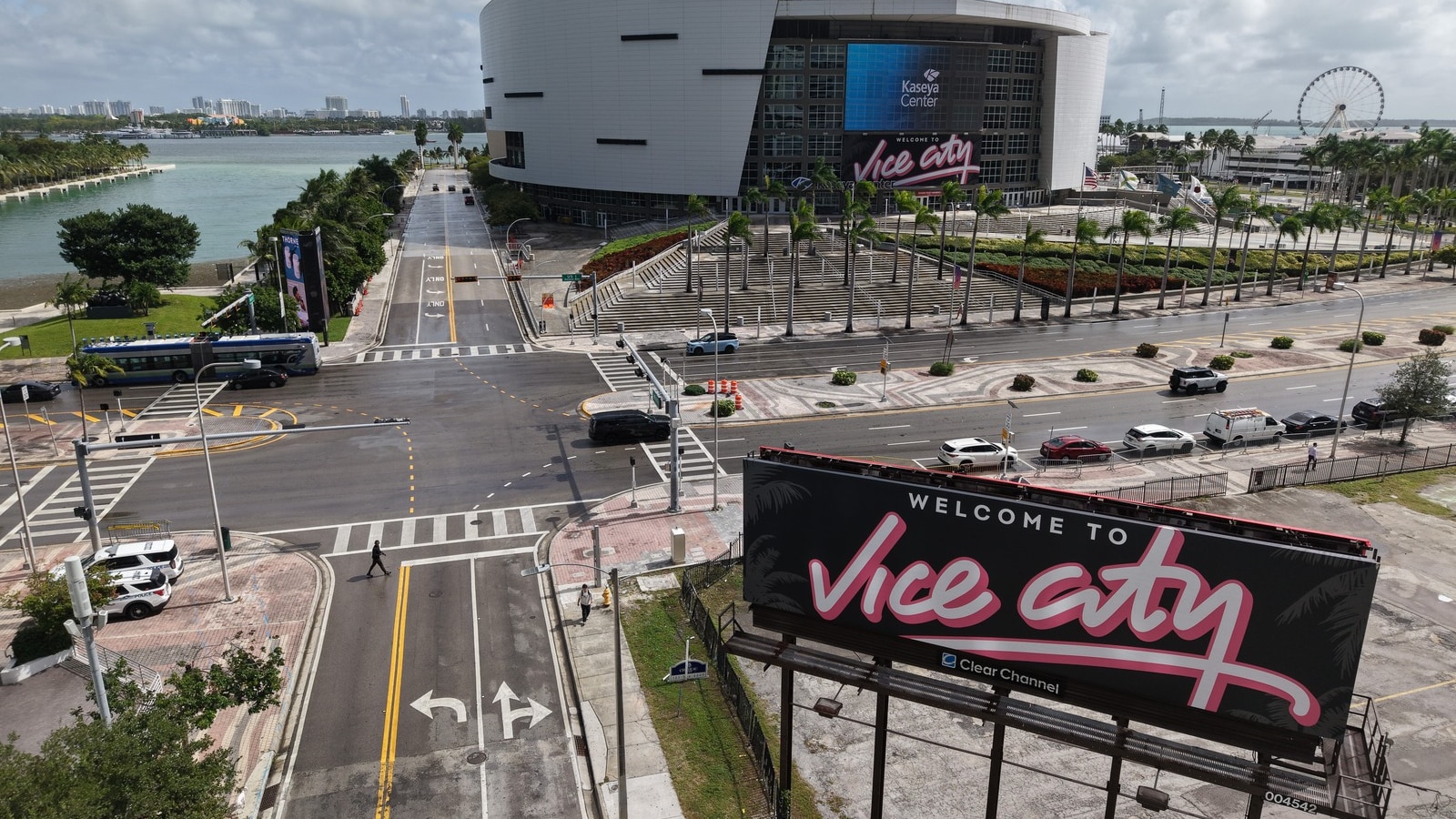
Video games—and Rockstar's sprawling sandboxes in particular—offer a seductive antidote to that helplessness. Think of a great open-world game like a lucid dream with physics. If you push a button, a car accelerates. If you make a choice, the world reacts immediately, loudly, and often hilariously. There are no quarterly reviews in Vice City. There are no passive-aggressive performance improvement plans. There is only cause, effect, and the intoxicating freedom to roam an American dreamscape rendered in hyper-saturated satire.
When people skip work to play a game, they aren't running away from hard work. Most of them will spend the next three days meticulously grinding missions, memorizing map layouts, and executing complex virtual heists that require more coordination and focus than their actual day jobs. They are running toward a world where their actions actually matter.
The Myth of the Slacker Gamer
There is a persistent, stubborn stereotype that the person calling in sick for a video game is a twenty-something living in a basement, surrounded by empty energy drink cans. That demographic certainly exists, and they will be online at 12:01 AM sharp.
The real disruption, however, comes from the demographics nobody expects.
The average age of a video game player today is well into their mid-thirties. The teenagers who played Grand Theft Auto: Vice City on the PlayStation 2 in 2002 are now in their late thirties and early forties. They are senior software engineers, hospital administrators, structural architects, and middle-school teachers. They have mortgages, toddlers, and 401(k) plans.
This is where the invisible stakes get fascinating. When a twenty-year-old barista calls out of a shift, the coffee shop moves a little slower. When a forty-year-old senior database architect takes three "mental health days" in the middle of a product sprint, entire corporate timelines quietly warp.
Yet, there is a strange, unspoken solidarity forming inside modern workplaces. Because gaming has migrated from a niche subculture to the dominant entertainment medium on the planet—generating more annual revenue than the global film and music industries combined—the people approving the time-off requests are often playing the exact same game.
A hypothetical scenario plays out in thousands of offices: a junior analyst nervously submits a PTO request for a random Thursday and Friday in the autumn. His department head, a forty-two-year-old woman who still remembers every cheat code for San Andreas, looks at the dates, looks at the analyst, and approves it without a single question. No lies required. Just a silent nod between two people who both plan to spend their weekend stealing digital sports cars in Leonida.
The Last Shared Campfire
We live in an era of profound cultural fragmentation. Think back to the final episode of MASH*, or the morning after the Red Wedding aired on Game of Thrones. Those were moments when an entire society experienced the exact same narrative beat simultaneously. You could walk into an elevator, make eye contact with a complete stranger, and immediately share a frame of reference.
The streaming era killed that. Today, your neighbor is watching a true-crime documentary on Netflix, your coworker is binging a prestige drama on Apple TV, and you are scrolling through an endless, hyper-personalized stream of short-form videos that nobody else on earth will ever see in the exact same order. We have infinite content and zero shared culture.
Grand Theft Auto VI is one of the last remaining cultural monoliths capable of piercing that isolation.
When millions of people skip work on the exact same day, they aren't just playing a game; they are participating in a massive, simultaneous live event. They are experiencing the same opening cutscene, hearing the same fictional radio stations, and discovering the same hidden Easter eggs at the exact same moment. The watercooler conversation—whether it happens in an actual breakroom or across group chats—is suddenly alive again. Everyone is speaking the same language.
Of course, there is real anxiety tucked beneath the excitement. Will the servers hold up? Will the game live up to more than a decade of impossible, mythologized expectations? What happens to the economy if a sizable chunk of the workforce simply checks out for a long weekend? Nobody knows for sure, and the uncertainty is part of the electric tension humming beneath the gaming community.
The Morning After
Employers often wring their hands over lost productivity, calculating hypothetical billions in vanished labor every time March Madness rolls around or a major game launches. Those calculations always miss the deeper truth about human endurance.
People are exhausted. Years of economic volatility, relentless digital connectivity, and the quiet erosion of boundaries between home and office have left the modern worker stretched thin. A corporate culture that demands constant availability shouldn't be surprised when its workforce stages a silent, joyful mutiny.
Taking a day off to vanish into a fictional world isn't a failure of work ethic. It is a pressure valve. It is a reminder that human beings are not biological subroutines designed to optimize shareholder value until they burn out. Sometimes, the healthiest thing a person can do is close the laptop, draw the curtains, and spend twelve hours driving down a digital highway while the sunset bleeds purple and orange across a fictional ocean.
Somewhere out there, an alarm clock is going to ring at 6:30 AM on launch morning. Millions of hands will reach out from beneath warm blankets, silence the noise, and roll back over in the dark—not to sleep, but to wake up somewhere else entirely.