The lights in the factory district of Dongguan don’t flicker anymore.
A decade ago, a sudden spike in global crude prices or a geopolitical tremor in the Strait of Hormuz would send a literal shiver through the Chinese power grid. Managers would scramble. Shift schedules would be torn up to accommodate rolling brownouts. The cost of making a plastic toy or a high-end circuit board was tethered, by an invisible and fraying umbilical cord, to the stability of a region five thousand miles away.
That cord has been severed.
As the sky over the Middle East turns a bruised purple from the smoke of escalating conflict, global markets are doing what they always do: panicking. Crude oil futures climb. Shipping insurance premiums skyrocket. In London and New York, analysts look at their screens with a sense of grim inevitability, waiting for the "energy tax" to choke the life out of the global recovery.
But in Shanghai, the reaction is different. The mood is quiet. Calculating. Almost serene.
Chinese assets—the stocks, the bonds, the very currency of the dragon—are behaving with a resilience that feels unnatural to those who remember the 1970s or even the early 2000s. To understand why, you have to look past the ticker tape and down at the ground. You have to look at the silicon, the lithium, and the long, patient game of architectural survival.
The Ghost of the Tanker
Consider a hypothetical engineer named Liang.
Liang works for a logistics firm in Shenzhen. In a previous life, his biggest headache was the "fuel surcharge." Every time a drone hit a refinery in the desert or a tanker was seized in the Persian Gulf, his margins evaporated. He was a hostage to geography. He was a pawn in a game played by kings and cartels.
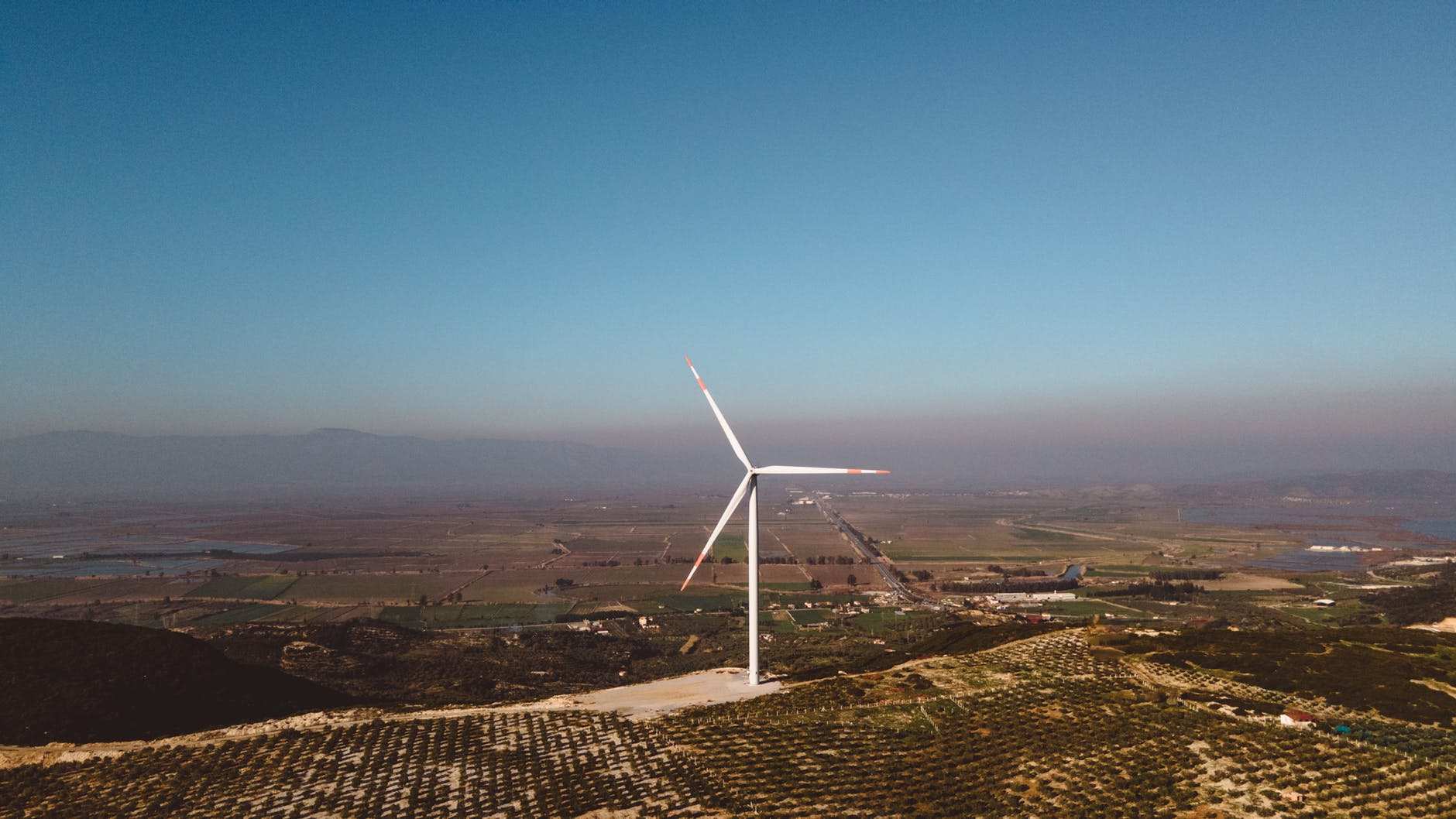
Today, Liang oversees a fleet of electric heavy-duty trucks. They don't care about the price of Brent Crude. They plug into a grid that is increasingly fed by a massive, silent sea of photovoltaic panels in the Ningxia desert and wind turbines off the coast of Fujian.
This isn't just about "being green." Forget the brochures and the climate summits. This is about hard-nosed, cold-blooded insulation. China realized long ago that as long as its economy ran on imported oil, its sovereignty was an illusion. It was a house built on a fault line.
So, they moved the fault line.
By aggressively pivoting toward domestic electrification, China didn't just change how it powers its cars; it changed how its economy reacts to external trauma. When oil prices jump because of a war in Iran, the "energy shock" hitting China is dampened. It’s like wearing a lead vest in an X-ray room. The radiation is there, but it isn’t reaching the organs.
The Math of Independence
The numbers back up Liang’s newfound peace of mind. In the last few years, China has installed more solar capacity than the rest of the world combined. This isn't a statistic; it’s a fortress.
Every gigawatt of renewable energy added to the Chinese grid is a gigawatt that doesn't need to be bought in US dollars from a volatile foreign power. This creates a massive "buffer" for the Chinese Yuan. Usually, when energy prices spike, oil-importing nations have to sell their local currency to buy dollars to pay for that oil. This devalues the local currency and spikes inflation.
China has broken that cycle.
Because they need less foreign oil per unit of GDP every year, the pressure on the Yuan during a Middle Eastern crisis is significantly lower than it used to be. Investors are noticing. They see a country that has essentially pre-paid its energy bills for the next twenty years by building out its own infrastructure.
Foreign capital, looking for a port in the storm, is finding its way into Chinese equities not because they love the politics, but because they love the physics. It is a bet on a system that has successfully decoupled itself from the most chaotic region on Earth.
The Invisible Stakes of the Grid
We often think of "energy" as something we put in a tank. We should think of it as a leash.
The length of that leash determines how much a country can actually do when the world goes mad. For decades, the West held the leash. Then, the Middle East held it. Now, China has decided to simply let go.
The strategy was simple: electrify everything.
It started with the high-speed rail network, a silver web that moved millions of people without a single drop of gasoline. Then came the buses. If you walk through a major Chinese city today, the most striking thing isn't the lights—it's the silence. The roar of the internal combustion engine is being replaced by the low hum of the battery.
This transition creates a unique financial phenomenon. While the rest of the world sees a war in the Middle East as a "cost," China sees it as a "competitive advantage." If your competitor's costs go up by 20% because of fuel prices and yours only go up by 2%, you haven't just survived. You’ve won.
The Emotional Core of the Dragon
There is a deep-seated psychological element to this resilience. There is a memory of "the century of humiliation," a time when China's destiny was controlled by outsiders. For the modern Chinese technocrat, energy dependence is the ultimate vulnerability. It is the modern equivalent of an opium trade—a foreign substance that the country relies on, which can be cut off at any moment to bring the nation to its knees.
The frantic building of dams, solar farms, and nuclear plants is an act of emotional defiance.
When you see Chinese stocks rallying while the rest of the world bleeds red during a war, you are seeing the market price in "security." It is the valuation of a country that no longer has to ask permission to keep its lights on.
But this path isn't without its own friction. The transition is expensive. It requires a level of state-directed capital that makes Western economists nervous. It relies on a monopoly of the supply chain for rare earth minerals and battery components that has the rest of the world scrambling to catch up.
The Ripple Effect on Global Assets
What happens to a global portfolio when the "old rules" stop working?
Traditionally, you bought gold or US Treasuries to hide from a war. But if the war is specifically an energy war, and one of the world's largest economies is immune to that energy shock, then that economy’s assets become a "defensive play."
We are seeing a migration of logic.
Hedge funds that used to see China as a high-growth, high-risk "casino" are starting to see it as a structural utility. It’s a place where the inflation floor is lower because the energy roof is made of local silicon rather than foreign oil. This shifts the entire gravity of global finance. If Chinese bonds can stay stable while the Middle East burns, they aren't just "emerging market" debt anymore. They are something new. Something sturdier.
The View from the Bridge
Back in Dongguan, the sun sets.
The streetlights come on, drawing power from a grid that is, at this very moment, balancing inputs from a thousand different sources. Some of it is still coal. Some of it is still gas. But the percentage that comes from a place where people are fighting is shrinking every single day.
The war in the Middle East is a tragedy of human proportions, a geopolitical nightmare, and a threat to the global order. But for the Chinese economy, it is also a validation. It is the moment where the billions of dollars spent on "unnecessary" solar panels and "over-engineered" battery plants suddenly look like the smartest money ever spent.
The dragon isn't just breathing fire. It has learned how to capture the fire of the sun and the power of the wind, storing it in the belly of the earth, waiting for the day when the rest of the world's fuel runs dry or becomes too expensive to burn.
The decoupling is complete. The umbilical cord is gone. And as the world watches the horizon for the next explosion, China is simply watching the meter, knowing the bill has already been paid.
There is no louder statement in the world of power than silence. And right now, the Chinese economy is very, very quiet.