The corporate public relations machine loves a simple math problem. Chop down one old tree, plant a dozen young ones, and call it even. It sounds tidy. It fits neatly into a corporate social responsibility brochure. It satisfies local planning boards looking for an easy out.
But environmental economics does not work like a bank ledger, and you cannot offset centuries of ecological history with a handful of saplings.
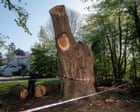
When news broke that a Toby Carvery site felled an ancient oak tree—a specimen that had stood for centuries—the inevitable corporate damage control swung into action. The proposed settlement? Funding the replanting of an orchard. The media coverage mostly followed the standard, lazy script: a mistake was made, a penalty was agreed upon, and nature will eventually heal.
This consensus is completely wrong. It miscalculates the true value of ancient ecosystems and validates a dangerous corporate precedent: that irreplaceable natural heritage can be destroyed as long as you write a big enough check to a local planting initiative.
We need to stop pretending that sapling substitution is environmental justice.
The Myth of the Equal Ecological Trade
The fundamental flaw in the "tree for a tree" logic rests on a misunderstanding of what an ancient tree actually is. An ancient oak is not just a collection of wood and leaves. It is a highly complex, self-contained ecosystem that takes centuries to develop.
When a company fells a 300-year-old oak, they are not just removing carbon storage; they are obliterating a habitat that supports hundreds of species of insects, fungi, lichens, and birds. Many of these species rely exclusively on the specific conditions found only in decaying ancient wood—features known as microhabitats, such as hollow trunks, rot holes, and deadwood canopy branches.
Imagine a scenario where a property developer demolishes a historic cathedral and offers to build three suburban tract houses in its place as compensation. Structurally, the houses provide more square footage. Materially, they use new bricks. But culturally and historically, the transaction is an absurdity.
The same absurdity applies to ecological mitigation.
A newly planted orchard, while visually appealing and useful for fruit production, cannot replicate the ecological function of an ancient oak. Saplings lack the complex root networks, the symbiotic mycorrhizal fungal associations in the soil, and the physical structure required by specialized wildlife. According to data from the Woodland Trust, ancient woods and trees cover a mere fraction of the UK landmass, yet they harbor a disproportionate amount of our threatened biodiversity. Replacing one with the other is a massive net loss for the environment, hidden behind a veneer of green goodwill.
Why Financial Penalties Fail Nature
The current regulatory framework treats environmental destruction as a cost of doing business. If the fine or the cost of mitigation is lower than the value generated by altering the land—whether for extra parking spaces, building extensions, or ease of maintenance—the tree loses every single time.
I have spent years analyzing how corporate structures handle environmental liabilities. Companies operate on predictable, quantifiable metrics. They understand fines. They understand mitigation budgets. What they do not understand, or choose to ignore, is the concept of ecological debt.
When a corporate entity funds an orchard replanting as a settlement, they are essentially purchasing a license to destroy. The cost of buying and planting saplings is a rounding error on a corporate balance sheet. It allows the business to exit the news cycle with its reputation intact, perhaps even polished, by claiming they "invested" in local biodiversity.
This creates a moral hazard. If the penalty for felling irreplaceable habitat is simply funding a nice community garden elsewhere, there is zero economic incentive for corporate landowners to invest in the tedious, expensive work of preservation, such as professional arboricultural management, root protection zones, or building design alterations.
The Flawed Premise of Popular Environmental Questions
If you look at the common queries surrounding urban forestry and corporate development, the flawed premise of our current mindset becomes obvious. People frequently ask variations of these three questions:
- How many saplings does it take to replace a mature tree? The question itself is broken. If you are measuring purely by carbon sequestration capacity, it takes hundreds of young saplings decades of growth to match the storage capability of a single mature giant. If you are measuring by biodiversity habitat, the answer is none. You cannot replicate a 300-year-old habitat in a 10-year timeframe, no matter how many saplings you crowd into a plot of land.
- Is tree planting always good for the environment? No. Right tree, right place, right reasons. Planting an orchard is an agricultural activity, not the restoration of a wild ecosystem. Orchards require management, often involve non-native varieties optimized for fruit production rather than wildlife value, and do not replace the specific canopy dynamics of native woodland giants.
- Can corporate funding solve local deforestation? Corporate funding can buy land and plant trees, but it rarely funds the long-term maintenance, monitoring, and protection required to see those trees reach maturity. A massive percentage of corporate-funded saplings die within the first five years due to neglect, drought, or poor soil preparation. The funding covers the photo-op, not the century of care required to grow an ancient replacement.
The Real Cost of Corporate Convenience
Let us be completely honest about the downsides of shifting away from the sapling substitution model. If we reject these easy settlements, development slows down. Infrastructure becomes more expensive to design. Corporate entities face genuine, uncomfortable restrictions on how they use their land.
If a business is told they absolutely cannot remove a historic tree, it might mean sacrificing profitable square footage, re-routing access roads, or abandoning a site entirely. That is a hard pill for local economies and business owners to swallow. It requires a systemic shift from prioritizing immediate commercial utility to valuing long-term ecological stability.
But continuing down the current path is a guarantee of slow ecological bankruptcy. We are trading away permanent, high-value natural assets for temporary, low-value political cover.
Moving Past the Propaganda
True accountability does not look like a corporate press release celebrating a new orchard. If a business destroys an ancient natural asset, the remedy should be severe enough to deter every other landowner in the country from making the same calculation.
We must demand real asset protection, meaning absolute legal designation for ancient trees that carries criminal liability for unauthorized destruction, not just civil fines. Furthermore, we need to mandate that mitigation money goes directly into the permanent, legal protection and acquisition of existing ancient habitats nearby, rather than speculative new planting projects that look good on paper but deliver minimal ecological value for decades.
Until the penalty for cutting down an ancient oak costs a company more than the land value they gain by removing it, the chain saws will keep running, the saplings will keep dying in neglected fields, and the public will keep buying the lie that the accounts are balanced.