A Whisper Above Zhukovsky
The air near Moscow in late December smells of diesel exhaust, damp pine needles, and freezing moisture. It is a quiet cold. The kind that seeps through thick wool coats and settles in the marrow of your bones. On an ordinary afternoon, the suburban woods surrounding the Zhukovsky Airfield are silent, save for the crunch of snow beneath a walker's boots.
Then comes the tear in the sky.
It begins not as a roar, but as a violent, unnatural whistle—the sound of air being ripped apart by forty thousand pounds of titanium and composite materials moving far too fast and far too low.
For a test pilot inside the cockpit of Russia’s prized stealth fighter, the Su-57 Felon, the world contracts in a matter of milliseconds. Warning lights flood the glass cockpit in a sickening amber glare. Flight control systems, meant to calculate thousands of aerodynamic variables every second, go dark or begin to fight the human hand at the stick.
The jet tumbles. The ground, a mosaic of dark birch trees and white fields, rushes up to meet the canopy.
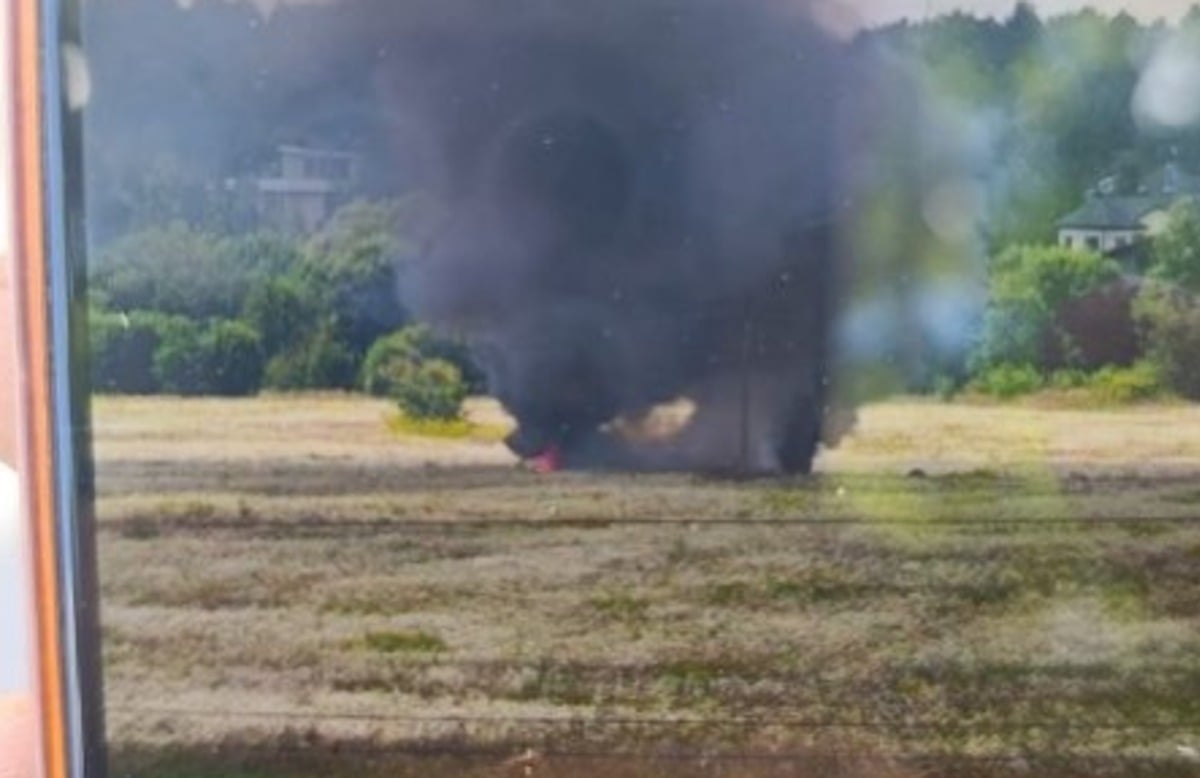
There is a hard pull on the ejection handle. Explosive charges shatter the overhead glass. A seat fires into the freezing sky. Seconds later, a multiton pinnacle of modern military engineering hits the forest floor, exploding in a fireball that turns decades of propaganda into a rising column of black smoke.
The pilot survives. The narrative does not.
The Ghost in the Machine
We often treat advanced fighter jets as mythical creatures. We talk about stealth coating, thrust-vectoring engines, and radar cross-sections as if they belong to a science fiction universe. But strip away the classified avionics and the slick matte-black paint, and an aircraft is simply a terrifyingly complex agreement between human engineering and physical law.
When news broke that a Su-57 had crashed during a routine test flight near Moscow, official statements were predictably brief. A technical malfunction. An investigation underway. The pilot ejected safely. Standard language designed to smooth over a deeply jagged reality.
To understand why this single crash reverberates so loudly through the halls of defense ministries from Berlin to Washington, you have to stop looking at the plane as a weapon and start looking at it as a symptom.
Imagine spending twenty years telling your neighbors that you have built an unbreakable lock for your front door. You charge money for tours. You boast about its impenetrable design at every block party. Then, one Tuesday afternoon, the wind blows the door completely off its hinges.
That is the Su-57 problem.
Moscow pitched the Felon as a fifth-generation marvel, a direct rival to America’s F-22 Raptor and F-35 Lightning II. It was supposed to be invisible to enemy radar, capable of cruising at supersonic speeds without using afterburners, and governed by artificial intelligence so seamless that it could correct pilot error before the pilot even noticed a mistake.
Yet, here was the flagship of Russia's modern air force, resting in shattered, charred pieces in a snowbank just outside its own capital.
When Physics Demands the Bill
High-performance aviation is an unforgiving creditor. It accepts no excuses, no political spin, and no creative accounting.
Consider what happens when a modern jet enters a flat spin or suffers a flight-control system failure. At Mach 1.5, a computer glitch is not a mild inconvenience like a frozen laptop screen. It is an immediate crisis. The fly-by-wire system—the digital tether linking the pilot's control stick to the tail fins and wing flaps—is the only thing keeping a inherently unstable aerodynamic frame from flying apart.
If that digital tether snaps, gravity takes over instantly.
For years, aerospace analysts pointed out subtle flaws in the Su-57 program. They noted visible rivets on the airframe—a cardinal sin for a stealth aircraft meant to absorb and deflect radar waves. They pointed to delay after delay in mass production, suggesting that beneath the sleek exterior lay a troubled supply chain struggling to source advanced microchips and high-precision components.
"A stealth jet is not just a frame; it is a symphony of software, materials science, and industrial discipline. If one instrument is out of tune, the whole performance collapses."
When the aircraft plunged into the Moscow countryside, it wasn't just a failure of hydraulics or software. It was the physical manifestation of years of skipped steps, rushed testing schedules, and the immense pressure to deliver a miracle weapon on a budget that couldn't sustain it.
The Human on the Ground
It is easy to get lost in the geo-political chess game, to view a crashed jet as a win or loss on a scoreboard. But somewhere in a medical facility near Moscow, a test pilot sits on the edge of a gurney, shivering despite the heavy blankets wrapped around his shoulders.
Ejection is not like in the movies. It is a violent, traumatic event.
When those rockets fire under the seat, the human spine is compressed under forces up to twenty times the strength of gravity. Vertebrae crack. Blood vessels in the eyes burst. The sudden transition from a pressurized cockpit to sub-zero air at hundreds of miles per hour feels like slamming into a brick wall made of ice.
That pilot survived because a mechanical seat, designed decades ago, worked precisely as intended. But as he sits in the quiet recovery room, smelling the faint lingering odor of aviation fuel on his skin, he knows the truth that official press releases will spend weeks trying to hide.
He knows how close he came to being a footnote in a defense journal. He knows the exact moment the machine stopped listening to him.
The Fragile Illusion of Air Power
The crash near Moscow cuts to the heart of a broader, uncomfortable truth about modern technology. We build machines so sophisticated that we barely understand how to maintain them when things go wrong.
The Su-57 was supposed to herald a new era for Russian air dominance. Instead, it serves as a stark reminder of the limits of theater. You can fly a handful of prototypes over parade grounds. You can film cinematic promotional videos with dramatic orchestral soundtracks. You can announce orders for dozens more planes that exist mostly on paper.
In the quiet, freezing woods of Zhukovsky, non-classified reality asserts itself without mercy.
The snow will eventually fall over the burn scar in the forest. The debris will be loaded onto flatbed trucks under the cover of dark and hauled off to classified hangars for analysis. Engineers will scroll through telemetry data, looking for the single line of code or the cracked hydraulic seal that brought down a multi-million-dollar machine.
They will fix the part. They will clear the fleet for flight again.
But the silence in the woods remains, heavy with the knowledge that no matter how advanced our machines become, the sky does not care about national pride, and physics never takes a day off.

/https://i.s3.glbimg.com/v1/AUTH_e84042ef78cb4708aeebdf1c68c6cbd6/internal_photos/bs/2026/g/B/3vpkvHQKizRKAfzDxjXA/vini-jr-antes-e-depois.jpg)