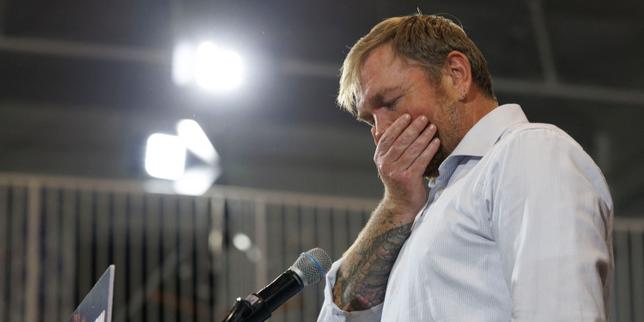
You can't make this up. Just a month after a historic primary victory, Graham Platner completely blew up his own campaign, leaving the Democratic path to winning the Senate in absolute tatters.
The self-described progressive populist and oyster farmer finally suspended his campaign after a devastating sexual assault allegation became the breaking point for a party that looked the other way for far too long. For months, the national Democratic establishment and local organizers rode his coattails because he had what they thought was the perfect anti-elite, working-class aesthetic. Now? They're left holding the bag in Maine with a July 27 deadline to find a replacement candidate who can somehow convince voters to trust the party again. If you found value in this post, you should check out: this related article.
If you want to understand why national Democrats are panicking about losing the entire legislative branch, you have to look at how they allowed a fatally flawed messenger to capture their most critical Senate pick-up opportunity of the year.
The Skeletons in the Oyster Bed
Let's be clear about one thing. This wasn't a sudden, unpredictable crisis. Platner's campaign was a rolling trainwreck of red flags from day one. For another look on this event, check out the latest update from The Washington Post.
Voters were willing to overlook early reports of unhinged, historic Reddit posts containing anti-gay slurs and dismissals of military sexual assault because Platner blamed them on post-traumatic stress from his Marine combat tours in Iraq. Then came the revelation of his chest tattoo, which featured a Totenkopf—a notorious Nazi symbol. He covered it up and claimed ignorance, and prominent progressive stars like Bernie Sanders and Elizabeth Warren kept right on backing him.
Next came the marital scandals, featuring sexually explicit text messages sent to multiple women, followed quickly by allegations from an ex-girlfriend that he had physically abused and restrained her.
Through it all, Platner maintained a comfortable lead in the polls, forcing the establishment favorite, Governor Janet Mills, to suspend her own campaign back in April because she couldn't match his raw, aggressive populist energy.
The house of cards collapsed when Jenny Racicot went to the press with a horrifying account of a 2021 incident where an intoxicated Platner allegedly forced his way into her home and raped her. Within forty-eight hours, Senate Leader Chuck Schumer and the Democratic Senatorial Campaign Committee threatened to cut off all funding for the state. Left with zero political oxygen, Platner dropped an angry, defiant 11-minute video blasting the party establishment as "judge, jury and executioner" while suspending his operations.
He still denies the claims, but the damage to the party's national strategy is done.
Why the Maine Seat Matters for the Whole Country
You might wonder why a single Senate race in Maine has the entire national party hyperventilating. It comes down to basic math.
Republicans hold a slim 53-47 majority in the upper chamber. The 2026 electoral map is notoriously brutal for Democrats, who are playing defense across multiple states. Flipping Susan Collins' seat in Maine wasn't just a luxury; it was a non-negotiable requirement if Democrats wanted any realistic shot at taking back the Senate and building a legislative wall against the opposition party's agenda.
Platner wasn't just winning; he had secured more primary votes than any Democratic Senate candidate in Maine's history. He activated a ferocious base of young, working-class, and anti-war volunteers who were completely uninspired by the traditional corporate wing of the party. By forcing a nominee with this level of baggage off the ballot, Democrats haven't just lost a candidate—they've alienated the very base they need to win.
The Scramble for a July Replacement
Maine election law gives the state Democratic Party until 5 p.m. on July 27 to formally select a replacement nominee via an emergency convention.
Finding a name isn't the problem. Several figures have already signaled interest, including David Costello, who finished third in the primary, and various progressive state representatives. The real nightmare is trying to bridge the massive chasm between the moderate and progressive factions before November.
Progressives want to appoint someone like former candidate Angela Jackson to keep the anti-billionaire, pro-worker momentum alive. Moderates are terrified that another far-left platform will hand Susan Collins an easy victory by alienating the centrist independent voters who decide Maine elections.
Worse still, Platner is actively trying to put his own thumb on the scale from the sidelines. In his exit video, he demanded that the replacement process respect the voters who supported his insurgent movement, and reports suggest he's personally calling local allies to back hand-picked loyalists to take over his infrastructure.
Stop Believing the Working Class Illusion
The biggest takeaway from the Platner disaster is a hard lesson about candidate vetting and superficial politics. Democrats became so desperate to shed their image as an elite, out-of-touch party that they fell head over heels for an engineered aesthetic.
Platner presented himself as a rugged, bearded combat veteran who spent his days hauling oyster cages out of the freezing Atlantic. It was an incredibly compelling story. Except it was largely an illusion.
Platner is actually the son of a wealthy lawyer and an upscale restaurateur. He attended a prestigious private high school. His oyster business barely generated a fraction of his actual income. Yet, the party hierarchy and voters alike wanted to believe the blue-collar myth so badly that they ignored mountain after mountain of evidence regarding his abusive behavior toward women. They treated serious behavioral warnings as mere "authenticity" or raw, unpolished charm.
What Happens Now
If you are trying to salvage the congressional map, you can't waste time mourning the Platner campaign. The state party needs to execute an aggressive, transparent convention that avoids the appearance of a backroom deal by party insiders, which would completely kill volunteer turnout.
The new nominee has to immediately pivot to a message of absolute accountability. They must validate the progressive economic anger that Platner tapped into while completely disavowing the toxic, misogynistic behavior that brought him down. Susan Collins has spent months building a massive war chest; the replacement candidate has exactly zero time to lose if they want to introduce themselves to Maine voters and save the party's chances of controlling the Capitol.