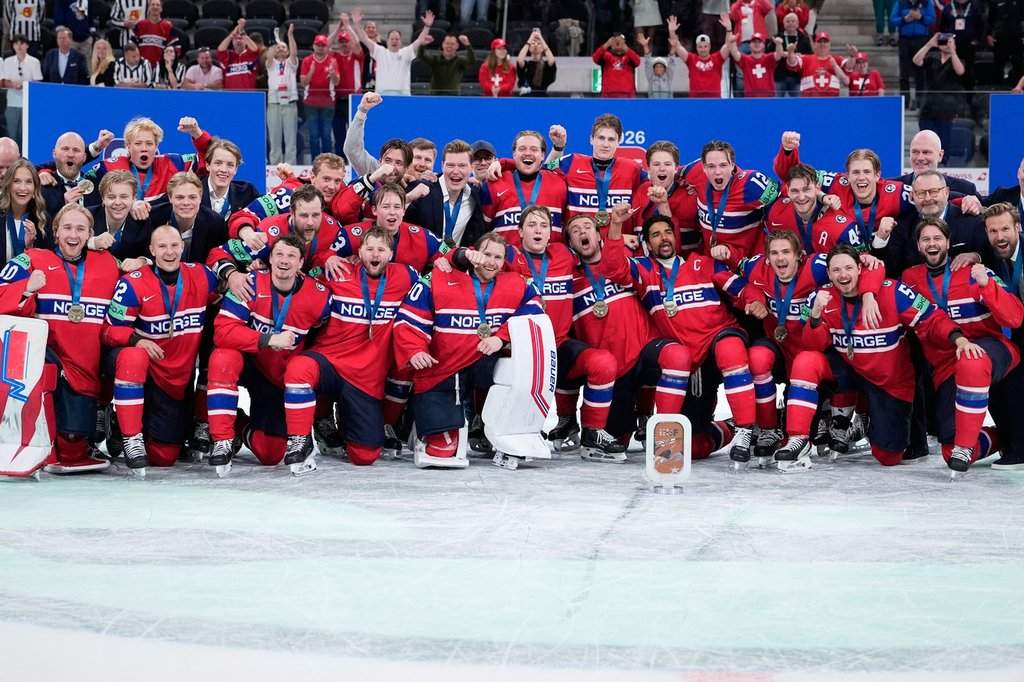
International sports federations operate under a structural tension between meritocratic tournament qualification and geopolitical risk management. When the Norwegian Ice Hockey Association indicated that its under-20 national team faces displacement from the top division of the IIHF World Junior Championship in Canada to accommodate the return of Russia, the situation exposed the precise mechanics of tournament bracket elasticity. Rather than viewing this development as an isolated administrative dispute, analysts must evaluate it as a resource allocation problem governed by fixed tournament capacities, commercial broadcasting dependencies, and institutional precedent.
The Structural Constraints of Top-Division Bracket Elasticity
The International Ice Hockey Federation (IIHF) top-division World Junior Championship operates on a rigid ten-team equilibrium. This structure is not arbitrary; it reflects a balanced logistical and commercial model designed to optimize arena utilization, television broadcast windows, and competitive parity over a compressed eleven-day schedule.
Introducing a previously suspended Tier-1 hockey nation into a closed ten-team ecosystem creates an immediate zero-sum displacement problem. Because the tournament infrastructure in host venues across Canada cannot absorb an eleventh team without dismantling the two-group, five-team round-robin format, reintegration requires either an administrative expansion or the removal of an existing participant.
- The Administrative Freeze Mechanism: During the period of Russia and Belarus's suspension following the 2022 invasion of Ukraine, the IIHF preserved their theoretical rankings within the federation's hierarchy rather than relegating them through standard competitive attrition. By freezing their status, the governing body created a latent structural debt. Reinstating Russia does not require them to climb back through Division I Group A; it triggers a direct re-entry into the top flight.
- The Marginal Participant Vulnerability: In a ten-team bracket, the tenth seed—historically the newly promoted nation from Division I Group A—occupies the most precarious position. Norway, having earned promotion through standard competitive channels, sits directly on the fault line between meritocratic qualification and administrative reinstatement.
- The Cost Function of Tournament Expansion: Expanding the tournament to twelve teams to accommodate Russia while protecting Norway introduces severe operational friction. Adding two teams increases the minimum game count from 31 to 41, requiring additional ice time, expanded hotel blocks, higher refereeing stipends, and renegotiated broadcast rights. For a host committee in Canada, where local organizing committees rely on predictable gate receipts and municipal subsidies, absorbing unbudgeted expansion costs degrades the tournament's profit margin.
Commercial Incentives and the Broadcasting Gravity Well
To understand why a governing body risks the reputational fallout of displacing a qualifying nation like Norway, one must examine the revenue architecture of international junior hockey. The World Junior Championship is the primary financial engine for the IIHF and Hockey Canada. Unlike the senior World Championship, which competes directly with the NHL Stanley Cup Playoffs for North American attention, the World Juniors occupy a monopolistic holiday broadcast window from December 26 to January 5.
The economic value of this window depends heavily on tier-one matchups. Broadcast partners—most notably TSN and RDS in Canada, alongside NHL Network in the United States—price their advertising inventory based on projected viewership for high-stakes rivalries. Matches featuring Canada, the United States, Sweden, Finland, and Russia generate exponential ratings compared to matchups involving promoted nations fighting to avoid relegation.
- Competitive Density vs. Blowout Risk: When a newly promoted nation enters the top division, the talent disparity against top-four seeds frequently produces lopsided scorelines. While sporting integrity dictates that promotion must be earned on the ice, commercial stakeholders view non-competitive games as dead inventory that depresses audience retention.
- The Russian Market Multiplier: Russia represents both a massive domestic broadcast market and a premier on-ice antagonist. Reintroducing Russia restores a primary historical rivalry for Canada and the United States, immediately inflating the commercial valuation of the tournament's knockout rounds and medal games.
- Sponsorship Alignment: Corporate sponsors funding the IIHF commercial rights portfolio demand maximum global reach. A bracket missing one of the sport's foundational superpowers operates at a permanent commercial discount, creating sustained pressure from rights holders to normalize the participant pool as soon as geopolitical conditions permit.
The Meritocracy Deficit and Institutional Precedent
Displacing a team that qualified under established rules introduces a severe moral hazard into international sports governance. If tournament entry can be revoked retroactively to accommodate an administratively reinstated member, the integrity of the entire promotion-and-relegation pyramid is compromised.
For federations like Norway, national team funding is tightly coupled to top-division participation. Government sports grants, corporate sponsorships, and player development pipelines depend on the visibility and competitive benchmarking provided by playing against elite nations. Removing Norway after they have secured their berth under the prevailing ruleset imposes an uncompensated financial and developmental penalty on a member federation that complied with every sporting and regulatory requirement.
This dynamic exposes a fundamental flaw in how sports federations manage geopolitical suspensions. When the IIHF elected to freeze Russia's ranking rather than relegating them to the bottom tier of the international structure, it deferred the political and logistical cost of reintegration. That deferred cost is now being transferred directly onto the balance sheet of a smaller federation.
Furthermore, this maneuver establishes a dangerous precedent for future governance disputes. If commercial utility and historical status supersede earned qualification, smaller federations lose their institutional leverage. The incentive structure shifts from investing in long-term grassroots development to lobbying executive councils for protected status.
Geopolitical Risk Management and Security Externalities
Reintegrating Russia into a tournament hosted in Canada involves complex operational variables beyond sporting fairness. Canada possesses one of the largest Ukrainian diasporas in the world, alongside strict federal visa protocols and public safety mandates.
Hosting a Russian national delegation in Canadian cities introduces significant security externalities. Local organizing committees and municipal police forces must account for potential protests, venue security upgrades, and diplomatic friction. In previous international events, the presence of Russian athletes has triggered boycotts, sponsor withdrawals, and heightened security expenditures that offset the commercial gains of their participation.
The IIHF Council must weigh the immediate broadcast uplift of a Russian return against the operational risk of disrupted venues and alienated North American corporate partners. A tournament marred by off-ice political demonstrations or player safety concerns damages the brand equity of the World Juniors far more severely than a bracket lacking a traditional powerhouse.
Additionally, the travel and visa logistics for a Russian delegation entering North America require explicit coordination with Canadian federal authorities. Even if the IIHF Council votes to reinstate Russia on sporting grounds, sovereign border policies remain an independent veto point. If key players or staff are denied entry visas, the tournament faces last-minute roster forfeits or administrative chaos, rendering the displacement of Norway entirely counterproductive.
Asymmetric Responses for Displaced Federations
When a smaller federation faces administrative displacement by an international governing body, traditional diplomatic protests rarely alter the outcome. The voting power within the IIHF Congress and Council is heavily weighted toward established hockey nations and commercial stakeholders. To protect its competitive and financial interests, a displaced federation must execute a targeted strategic response focused on contractual leverage and governance reform.
- Demand Financial Indemnification: If the IIHF alters the tournament format or participant list after qualification has concluded, the displaced federation must demand direct financial compensation equivalent to the lost top-division revenue share, television distributions, and national olympic committee funding tiers.
- Enforce Formal Expansion Protocols: Rather than accepting unilateral removal, the affected federation should align with other mid-tier European nations—such as Denmark, Latvia, Germany, and Slovakia—to form a voting bloc that mandates tournament expansion to twelve teams as the sole legal mechanism for reintegrating suspended members.
- Challenge via the Court of Arbitration for Sport (CAS): Administrative removal without a breach of conduct or competitive failure violates the foundational principles of sporting predictability. Filing an expedited appeal with CAS forces the governing body to justify the retroactive nullification of earned qualification under Swiss association law.
The Structural Trajectory of International Tournament Design
The friction surrounding Norway's status and Russia's potential return highlights the obsolescence of rigid ten-team brackets in an era of volatile geopolitics. Sports federations can no longer rely on static tournament architectures that assume uninterrupted participation by all major powers.
To insulate commercial properties from geopolitical shocks, international governing bodies must transition toward modular tournament formats. Expanding the World Junior Championship top division to twelve teams—divided into two groups of six—eliminates the zero-sum displacement trap. A twelve-team model preserves commercial density by maintaining top-tier matchups while creating an institutional buffer that absorbs promoted nations and reinstated powers without triggering legal challenges or reputational damage.
For the IIHF, executing a clean reintegration requires decoupling political reinstatement from immediate bracket displacement. Implementing a mandatory one-year lag between the lifting of a suspension and re-entry into the top division—or requiring reinstated nations to compete in a dedicated qualification play-in series against the lowest-seeded top-division team—restores competitive legitimacy. Until governing bodies codify these buffer mechanisms into their tournament regulations, every geopolitical thaw will continue to destabilize the competitive integrity of international sport.


