The Pacific should smell like salt, cold depth, and the sharp, clean promise of an open horizon. But in Imperial Beach, just south of San Diego’s manicured postcard views, the air often carries a different scent. It is heavy. It is metallic. It is the unmistakable, gag-inducing stench of a failing civilization.
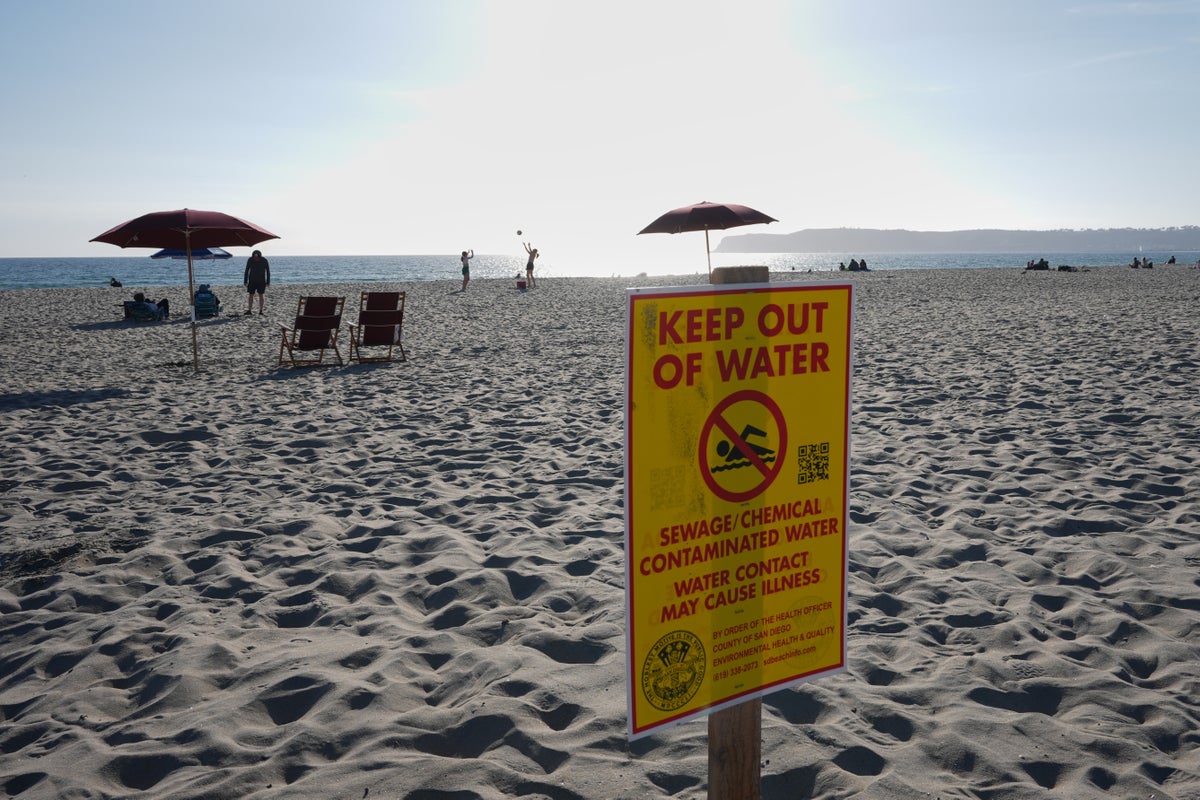
Paloma walks this stretch of sand every morning. She is a hypothetical resident, but her cough is very real, mirrored by thousands who live along this fractured coastline. She remembers when the "Yellow Flag" was a rarity, a cautionary note after a heavy rain. Now, the signs are semi-permanent fixtures, their bold black letters warning of "Contaminated Water" and "Sewage Runoff." They don't just stay up for a weekend anymore. They stay up for months. You might also find this similar story insightful: The Lost Art of Telling the Way.
In some of California’s most storied coastal enclaves, the ocean is no longer a playground. It is a hazard zone.
The River of Ruin
The math is as brutal as the smell. Billions of gallons of untreated wastewater, laced with industrial chemicals and human excrement, pour across the border from Tijuana into the Tijuana River Valley. This isn't a trickle. It is a deluge. The infrastructure on the Mexican side of the border—taxed by rapid population growth and aging pipes—simply cannot hold the volume. When it breaks, the Pacific pays the price. As discussed in detailed articles by The Points Guy, the implications are widespread.
Coronado, an island synonymous with luxury and the elite Navy SEAL training grounds, has seen its beaches closed for over 200 days in a single year. Think about that. For more than half the year, the "Crown City" is barred from its own namesake. The sand is a tease; the water is a biohazard.
Consider the mechanics of the spill. When a pipe bursts in Tijuana, or when heavy rains overwhelm the shared International Wastewater Treatment Plant, a plume begins its slow, toxic crawl northward. It follows the currents. It ignores border patrols. It doesn't care about property values or the tourist season.
This is a crisis of geography and neglect. The Tijuana River flows north. Gravity is the ultimate diplomat, and right now, it is delivering a message that San Diego County is struggling to answer. The South Bay International Wastewater Treatment Plant was built to handle 25 million gallons a day. On a bad day, the flow can triple that. The excess? It goes straight to the surf.
The Invisible Toll on the Body
We often talk about beach closures in terms of lost revenue. We talk about the surf shops that go quiet and the hotels that see cancellations. But the human body keeps a different kind of ledger.
Surfers are the first to know when the water has turned. They describe a particular "sting" in the eyes that doesn't come from salt. They talk about "The San Diego Scours"—a violent, sudden gastrointestinal rebellion that follows a session in the waves. But the stakes are rising beyond a bad stomach ache.
The water now carries a cocktail of pathogens: hepatitis, norovirus, and E. coli. There are even whispers and emerging studies about antibiotic-resistant "superbugs" thriving in the warm, nutrient-rich soup of the outfalls.
Imagine a young father, unaware of the latest water quality report, letting his toddler splash in the shallows of a lagoon. The water looks blue enough. The sun is out. But beneath the surface, the bacterial counts are hundreds of times higher than the legal limit for human contact. That night, the fever starts. This isn't a hypothetical fear for the people of Imperial Beach; it is a recurring anxiety. They live in a state of constant vigilance, checking apps and websites before they dare touch the Pacific.
A Failure of Grand Proportions
Why hasn't this been fixed? If this were happening in Malibu or Monterey, the outcry would be a national roar. But because this involves a complex transborder dynamic and a community that sits at the edge of the map, the response has been a slow-motion car crash of bureaucracy.
Fixing the problem requires more than just a bigger pipe. It requires a massive infusion of federal cash—billions of dollars—to expand treatment capacity and shore up the crumbling collectors in Mexico. The United States and Mexico signed a treaty, Minute 328, pledging hundreds of millions to the cause. But in the world of large-scale civil engineering, money moves slower than the tide.
Inflation has eaten into the budgets. Maintenance backlogs have grown. While politicians hold press conferences on the sand, the pumps are failing.
The reality is that we are witnessing the collapse of an ecosystem and a lifestyle. For decades, the California dream was built on the accessibility of the coast. The "ritzy" beaches mentioned in headlines are the canaries in the coal mine. When the wealth of Coronado can’t buy a clean swim, the system is fundamentally broken.
The Sound of Silence
Walk down to the shoreline in Silver Strand State Beach on a Tuesday afternoon in July. In years past, the air would be filled with the shrieks of children and the rhythmic thud of surfboards hitting the water.
Now, there is often a haunting silence.
The parking lots are half-empty. The lifeguards sit in towers overlooking a sea that they cannot enter. They watch the horizon for swimmers who shouldn't be there, ready to blow a whistle not to save someone from a rip current, but to save them from a microscopic invader.
It is a psychological blow to a community. When you live by the ocean, the water is your north star. It is where you go to think, to exercise, to heal. To have that taken away—to have your backyard turned into an open sewer—creates a specific kind of mourning. It is a loss of agency.
Paloma stands at the edge of the wet sand, where the foam leaves a brownish residue. She watches a pod of dolphins break the surface a few hundred yards out. They don't have the luxury of reading the warning signs. They swim through the plume. They eat the fish that live in it.
The tragedy of the California coast isn't just about "raw sewage." That is a clinical term. The tragedy is the betrayal of a promise. We promised ourselves that we could have it all: the industry, the border, the growth, and the pristine blue water. We were wrong.
The Pacific is patient, but it is not a vacuum. It can only hold so much of our failure before it begins to push back. Every time a child gets sick, every time a beach stays closed through the heat of August, the ocean is returning what we gave it.
The flags are still flying. They are bright, warning yellow, snapping in the breeze. They aren't going anywhere. Until we treat the water with the same urgency we treat our borders, the Golden State will continue to watch its most precious asset turn gray.
The tide comes in. The tide goes out. But the stench remains.