Standard media headlines claiming that Muslims will outnumber Christians by 2035 rely on a fundamental misreading of cohort-component demographic modeling. While the directional trend is mathematically locked in, the actual parity point is projected by major demographic institutions—most notably the Pew Research Center—to occur closer to 2070, not 2035. The discrepancy between popular reporting and demographic reality stems from confusing high growth rates in specific regions with absolute global population parity. Understanding the true trajectory requires stripping away sensationalist timelines and isolating the four mechanical variables that actually drive religious population shifts: Total Fertility Rate (TFR), age structure momentum, religious switching, and mortality differentials.
The Four Engines of Demographic Divergence
Population shifts among major religious groups do not happen randomly. They are the predictable output of mathematical inputs interacting over multi-decade cycles. When analysts model the future size of the global Muslim and Christian populations, they track four distinct variables. For another view, read: this related article.
1. Age Structure Momentum
The single strongest predictor of population growth over the next thirty years is the current age distribution of a population, a phenomenon demographers call demographic momentum. Even if fertility rates dropped to replacement level tomorrow, a population with a large base of children and young adults will continue to grow for decades simply because a massive cohort is entering its reproductive years.
- The Muslim Age Base: Globally, the Muslim population has the youngest median age of any major religious group, sitting around 24 years old. Over one-third of all Muslims are under the age of 15. This creates an enormous structural tailwind; hundreds of millions of individuals are about to enter peak childbearing years simultaneously.
- The Christian Age Base: The global Christian population has a median age closer to 30. While younger than the global non-religious population (median age 34), this six-year gap represents a massive structural lag in reproductive volume. Furthermore, a large percentage of the Christian population is concentrated in Europe and North America, where top-heavy age pyramids mean deaths outnumber births among native populations.
2. Total Fertility Rate (TFR) Differentials
Total Fertility Rate measures the average number of children a woman would bear over her lifetime if she experienced the exact current age-specific fertility rates through her lifetime. Replacement-level fertility—the rate required to keep a population stable without migration—is approximately 2.1 children per woman in developed nations, and slightly higher in regions with higher infant mortality. Similar insight on this trend has been published by Al Jazeera.
Muslims maintain the highest global TFR among major religious groups, averaging roughly 2.9 children per woman. Christians hold the second-highest rate at approximately 2.6 children per woman. On the surface, a 0.3 child difference appears marginal. Over two generations, however, this compounding differential produces hundreds of millions of additional births.
The mechanism behind this gap is not purely theological; it is heavily correlated with geographic distribution and economic development stages. High fertility rates are concentrated in Sub-Saharan Africa and parts of South Asia. Because a larger proportion of the global Muslim population resides in high-fertility developing economies compared to the global Christian population—which remains heavily anchored in low-fertility post-industrial economies—the aggregate Muslim birth rate remains significantly higher.
3. Mortality and Life Expectancy Offsets
High birth rates do not automatically translate into net population gain if mortality rates remain high. Historically, high infant and child mortality suppressed population expansion in the developing world. As basic healthcare, sanitation, and vaccination infrastructure have scaled across Asia and Africa, child mortality has plummeted faster than fertility rates have declined. This gap between falling death rates and lagging birth rate drops—known as the demographic transition—is currently maximizing net population growth in Muslim-majority regions.
Conversely, Christians experience higher overall life expectancy because a larger share of their population lives in wealthy nations with advanced healthcare systems. While this keeps older Christian cohorts alive longer, delaying population decline in the West, extending the lifespan of post-reproductive cohorts does not generate future population growth. It merely delays the inevitable contraction of aging populations.
4. Religious Switching and Disaffiliation
Demographic models must account for individuals entering or leaving a faith over their lifetimes. Here, the data reveals a sharp asymmetry between Christianity and Islam.
Christianity suffers massive net losses from religious switching, primarily driven by secularization in Western Europe, North America, Australia, and New Zealand. Millions of individuals raised in Christian households now identify as religiously unaffiliated (atheist, agnostic, or "nothing in particular"). While Christianity gains converts in parts of Sub-Saharan Africa and East Asia, these gains are statistically overwhelmed by Western disaffiliation.
Islam experiences virtually zero net loss from religious switching globally. In many Muslim-majority nations, legal, social, and familial structures create high exit costs, keeping apostasy rates statistically negligible in global census data. Simultaneously, conversion rates into Islam roughly balance out conversion rates out of Islam in Western nations. Consequently, Islam retains nearly 100% of its biological growth, while Christianity loses a substantial fraction of its biological growth to secularism.
Why the 2035 Timeline Fails Basic Stress Testing
Articles claiming that Islam will become the world's largest religion by 2035 usually commit one of two analytical errors: they either confuse regional milestones with global milestones, or they extrapolate short-term growth rates linearly without accounting for fertility convergence.
In 2015, Christians numbered roughly 2.3 billion, while Muslims numbered roughly 1.8 billion—a baseline gap of 500 million people. To close a 500-million-person gap in just twenty years (by 2035), the Muslim population would need to add 25 million more people per year net of Christian growth every single year.
This violates observed demographic limits. While the absolute number of babies born to Muslim mothers is projected to surpass the number of babies born to Christian mothers around 2035, birth parity is not population parity. Because hundreds of millions of older Christians will still be alive in 2035, the total Christian headcount will remain several hundred million higher than the total Muslim headcount for another three to four decades. Journalists routinely misread research notes stating "Muslim births will exceed Christian births by 2035" and mistranslate that finding into "Muslims will outnumber Christians by 2035."
The Geographic Shift Within Christianity and Islam
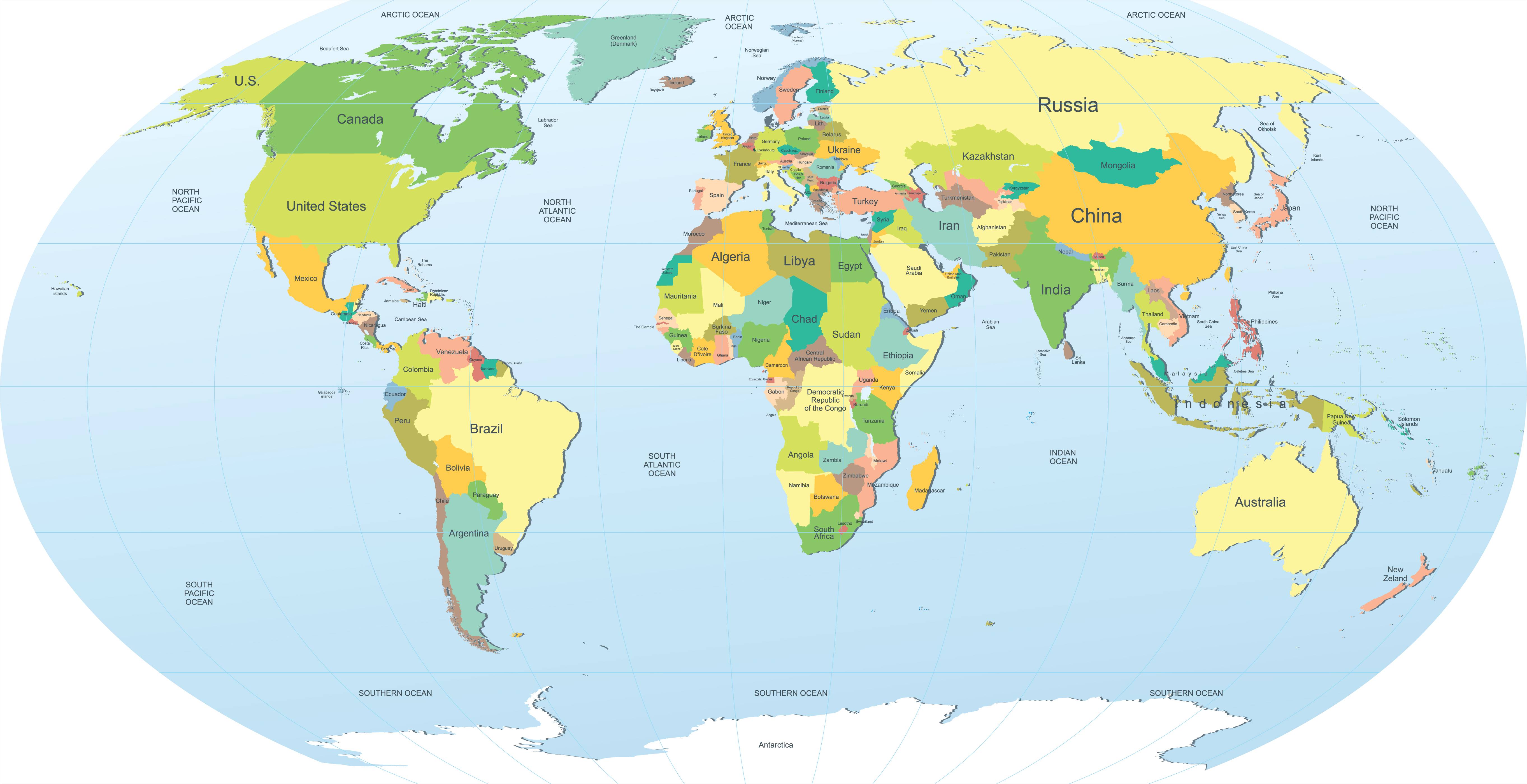
Treating "global Christians" and "global Muslims" as monolithic blocks obscures the most important structural shift occurring within both religions: the center of gravity for both faiths is moving rapidly toward Sub-Saharan Africa.
The Africanization of Christianity
By 2050, roughly four out of every ten Christians in the world will live in Sub-Saharan Africa. European Christianity is contracting rapidly due to below-replacement fertility (often 1.3 to 1.6 children per woman) and aggressive secularization. North American Christianity is following a similar, though slightly slower, trajectory. The survival of Christianity as the world's largest religion over the next forty years is entirely dependent on high fertility rates in nations like Nigeria, the Democratic Republic of the Congo, Ethiopia, and Tanzania.
The Dual-Engine Growth of Islam
Islam's growth is powered by two distinct geographic engines rather than one:
- The Asia-Pacific Engine: Indonesia, Pakistan, India, and Bangladesh already hold the largest concentrations of Muslims globally. While fertility rates in Indonesia and Bangladesh have dropped significantly toward replacement levels, their massive existing populations ensure huge absolute population additions through demographic momentum alone.
- The Sub-Saharan Engine: Countries like Nigeria, Niger, Mali, and Senegal exhibit some of the highest fertility rates on earth (often exceeding 4.5 to 6.0 children per woman). As mortality rates fall in the Sahel and West Africa, the Muslim population in this region is expanding at an exponential pace.
Because Islam draws massive volume from both South/Southeast Asia and Sub-Saharan Africa, while Christianity's growth engine is increasingly isolated to Sub-Saharan Africa alone, Islam's aggregate global growth rate remains structurally higher.
Limitations and Blind Spots in Demographic Forecasting
Demographic projections are not prophecies; they are conditional mathematical models built on the assumption that current trends will evolve smoothly. Several black-swan variables or structural accelerations could invalidate the 2070 parity timeline.
Rapid Fertility Convergence
Standard models assume that as nations urbanize and female education levels rise, fertility rates gradually decline toward 2.1. However, recent demographic data from countries like Iran, Tunisia, and parts of Indonesia demonstrates that fertility drops in Muslim-majority nations can happen much faster than historical Western models predicted. Iran's TFR plunged from over 6.5 in the early 1980s to below replacement level (around 1.7) in less than three decades. If Sub-Saharan African nations experience accelerated urbanization and access to family planning, the global Muslim growth curve will flatten earlier than projected, pushing population parity past 2070 or preventing it entirely.
Climate Shocks and Resource Constraints
The regions projected to drive the highest religious population growth—specifically the Sahel, the Horn of Africa, and the Indus-Gangetic Plain—are also the zones most vulnerable to severe climate stress, water scarcity, and agricultural disruption. Demographic models assume stable carrying capacity and continuous improvements in healthcare. Severe, prolonged resource shocks could spike mortality rates or trigger mass migration patterns that alter fertility behaviors and religious affiliation trajectories.
Unmeasured Secularization in Developing Markets
Census data in many developing nations relies on state-recorded religious identity rather than active belief or practice. In Western nations, disaffiliation is tracked freely through anonymous polling. In nations where religious identity is tied to legal status, inheritance laws, or social safety, individuals who privately abandon religious belief still appear as devout adherents in official demographic baselines. A sudden political or cultural shift that lowers the social cost of disaffiliation in major developing nations could cause an overnight statistical drop in recorded religious adherence, mirroring the rapid secularization seen in post-1960s Europe and 21st-century Latin America.
Tactical Framework for Interpreting Demographic Claims
When evaluating future headlines or policy briefs regarding global religious shifts, apply a three-step verification filter to separate valid demographic analysis from clickbait distortion:
- Isolate Flow vs. Stock: Check whether the claim refers to flow (annual births, conversion rates, growth percentages) or stock (total living headcount). Flow metrics shift decades before stock metrics reflect the change. Birth parity in 2035 does not equal population parity in 2035.
- Audit the Geographic Denominator: Identify which countries are driving the numbers. Global averages are statistical illusions; an increase in global Christian headcount hides a collapse in Europe masked by a boom in Nigeria. Always disaggregate global religious statistics down to the regional or national level before drawing geopolitical or economic conclusions.
- Check the Fertility Baseline: Verify whether the projection assumes static fertility rates or dynamic convergence. Any model that projects current fertility rates forward without factoring in urbanization and female educational attainment will systematically overestimate future population sizes in the developing world.
For policymakers, economists, and global enterprises, the immediate strategic takeaway is not the specific year global parity occurs. The actionable reality is that consumer markets, labor forces, and geopolitical influence over the next three decades will be overwhelmingly concentrated in younger, high-growth regions across Sub-Saharan Africa and South Asia, requiring capital allocation and operational strategies built for youthful, religiously observant demographics rather than aging, secular Western markets.