Global religious composition is shifting not through mass conversion, but through mechanical demographic momentum driven by age structure and total fertility rates. Standard media coverage reduces the projected rise of Islam to a single variable—higher birth rates—while ignoring the underlying compounding engines of population pyramids, replacement-level thresholds, and regional mortality stabilization. To forecast global religious distribution accurately through 2035 and beyond, analysts must decouple raw fertility metrics from demographic momentum and regional economic development curves.
The Demographic Momentum Equation
Population growth in any closed cohort operates on a lag timer. Even if global fertility rates dropped to exact replacement level tomorrow, total population figures would continue to diverge for decades due to population momentum—the tendency for population growth to continue beyond the time that replacement-level fertility has been achieved because of a high concentration of people in the childbearing years.
Most media narratives treat birth rates as a static multiplier. In reality, global religious shifts are governed by a three-variable compounding formula:
- Baseline Median Age: The proportion of a religious cohort currently under age 15 determines the size of the reproductive base over the next two decades.
- Total Fertility Rate (TFR): The average number of children a woman would bear if she survived through the end of her reproductive life and experienced the exact current age-specific fertility rates.
- Mortality Convergence: Falling infant and maternal mortality rates in developing regions convert high birth rates into surviving adult cohorts faster than historical models predicted.
Muslims currently possess the youngest median age among major global religious groups, sitting at roughly 24 years, compared to a global median of 30, a Christian median of 30, and a Hindu median of 27. Because a massive share of the global Muslim population has not yet entered its primary reproductive window, the absolute number of births will continue to climb even as individual family sizes shrink.
Replacement-Level Thresholds and Cohort Divergence
Demographic transition theory establishes that a TFR of 2.1 children per woman represents the replacement level in developed nations with low mortality. Below 2.1, a population eventually contracts absent net positive immigration. Above 2.1, a population expands exponentially until socioeconomic variables compress fertility.
When evaluating major religious blocs, the divergence around this 2.1 threshold explains the 2035 inflection point:
- Muslim Cohorts: Maintain an aggregate global TFR near 2.9 to 3.1. While this represents a steep decline from late-20th-century averages, it remains well above replacement level.
- Christian Cohorts: Hover near a global aggregate TFR of 2.6 to 2.7. However, this figure masks severe geographic polarization. Sub-Saharan African Christian populations exhibit high fertility, while European and North American Christian populations have fallen far below replacement level (often between 1.4 and 1.8), creating a net drag on global totals.
- Hindu Cohorts: Have experienced rapid fertility compression, dropping to approximately 2.1 to 2.2 globally, effectively reaching stabilization in major Indian states.
- Unaffiliated and Buddhist Cohorts: Both groups sit significantly below replacement level (roughly 1.6), guaranteeing long-term structural contraction in their share of the global population.
Geographic Concentration and Regional Engines
Treating religious groups as monolithic global blocks obscures the actual geographic engines driving demographic change. Population growth is hyper-localized, tethered to specific regional infrastructure, urbanization rates, and female labor participation.
The Sub-Saharan African Multiplier
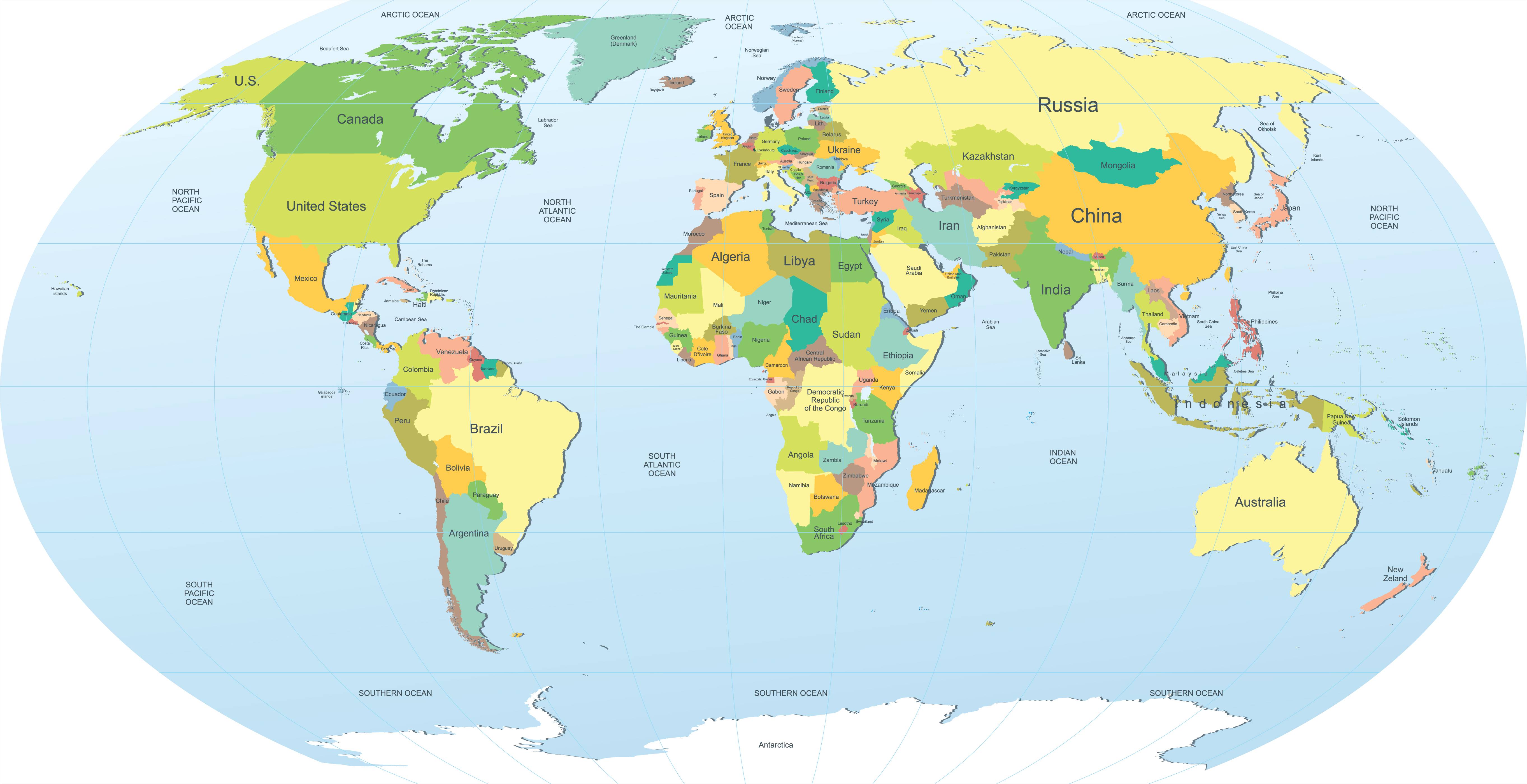
The primary driver of both Christian and Muslim demographic expansion over the next thirty years is Sub-Saharan Africa. High baseline fertility combined with rapidly declining child mortality creates an unprecedented youth bulge. Because Sub-Saharan Africa is roughly split between Christian-majority nations in the south and central regions and Muslim-majority nations across the Sahel and West Africa, both religions are expanding rapidly on the continent.
The critical difference lies in global offset. Christian gains in Sub-Saharan Africa are heavily counterbalanced by rapid secularization and sub-replacement fertility in Western Europe, the Americas, and Oceania. Muslim gains in Sub-Saharan Africa, conversely, face no comparable demographic contraction in the Middle East, North Africa, or South Asia, where populations remain young and growing.
South Asian Stabilization vs. Momentum
South Asia houses the largest absolute concentration of Muslims globally, split across India, Pakistan, and Bangladesh. Standard reporting often misses the internal divergence within this single region:
- Bangladesh achieved a dramatic fertility transition over the last three decades, bringing its TFR down to near-replacement levels (~2.0) through targeted public health interventions and female education initiatives.
- India exhibits state-by-state convergence; while Muslim fertility in India remains slightly higher than Hindu fertility (roughly 2.36 versus 1.94 according to recent national family health surveys), the gap has narrowed aggressively over twenty years.
- Pakistan remains an outlier with a persistently high TFR above 3.3, acting as a primary demographic engine for South Asian Muslim growth through 2035.
Even in regions like Bangladesh and southern India where TFR has hit 2.0, the sheer size of the reproductive-age cohort ensures continued absolute population growth for another thirty years.
The Structural Limits of Linear Demographic Projections
Forecasting religious affiliation out to 2035 or 2050 relies on cohort-component projection models—the gold standard used by demographers at institutions like the Pew Research Center and the United Nations Population Division. However, strategic analysts must account for three friction points that routinely disrupt linear demographic models.
1. The Speed of the Demographic Transition
Demographic models assume that fertility declines follow historical curves tied to GDP per capita, urbanization, and female secondary education. Yet modern developing economies frequently experience compressed transitions. Access to mobile telecommunications, rapid urban migration, and shifting cultural norms can cause TFR to plummet from 4.0 to 2.1 within a single generation—far faster than occurred in 19th-century Europe. If fertility rates in Nigeria, Niger, or Pakistan compress faster than baseline projections assume, the 2035 parity timeline shifts outward.
2. Religious Switching and Disaffiliation Friction
Most demographic projections model religious switching (conversion and disaffiliation) using historical transition matrices derived from survey data. This introduces structural blind spots:
- Asymmetric Measurement: In Western nations, disaffiliation (the rise of the religiously unaffiliated or "nones") is openly reported in census and survey data, driving down projected Christian numbers.
- Reporting Constraints: In jurisdictions with strict social, legal, or apostasy penalties, survey respondents rarely report leaving their birth religion. Demographic models therefore assume near-zero disaffiliation in Muslim-majority nations, potentially overstating active religious adherence while accurately tracking nominal cultural identity.
3. Climate and Resource Carrying Capacity
Long-range demographic models treat environmental carrying capacity as a constant. In reality, the regions projected to drive the highest population growth—specifically the Sahel belt, parts of the Horn of Africa, and the Indus River basin—face severe climate volatility, water table depletion, and agricultural stress. Prolonged resource shocks increase mortality rates, suppress marriage and birth rates, and trigger cross-border migration flows that alter the demographic composition of receiving nations.
Analytical Frameworks for Evaluating Demographic Shifts
To extract actionable intelligence from global demographic data rather than reacting to headline-driven projections, analysts must apply a disciplined evaluation protocol:
- Separate Absolute Growth from Relative Share: A religious group can grow by hundreds of millions of people while still losing global market share if another group grows faster. Always track both metrics independently.
- Audit the Age-Structure Pyramid: Never evaluate a population's future trajectory using TFR alone. Examine the ratio of the 0–14 age cohort to the 15–49 childbearing cohort to calculate embedded momentum.
- Disaggregate National Data: National averages hide regional extremes. An analysis of global Christianity or Islam that fails to separate Sub-Saharan fertility from Eurasian stabilization produces distorted strategic conclusions.
- Track Female Education Metrics as Leading Indicators: Female secondary school enrollment and age at first marriage are the most reliable leading indicators of future TFR compression, consistently predicting fertility drops ten to fifteen years before they appear in birth registries.
Strategic Forecast and Positioning
By 2035, the global religious landscape will reach functional parity between Christianity and Islam, with each accounting for roughly 30 percent of the global population, driven primarily by the mathematical certainty of existing youth cohorts rather than future behavioral shifts. Organizations, policymakers, and market analysts operating across global territories must stop treating Western demographic stagnation as a universal template. Capital allocation, consumer market forecasting, and geopolitical risk modeling for the 2030–2050 window must be calibrated directly to the youth bulges of Sub-Saharan Africa and South Asia, where consumer demand, labor supply, and geopolitical leverage will concentrate regardless of marginal fluctuations in global fertility curves.


