In a small, windowless room in Singapore, a technician named Malik watches a flickering monitor. To most, the screen is a mess of jagged lines and frequency charts. To Malik, it is the heartbeat of a continent. Somewhere three thousand meters below the surface of the South China Sea, a cable no thicker than a garden hose is pulsing with the private messages, bank transfers, and medical records of half a billion people.
Then, the line goes flat.
Malik doesn’t see an explosion. He doesn't hear a sound. He simply watches a data packet destined for Frankfurt vanish into the dark. In that same instant, three thousand miles away, a surgeon loses the low-latency connection required for a remote procedure. A high-frequency trader loses a fortune in a millisecond. A daughter’s video call to her mother in Brussels freezes on a pixelated smile.
We live in a world that we imagine is defined by the cloud. We speak of "wireless" technology as if our data floats through the ether, untethered and ethereal. It is a lie. Our civilization is bolted to the muddy floor of the ocean.
Over 95% of international data travels through subsea cables. These are the "lifelines" that the European Union and ASEAN—the Association of Southeast Asian Nations—are currently scrambling to protect. But to call them cables is to undersell their fragility. They are the glass nerves of the planet. And right now, they are frayed.
The Anatomy of a Blackout
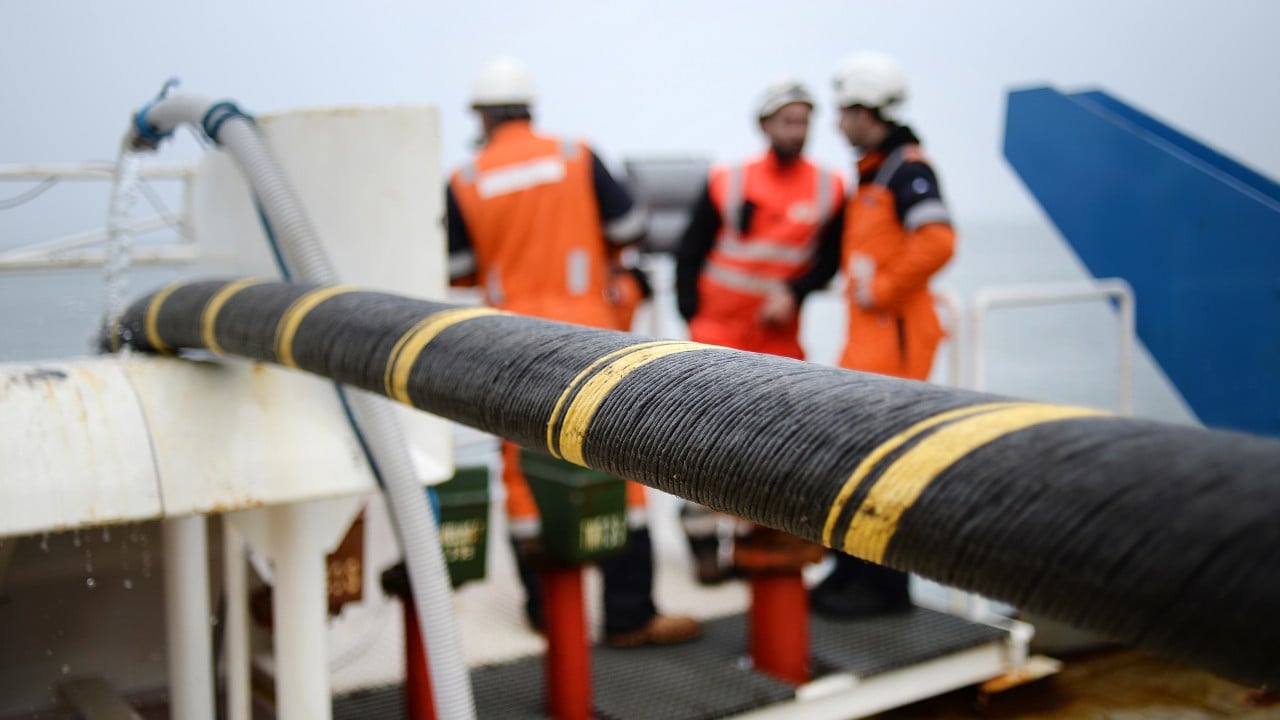
To understand the stakes, we have to look at what these cables actually are. Imagine a strand of hair made of glass. This is the fiber optic core. It is wrapped in copper, then petroleum jelly, then steel wires, and finally a plastic sheath. It looks tough in a factory. Under the crushing pressure of the abyss, subjected to the tectonic shifts of the Earth and the heavy drag of illegal fishing trawlers, it is paper-thin.
The geography of the Indo-Pacific is a nightmare for digital security. The waters are shallow, crowded, and politically radioactive. When the EU talks about "strategic autonomy" and ASEAN talks about "digital integration," they are really talking about the same thing: survival.
Consider the "Malacca Bottleneck." It is one of the busiest shipping lanes on Earth. It is also a graveyard for cables. Every time a captain drops an anchor in the wrong spot, they risk snagging the internet. This isn't a hypothetical fear. In 2024, the Red Sea saw three major cables severed. The result was a digital blackout that throttled traffic across Africa and Asia.
When the light in the fiber stops, the economy stops.
The Invisible War Beneath the Waves
If it were just anchors and earthquakes, the problem would be a matter of engineering. But the ocean floor has become the new front line of a shadow war.
Grey-zone tactics are the new norm. If a nation wants to cripple an opponent without firing a single missile, they don't attack a city. They send a "research vessel" to linger over a cable junction. They deploy a deep-sea submersible equipped with shears. Or, more subtly, they tap the line.
The EU and ASEAN are currently staring at a map of these vulnerabilities and realizing how much they rely on each other. The data highway between London and Singapore is the backbone of the global digital economy. If that highway is cut, the "Global Gateway" the EU is trying to build becomes a bridge to nowhere.
The complexity of the repair is the cruelest part of the story. You cannot simply send a diver down with some electrical tape. A specialized ship must be dispatched—one of only a handful in the world. It must use a robotic claw to find the severed ends in the silt, pull them to the surface, and have technicians manually fuse the glass fibers in a clean room on deck. This process takes weeks.
In those weeks, billions of dollars evaporate.
The Cost of the Quiet
There is a psychological weight to this vulnerability that we rarely acknowledge. We have built our modern lives on the assumption of instantaneity. We assume the "Send" button will always work.
But for the policy-makers in Brussels and Jakarta, that assumption is gone. They are looking at a reality where their digital sovereignty is outsourced to a few private companies and a handful of vulnerable maritime chokepoints.
The EU’s push for "secure connectivity" isn't about faster Netflix streaming. It is about the fact that if the subsea cables go dark, the European energy grid—which now relies on real-time data from offshore wind farms and cross-border exchanges—could stumble. It is about the fact that ASEAN's booming digital economy, projected to reach $1 trillion by 2030, is built on a foundation of glass and salt.
We are seeing a shift in how these two regions interact. It is no longer just about trade in physical goods like palm oil or cars. It is about a mutual defense pact for the seafloor. They are discussing "cable resilience," which is a polite way of saying they are terrified of what happens when the next "accidental" cut occurs.
A Patchwork of Sovereignty
The real obstacle isn't the technology; it's the bureaucracy. The sea is a legal "no man's land" once you get far enough from the coast.
If a cable is cut in international waters, who investigates? Who pays for the repair? Who punishes the perpetrator? Currently, the answer is often "no one."
The EU and ASEAN are attempting to create a framework for "underwater infrastructure protection." This involves everything from sharing satellite data to track suspicious ships to harmonizing the permits required to lay new, redundant routes. They are trying to build a digital version of the ancient Silk Road, but one that is shielded by law and sensors.
But law moves at the speed of a pen. Threats move at the speed of light.
The Human at the End of the Wire
Back in the monitoring station, Malik drinks a cold coffee and waits. He knows that his job is to maintain an illusion. The illusion that we are connected by magic.
He knows that every time someone in Paris buys a stock in a company in Ho Chi Minh City, a tiny pulse of light travels through a tube on the bottom of the ocean, passing by shipwrecks and giant squid and the silent, drifting hulls of warships.
He knows that we are one "accident" away from a world that feels much larger and much colder.
The effort to secure these lifelines is often described in the dry language of "geopolitical cooperation" and "infrastructure investment." These words are too small. This is an effort to keep the lights of civilization from flickering out. We have spent decades looking at the stars, dreaming of satellites and space-based internet, while the real danger was always beneath us, hidden in the dark, pressurized silence of the deep.
The water is rising, the ships are passing, and the glass is thin.
We are all hanging by a thread.
Would you like me to map out the specific geographic chokepoints where the EU and ASEAN are currently focusing their joint maritime surveillance efforts?