The Sound Before the Blast
Dust does not merely fall after an explosion. It hangs. It enters the throat like powdered chalk, dry and metallic, tasting faintly of sulfur and pulverized concrete.
In the Rafik Hariri University Hospital in southern Beirut, the air was already heavy before the shockwave arrived. It was the weight of exhaustion. For weeks, the medical staff had been operating on a deficit of sleep and an abundance of adrenaline. Then, the night split open. For a more detailed analysis into this area, we suggest: this related article.
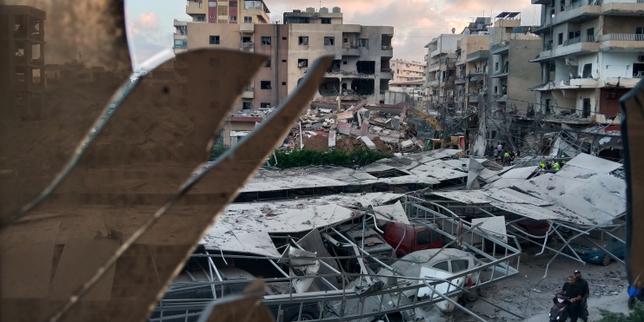
The strike did not hit the hospital directly. It landed dozens of meters away, flattening four residential buildings in the immediate vicinity. But proximity in a war zone is a relative concept. When a missile strikes concrete at supersonic speeds, the earth behaves like water. It ripples.
Inside the wards, that ripple translated into a sudden, violent displacement of reality. Windows, meant to let in the Mediterranean light, became thousands of airborne scalpels. Equipment calibrated to measure life by the millimeter toppled. The lights flickered, died, and left behind the terrifying crimson glow of emergency backups. For further context on this issue, extensive analysis can also be found on Reuters.
We often view conflict through the sterile lens of satellite imagery or drone footage. We see a plume of smoke, a flash of fire, and a headline detailing the coordinates. But a hospital is not a coordinate. It is a fragile ecosystem of survival, and when the perimeter is breached by violence, the consequences echo far beyond the crater left in the dirt.
The Anatomy of Neasness
Consider the geometry of a strike near a medical facility. The international community debates the legality, the intent, and the strategic necessity of every missile launched. Meanwhile, a nurse named Sarah—a composite of the dozens of healthcare workers currently standing watch in Beirut—is forced to make a choice in total darkness.
She was checking an intravenous line when the blast occurred. The pressure wave hit her chest first, knocking the wind from her lungs. Then came the sound, a roar so absolute it transcended hearing and became a physical assault.
Her first instinct was not to flee, but to shield the incubator beside her.
The infant inside weighed less than two kilograms. In the hierarchy of military targets, this child does not exist. In the calculation of collateral damage, this child is a statistic. But in that room, the child was the entire universe. Sarah threw her body over the acrylic canopy as the glass from the exterior windows showered the room.
This is the hidden tax of proximity. A hospital does not need to be the direct target of a bomb to be functionally incapacitated by it. The shockwaves fracture more than glass; they fracture the delicate illusion of safety required to heal. When a strike occurs yards away, the operating rooms must be evacuated. The sterile fields are compromised by dust. The power grids, already fragile in Lebanon, face catastrophic failure.
The numbers provided by official briefs tell us that dozens were injured and several were killed in the surrounding buildings. They do not tell us about the surgeries halted mid-incision. They do not mention the cardiac patients whose hearts failed under the sudden, immense stress of the blast wave.
The Fragmented Sanctuary
Hospitals in conflict zones are supposed to be sacrosanct. Under the Geneva Conventions, they are marked, known, and theoretically shielded from the violence surrounding them. Yet, the reality on the ground reflects a different doctrine.
When a weapon detonates near a medical facility, the psychological sanctuary is destroyed instantly. Patients who fled their homes seeking refuge in the hospital suddenly realize that there is no horizon safe from the reach of the conflict. The institution of healing becomes a lightning rod for terror.
The aftermath of the strike near the Rafik Hariri hospital revealed a scene of controlled chaos. The street outside was a canyon of rubble. Rescuers clawed through the remains of the neighboring apartment blocks with their bare hands, searching for survivors under the glare of flashlights and mobile phones.
Inside, the living were moved to the corridors. The central hallways, shielded by thick concrete walls, became makeshift wards. Patients lay on gurneys, their faces pale beneath layers of gray dust, while doctors worked by the light of their smartphones.
This is not a failure of logistics. It is the systemic collapse of civic infrastructure under the pressure of modern warfare. Lebanon’s healthcare system was already buckled under the weight of an unprecedented economic crisis. Medications were scarce. Fuel for generators was a daily anxiety. The strike did not create these vulnerabilities, but it exploited them ruthlessly.
The Weight of the Aftermath
To understand the true cost of this event, one must look past the immediate wreckage. The crater will eventually be filled. The glass will be swept away. The buildings will either be rebuilt or left as hollow monuments to a terrible night.
The real damage is silent, slow, and generational.
It is found in the pregnant women who are now terrified to enter a delivery ward, fearing that the ceiling might collapse while they are in labor. It is found in the doctors who suffer from a quiet, corrosive trauma, knowing that their skills are useless if the ceiling cannot stay above their heads.
Medical neutrality is not an abstract legal theory debated in European capitals. It is the practical barrier between life and death for people who have no part in the geopolitical chess match being played around them. When that barrier is eroded—when strikes creep closer and closer to the red cross or red crescent symbols painted on the roofs—the entire concept of human rights suffers a collective stroke.
The morning after the strike, the sun rose over a changed landscape. The smell of burning rubber and explosives still drifted through the shattered windows of the hospital. Volunteers stood in the courtyard, their shoes crunching on the millions of tiny fragments of glass that littered the asphalt.
A man was sitting on the curb outside the emergency entrance, his hands stained with dried blood from helping dig out his neighbors. He wasn't crying. He was just watching a team of workers haul away a twisted piece of metal that had once been a section of a balcony.
Behind him, through the broken facade of the clinic, the steady beep of a heart monitor could still be heard. It was a stubborn, rhythmic defiance against the chaos of the night. A reminder that despite the violence outside, the work of keeping humanity alive continues, heartbeat by agonizing heartbeat, on the blood-slicked floors of a sanctuary that is no longer safe.