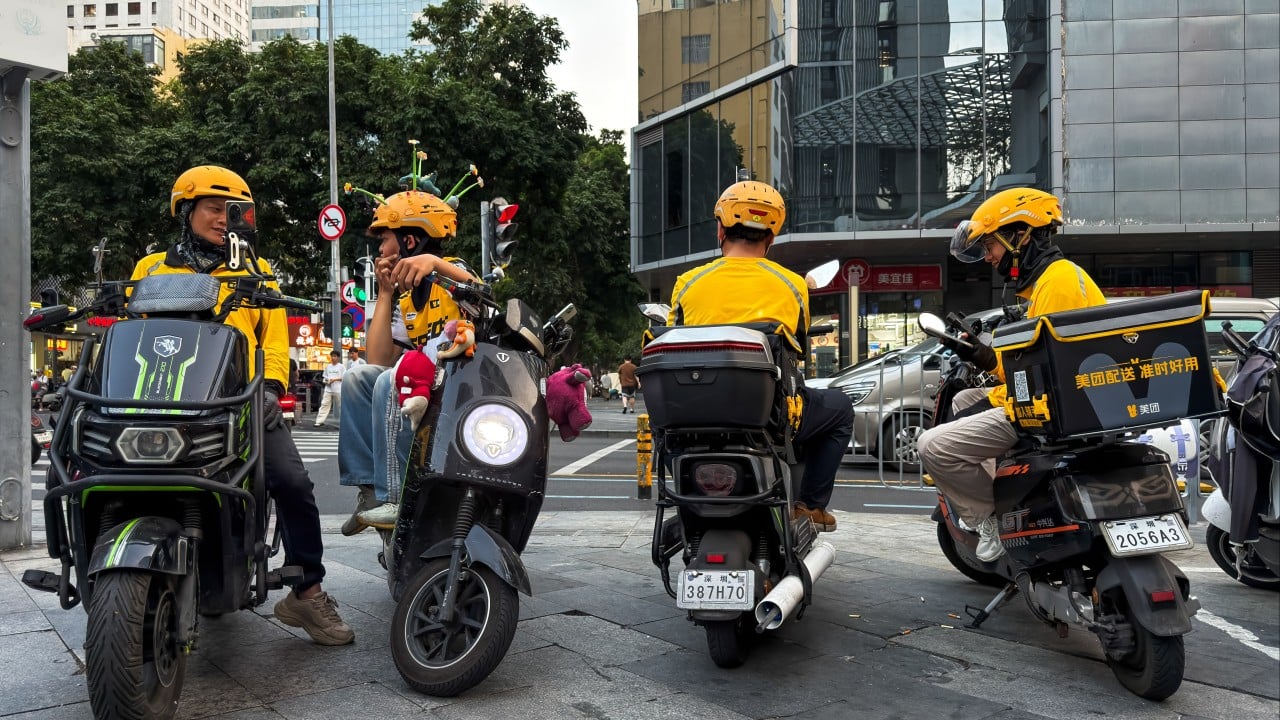
The air in Shenzhen doesn't just sit; it vibrates. It is a humid, electric hum composed of ten thousand soldering irons, the frantic clicking of mechanical keyboards, and the muffled roar of the South China Sea. In the glass towers of Futian, the lights never actually go out. They just shift hue as the sun climbs over the border.
When a new hand takes the wheel of this machine, the vibration changes.
Meng Fanli didn't just walk into an office when he became the city’s party chief; he stepped into a pressurized chamber. To the outside world, Shenzhen is a line graph that only knows how to point up. To the people inside, it is a relentless, 24-hour race against obsolescence. Now, with the APEC summit looming on the horizon, that race has a hard, unforgiving deadline. The world is coming to look at the "miracle," and Meng has to ensure the paint isn't peeling and the engine isn't smoking.
Pressure.
It is the primary export of the Pearl River Delta. It defines the lives of the delivery drivers weaving through electric-bus traffic and the billionaire founders staring at shrinking export margins. Meng's challenge isn't just administrative. It is existential. He has to prove that the "Shenzhen Speed" which built a metropolis out of fishing villages can still function in an era of fractured trade and tightening belts.
The Weight of the Chair
Imagine a desk where every document you sign affects the trajectory of twenty million lives and roughly three percent of a superpower’s GDP. This is the reality of the Shenzhen Party Secretary. Historically, this seat has been a springboard to the highest echelons of power in Beijing. But springboards can also snap.
Meng Fanli arrived with a reputation for being a technocrat’s technocrat. He isn't a firebrand or a poet; he is a man of the gears. His background in Qingdao and Inner Mongolia suggests a leader comfortable with heavy industry and maritime logistics, but Shenzhen is a different beast. It is a city of intangible assets—code, patents, and the fragile confidence of global investors.
The APEC summit acts as a magnifying glass. When the leaders of the world’s most influential economies gather, they won't just be looking at the skyline. They will be looking for stability. They will be looking to see if the "Special Economic Zone" still feels special.
Consider the hypothetical case of a mid-sized hardware startup in the Nanshan District. Let's call the founder Mr. Chen. For a decade, Chen’s world was simple: design a product, find a factory in Bao’an, and ship it to the world. Today, Chen is paralyzed. Supply chains are tangled in geopolitical knots. His margins are being eaten by rising costs. He looks to the government not for a handout, but for a signal.
Is the door still open? Is the wind at our backs or in our faces?
Meng’s first few months have been a series of signals sent to people like Chen. He has been visible, touring factories and speaking the language of "high-quality development." But in Shenzhen, talk is cheap. Results are measured in TEUs (twenty-foot equivalent units) at the Yantian port and the daily closing price of Tencent and BYD.
The Invisible Stakes of APEC
APEC isn't just a meeting; it’s a stage. For China, hosting is an opportunity to reassert its role as the indispensable hub of Pacific trade. For Shenzhen, it is a chance to show that it has evolved from the "world’s factory" into the "world’s laboratory."
The stakes are invisible because they are psychological. If the city feels stagnant—if the tech hubs feel like they are merely coasting on past glories—the capital will continue its slow, quiet flight to Singapore or Vietnam. Meng Fanli has to curate an atmosphere of inevitable success. He has to make the world believe that the Shenzhen miracle is a permanent state of being, not a historical fluke.
But the friction is real.
The global economy is cooling. The tech sector, once the undisputed engine of the city, has faced years of regulatory recalibration. Thousands of young workers, the "migrant elite" who fueled the city’s rise, are questioning the "996" culture (working 9 a.m. to 9 p.m., six days a week). They are tired. The social contract of Shenzhen—sacrifice your youth for a chance at extreme wealth—is fraying at the edges.
Meng isn't just managing a budget. He is managing a mood.
The Architecture of a Turnaround
To understand the scale of what needs to happen before the summit, one must look at the physical and digital infrastructure being overhauled. This isn't about fixing potholes. It’s about the integration of the Greater Bay Area—linking Shenzhen, Hong Kong, and Macau into a seamless megalopolis that can rival Silicon Valley.
- The Talent War: Meng has pushed for policies that make it easier for international researchers to settle in the city. He knows that a tech hub without a constant infusion of new brains is just a museum of yesterday’s gadgets.
- The Green Shift: The city is doubling down on green energy. The sky over Shenzhen is a clearer blue than in almost any other Chinese industrial hub, a result of a massive transition to electric transport. This is the visual proof Meng wants to present to APEC delegates.
- The Regulatory Balance: He must walk the tightrope between Beijing’s demand for order and the market’s demand for freedom. It is a precarious dance. Lean too far one way, and you stifle the very innovation that makes the city valuable. Lean too far the other, and you risk the "disorderly expansion of capital" that the central government has vowed to curb.
The silence of a Sunday morning in the Futian Central Business District is deceptive. Behind those glass walls, the data is flowing. Meng Fanli is likely at his desk, staring at a dashboard of metrics that would make a Fortune 500 CEO dizzy. He knows that his performance is being graded in real-time, not just by his superiors in the north, but by the markets.
The Human Component
We often talk about cities as if they are sentient beings, but a city is just a collection of choices made by people.
The woman running a street-side noodle shop in a "can-do" urban village like Baishizhou is part of the APEC preparation, too. If she feels the economy is picking up, she buys more supplies. The wholesaler sees the order and hires an extra driver. The driver buys a new phone. The cycle continues.
If Meng Fanli can’t reach that woman—if his policies only benefit the skyscrapers and ignore the alleyways—the city’s foundation weakens. APEC delegates will see the shiny drones and the autonomous taxis, but they will also sense the underlying pulse. They will know if the energy is authentic or manufactured.
The real test for Meng isn't the summit itself. The summit is just the party. The test is the "morning after."
Will the deals signed during those high-level meetings translate into actual growth? Will the foreign dignitaries leave with a sense that Shenzhen is the future, or a relic of a previous era of globalization?
The Relentless Ticking
Time in Shenzhen moves differently. A "Shenzhen year" feels like three years elsewhere. The pace is exhausting, exhilarating, and occasionally soul-crushing.
Meng Fanli has taken the wheel at a moment when the road is getting steeper and the fog is thickening. He doesn't have the luxury of a slow start. Every day he spends in office is a day closer to the moment the world's cameras turn toward the city.
He is a man trying to tune a jet engine while the plane is mid-flight.
Success looks like a city that breathes easily, where the "Mr. Chens" of the startup world feel emboldened to take risks again, and where the world sees a China that is still open for business, despite the headlines. Failure is a quiet stagnation, a loss of the "spark" that made a fishing village the envy of the planet.
As the sun sets, the LED displays on the Ping An Finance Centre begin their nightly dance. They cast a neon glow over a city that is simultaneously anxious and ambitious. Somewhere in the heart of the city, the new party boss is watching those same lights. He knows the clock is ticking.
He knows that in Shenzhen, you are only as good as your next miracle.
The glass towers are waiting. The world is watching. The vibration is changing again.